



THB/USD36.48
THB/EUR39.72
BTC/THB2,461,800
Gold/THB83,420
Hua Hin+32°C, Mainly clear
AQI48 · Good

Category Archive

Tech

Technology, AI tooling, digital infrastructure, and automation posts from the Ananas Insider editorial stream.

AI Tools for Expats in Thailand: Banking, Translation, Legal, Daily Life
Tech

AI Tools for Expats in Thailand: Banking, Translation, Legal, Daily Life

AI Has Replaced Your Translator, Your Tax Advisor, and Your Real Estate Agent — If You Know Which Tools to Use Three years ago, a foreigner moving to Thailand needed a Thai-speaking friend for every bank visit, a lawyer for every contract r

Ananas Editor Team · Editors · 4 min read

The Evolution of the 4-Day Workweek in Global Tech Hubs (2026 Edition)

Tech

The Evolution of the 4-Day Workweek in Global Tech Hubs (2026 Edition)

The Moment That Changed Everything: Bolt's Thursday Afternoon Gambit Marko Kuum, a senior developer at Bolt, leaned back in his Tallinn office chair on a rainy Thursday afternoon in March 2022. The clock read 2:47 PM when CEO Markus Villig's company-wide Slack notification pinged across 1,200 devices: "Starting next quarter, we're shifting to four-day weeks with no salary reduction. Fridays are now yours." The office erupted—some cheered while others nervously checked calendars. Customer support teams immediately started sketching rotation plans on whiteboards stained with old coffee rings. This wasn't theoretical. Bolt became the first European unicorn to implement the policy across 45+ countries simultaneously. Two years later, their bug report rate had dropped 23% while app performance metrics soared. "People assumed we'd lose velocity," recalls Kuum, now running Bolt's four-day workweek task force. "Instead, we cut 6 hours of redundant meetings per week and automated status updates through AI." The Estonian mobility giant proved something radical: fewer hours could mean better output when paired with ruthless process optimization. The experiment rippled through tech hubs from Berlin to Bangalore. By 2026, over 5,000 companies across 40 countries have adopted some form of compressed workweek, with 90-92% retaining the policy post-trial. What began as pandemic-era flexibility has hardened into structural change—especially in knowledge sectors where cognitive load outweighs clocked hours. But the transition hasn't been uniform. Regulatory landscapes, cultural attitudes, and technological readiness create stark regional contrasts. Why This Matters in 2026: Beyond the Productivity Myth The four-day workweek debate shifted decisively in 2025 when UK pilot data revealed participating companies saw revenue increase 1.4% alongside a 57% drop in staff turnover. These weren't feel-good experiments anymore—they were financial imperatives in a tight talent market. For tech workers scrolling through job boards filled with "4DW" badges, it's become a baseline expectation at progressive firms. Here's what you need to understand about the current state: Policy dominoes: Belgium's 2022 right-to-compress law (without overtime pay penalties) forced neighboring countries to respond Tech's uneven adoption: While Buffer's decade-long 32-hour week shows 91% happiness retention, most AI startups still glorify 80-hour "hustle culture" Urban/rural splits: Portugal's Madeira Island reported 17% productivity jumps in tourism sectors, while Lisbon's consultancies struggled with client expectations The most surprising insight? This isn't really about working less—it's about working better. Companies maintaining 90-92% output typically combine trimmed meeting culture with AI delegation tools like automated standup summaries and ticket prioritization. The wasted half-hours between Zoom calls add up faster than executives realized. UK Pilot: The 61-Company Stress Test Cambridge researchers still remember the skepticism when Autonomy announced the UK's largest four-day workweek trial in June 2022. "We had FTSE 100 directors laughing at us during preliminary calls," admits lead researcher Dr. Kyle Lewis. Their six-month study with 61 companies—ranging from 12-person marketing agencies to 800-employee healthcare providers—became the blueprint for national policy debates. Participant outcomes defied expectations: Metric Result Revenue change +1.4% (despite 20% fewer operating days) Staff turnover -57% compared to industry averages Fractions of sick days 2.3 days/month → 0.8 days/month Pilgrims Choice, a 400-employee dairy company, saw meeting times drop 67% after banning Friday scheduling altogether. Their operations director noted: "We stopped confusing urgency with importance." Meanwhile, London-based tech consultancy Everfound used the freed day for mandatory "deep work blocks," reducing context-switching penalties that previously consumed 31% of developer time (according to RescueTime data). Not all transitions were smooth. Customer-facing roles at participating banks struggled with rotating coverage gaps until implementing AI call routing. The British Retail Consortium publicly criticized the model for frontline workers, citing "unmanageable weekend staffing pressures." Yet 91% of trial companies opted to continue the policy permanently—including 100% of tech participants. Europe's Patchwork Revolution Walk into Siemens' Munich HQ on a Thursday evening now, and you'll find engineers playing table tennis in what used to be overtime hours. Germany's industrial giant joined Deutsche Telekom in 2024 as the first DAX companies to trial department-wide four-day weeks, citing 92% team retention rates post-implementation. Their secret? Synchronized "focus Fridays" where only maintenance crews rotate shifts—a compromise unimaginable under Germany's rigid labor laws five years prior. Contrast this with Belgium's 2022 "right to compress" legislation, allowing employees to condense hours without overtime pay—provided total weekly output remains constant. Critics argue it enables exploitation (Brussels think tank CEPS recorded 14% more weekend emails at compliant firms), but productivity rose 9% in the first year among knowledge workers. Southern Europe tells a different story: Spain: Valencia's public sector pilot (2023) cut energy costs by €2.1M annually while national parliament debates reducing maximum hours from 40 to 37.5 Portugal: Madeira's tourism revenue jumped 13% after hotels adopted staggered four-day rotations—front desk staff reported 22% fewer guest complaints despite shorter weeks Poland: 90 employers have signed onto a government-subsidized trial involving 5,000 workers and PLN 50M in allocated funds, with full results expected May 2027 France's 4jours.work movement gained unexpected traction at business schools—Emlyon now requires all MBA candidates to design four-day operational plans. "The old argument about competitiveness collapsed when German manufacturers started outperforming us on 32-hour schedules," notes professor Élise Laurent. Asia's Cautious Experimentation The scent of matcha hangs heavy in Microsoft Japan's Tokyo office every Friday morning—the only weekday it's now closed. Their landmark 2019 trial (which saw productivity spike 40%) became a rallying cry for reformers battling Japan's karoshi (death by overwork) culture. By April 2025, over 160,000 Tokyo employees across 620 companies had shifted to four-day variants, with Osaka, Chiba and Miyagi prefectures following suit. Progress remains fragile. Traditional firms like Mitsubishi Heavy Industries still require "voluntary" Saturday meetings, while startups like SmartNews publicly revoked four-day policies in 2026 citing investor pressure. "Venture capital expectations haven't caught up," laments former SmartNews engineer Rina Takahashi. "They see fewer days as less commitment, even when metrics improve." In the Philippines, Circular 114 (March 2026) framed four-day weeks as an energy conservation measure during power grid instability. Call center giant Concentrix reported smoother operations after aligning shifts with circadian rhythms—their 3AM-to-noon "owl schedule" reduced attrition by 19% in Quezon City facilities. Yet Southeast Asia largely resists the trend. Thailand's face-time culture keeps Bangkok offices full despite plummeting afternoon productivity. As remote work visas attract digital nomads, the disconnect grows starker—Chiang Mai coworking spaces buzz on Fridays while Thai staff commute to half-empty corporate towers. Tech's Paradox: Pioneers vs Hustle Culture Buffer's Amsterdam team hasn't worked a Friday since 2015. Their transparent salary formulas and results-only culture (91% employee happiness ratings) make them the poster child for sustainable tech work. Co-founder Joel Gascoigne recalls early doubts: "Investors warned we'd get out-hustled. Instead, we out-executed competitors because rested brains build better features." But visit any AI startup hub from San Francisco to Singapore, and you'll find a different reality. "Zero companies in Y Combinator's Winter 2026 batch offered four-day weeks," reports incubator director Michael Seibel. The reasoning? Breakneck iteration cycles and investor expectations. One neural interface founder (who requested anonymity) admitted: "We tried it last quarter. Our Series B lead threatened to pull funding unless we reverted." The divide reflects deeper tensions: Four-Day Adopters Resisters Bolt: -23% bug rate AI startups: 80% still require weekend on-call Basecamp: seasonal 4-day summers Crypto firms: "Shipping > sleep" ethos DNSimple: mandatory Friday logoffs Gaming studios: Crunch culture persists Interestingly, remote-native companies adapt easiest. GitLab's handbook explicitly states: "If you need five days to complete four days' work, you're doing it wrong." Their global teams use asynchronous documentation to eliminate status meetings—a tactic that reduced manager overhead by 37%. The Data Behind the Movement International four-day week advocates now wield an arsenal of peer-reviewed statistics. Iceland's 2015-2019 trials with 1% of the workforce showed sustained productivity in 90% of workplaces—without salary reductions. But how? The mechanisms matter more than the headline numbers. Key drivers emerged across successful implementations: Meeting austerity: Kickstarter cut 11.5 hours/week of redundant syncs after moving to four days AI delegation: Duolingo's ticket triage bot handles 83% of routine user queries, freeing educators for content creation Parkinson's Law reversal: Siemens teams completed identical sprints 12% faster when deadlines compressed Wellbeing metrics shifted too. Burnout rates in participating UK firms dropped from 28% to 7%, while voluntary turnover fell to 8% compared to the tech industry's 19% average. Revenue impacts were neutral-to-positive—a surprise to CFOs who predicted disaster. "We overestimated how much work happened between 4-6PM on Fridays anyway," quips a Deutsche Telekom finance director. Productivity researcher Ana Belmonte cautions: "The 90-92% output retention only holds when companies actively redesign workflows. Simply lopping off a day fails spectacularly." Her MIT team found unsuccessful attempts shared three traits: no meeting policy changes, poor asynchronous tool adoption, and failure to align with client schedules. The Buried Criticisms For all the success stories, Harvard Business Review's 2026 meta-analysis uncovered uncomfortable truths. Small businesses ( Other pain points: Work compression stress: Spanish logistics workers reported higher blood pressure when squeezing five days' loading dock work into four AI dependency: Portugal's textile firms needed €20K chatbot investments to handle customer inquiries on off-days Equity issues: UK nurses' unions noted four-day weeks mostly benefited desk workers, leaving shift staff with more weekend rotations Even tech hasn't solved all wrinkles. "Our U.S. clients expect responses on Fridays regardless of our policy," grumbles a Dublin SaaS account manager. Companies like Intercom now use geo-rotating schedules—but that requires maintaining 120% headcount in customer roles. Southeast Asia's Presenteeism Problem The contrast is jarring: While Berlin tech workers bike to lakes on summer Fridays, Bangkok advertising agencies still judge commitment by desk hours. Southeast Asia's adoption rates lag dramatically behind Western markets—and cultural norms explain why. Thai management consultant Prin Rutnin summarizes the region's hesitance: "If the boss sees empty chairs at 6PM, they assume laziness—even if KPIs are met." This face-time culture persists despite digital nomad hubs proving alternative models work. Vietnam's top tech firm FPT Software tested four-day weeks in 2025 only to revert after three months when clients complained about response delays. While EV infrastructure investments could reduce commute times, structural barriers compound the issue: Country Adoption Rate Key Obstacle Thailand Hierarchical office culture Malaysia 3% Manufacturing sector dominance Indonesia 0.5% Religious Friday prayer complications There are exceptions. Singapore's government quietly implemented four-day weeks for policy researchers in 2025 after attrition hit 27%. And Bali's startup scene increasingly adopts "Flex Fridays" to attract global talent—though local staff often work remotely those days to satisfy traditional employers. 2027 and Beyond: The Legislative Tipping Point Poland's draft Labor Code revisions (slated for Q1 2027) could make it the first EU nation to enshrine four-day work rights nationwide. The proposal includes subsidies for small businesses transitioning—a recognition that mom-and-pop shops need more support than tech giants. Meanwhile, UK lawmakers are drafting similar legislation after the pilot's success, with Spain and Portugal considering variants. Several trends will shape coming years: Generational shift: 78% of Gen Z job seekers now filter for four-day roles on LinkedIn AI acceleration: Tools like generative search automate more routine tasks, making shorter weeks viable Urban planning: Cities like Valencia are redesigning public transit around four-day commuting patterns The ultimate test may be macroeconomic. If recessions return, companies could revert to presenteeism—though data suggests four-day firms actually weather downturns better due to higher morale. As Bolt's Kuum reflects while sipping midday espresso in Tallinn's now-quiet Friday offices: "Turns out treating brains like humans rather than machines isn't just ethical—it's profitable." The numbers back him up.

Ananas Editor Team · 10 min read

Smart Mobility in Hua Hin: The Impact of New EV Infrastructure

Tech

Smart Mobility in Hua Hin: The Impact of New EV Infrastructure

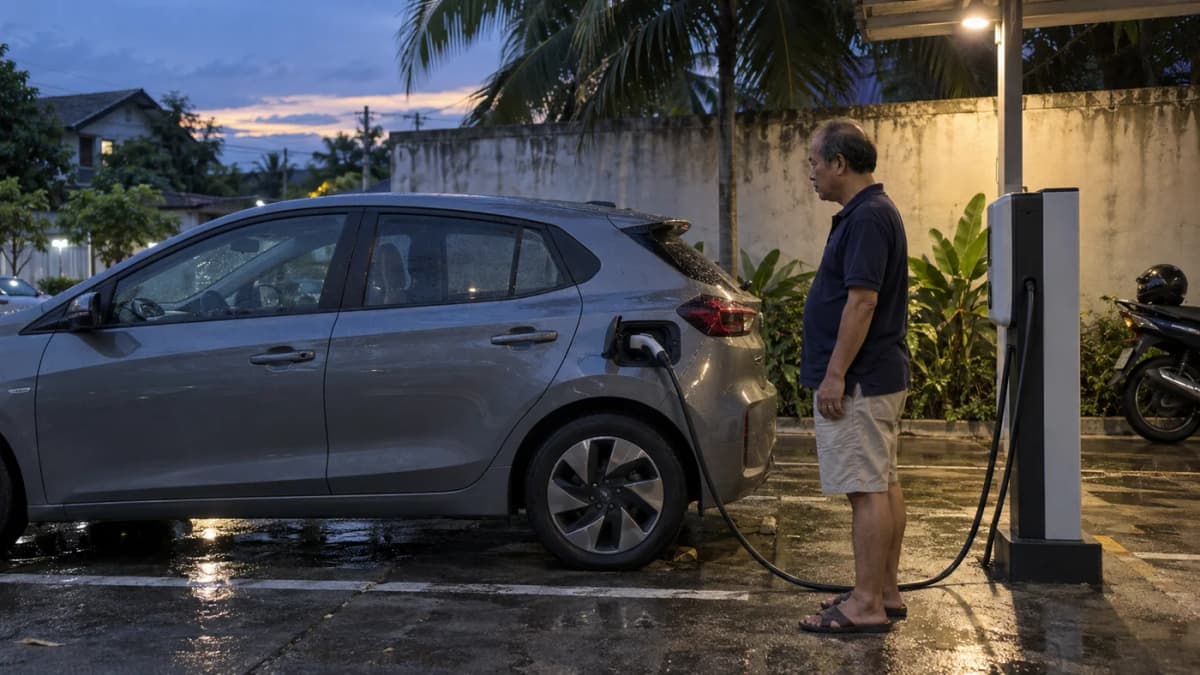
The Tesla That Changed Everything on Phetkasem Road Somchai Kittisak hadn't thought much about electric vehicles until his neighbor drove up in a BYD Atto 3 last March. The sleek SUV sat silently in the driveway of their Hua Hin moobaan while Somchai's diesel pickup rumbled through its usual warmup routine. "He invited me for a ride," Somchai remembers. "We went from Hua Hin to Cha-am and back — 80 kilometers round trip — and he showed me the energy cost. Seventeen baht. My truck would have burned 400 baht in diesel for the same trip." The number stuck. Within two months, Somchai had test-driven six different EV models. By June, he'd placed an order for a MG4. Somchai's story isn't unusual. It's playing out across Hua Hin's quiet sois and gated communities at a pace that's catching local businesses, the municipal government, and even the power grid off guard. Thailand's EV revolution, which started in Bangkok showrooms and Phuket dealer lots, has reached the Gulf coast — and Hua Hin, with its compact urban footprint and tech-savvy expat population, is becoming one of the country's unexpected proving grounds for electric vehicles. The numbers tell the story. Thailand's electric vehicle sales surged past 76,000 units in 2024, up from 13,000 in 2022 — a nearly sixfold increase in two years. In the first quarter of 2025 alone, EVs accounted for 13% of all new car registrations nationally, making Thailand the fastest-growing EV market in Southeast Asia. But here's what the national headlines miss: the infrastructure buildout happening in secondary cities like Hua Hin is where the real transformation is taking shape. It's not about luxury Teslas at beach clubs. It's about whether a grab driver can charge between airport runs, whether a moobaan can handle 40 EVs plugging in simultaneously on a Friday night, and whether the provincial power grid can survive a summer heatwave when every air-conditioned EV is charging at peak hours. Thailand's EV Push: What the Numbers Actually Show Thailand's government has thrown everything behind electric vehicles. The Board of Investment (BOI) approved over THB 40 billion in EV-related incentives between 2022 and 2025, covering everything from excise tax reductions on assembled EVs to subsidies for battery pack manufacturers. The target is ambitious: 30% of all vehicles produced in Thailand should be electric by 2030, up from roughly 10% in 2025. The policy has attracted an unprecedented wave of Chinese manufacturers. BYD opened its Rayong assembly plant in 2024 with capacity for 150,000 vehicles annually. MG's SAIC factory in Chachoengsao now produces the MG4 and MG EP for domestic sale and regional export. GWM's facility in Chonburi has ramped up production of the Haval H6 PHEV and Ora Good Cat. Even Toyota and Honda — historically skeptical of battery electrics — have committed to Thai-assembled BEVs by 2026. The result is a market flooded with affordable options. The BYD Dolphin starts at THB 699,900. The MG4 begins at THB 739,000. The Neta V lists at THB 549,900 — cheaper than a base Toyota Vios. These aren't compliance cars or luxury toys. They're daily drivers priced within reach of middle-class Thai families and expat retirees on fixed incomes. Model Starting Price (THB) Range (km) Charge Time (DC Fast) BYD Dolphin 699,900 340-427 30-80% in 30 min MG4 Electric 739,000 350-450 30-80% in 35 min Neta V 549,900 384 30-80% in 40 min GWM Ora Good Cat 899,000 400-500 30-80% in 45 min BYD Atto 3 1,099,900 410-480 30-80% in 35 min The catch nobody talks about: the car is the easy part. The infrastructure is where things get complicated, and that's exactly what's happening in Hua Hin right now. The Charging Desert: Where Hua Hin Stands Today Hua Hin's EV charging network in early 2026 looks like a city in transition. The backbone consists of DC fast chargers — mostly 60kW units — clustered along Phetkasem Road and concentrated at three locations: the Bluport shopping mall parking structure, the Hua Hin Railway Station area, and the PTT station on Soi 94. In total, the city has roughly 25-30 public charging points, including both DC fast chargers and slower AC units at hotels and shopping centers. That sounds reasonable for a town of 90,000 residents. But the math breaks down during peak weekends. Hua Hin's population effectively doubles from Friday evening to Sunday afternoon, when Bangkok expats and Thai families flood in for beach getaways. A Saturday afternoon in January might see 50-60 EVs circulating in the city center, all competing for the same 25 charging points. The result: queues at Bluport that stretch past the cinema entrance, frustrated drivers circling Soi 94, and — more problematically — some EV owners running their batteries below 10% to reach a charger, which degrades battery chemistry over time. The hotel sector tells a similar story. International chains like the InterContinental and Hilton have installed 2-4 chargers each, but these are typically reserved for in-house guests. Smaller boutique hotels — Aviyana, Putahracsa, The Peri — have added AC chargers in their parking areas, but the 7kW charge rate means a full overnight charge is required. For a guest arriving at 3pm with 20% battery, that's cutting it close for a morning beach run. What's missing is the middle layer: workplace and neighborhood charging for the people who actually live here full-time. The grab driver who covers 150 kilometers daily needs a 30-minute fast charge between lunch and dinner rush. The Thai teacher commuting from Cha-am needs reliable AC charging at the school. The retired German couple with a BYD Atto 3 needs a charger within walking distance of their moobaan — not a 15-minute drive to Bluport. This granular, neighborhood-level infrastructure barely exists. Who's Building What: The Infrastructure Players Three companies dominate Hua Hin's current EV charging landscape, each with a different strategy and target customer: EA Anywhere (Energy Absolute) operates the largest network in Thailand with over 7,000 charging points nationally. In Hua Hin, they've deployed DC fast chargers at PTT petrol stations along Phetkasem Road. Their app works reliably, pricing sits at THB 7.5-8.5 per kWh, and the chargers typically deliver 45-55kW actual output. The weakness: location concentration. Most EA stations cluster on the main highway, which doesn't serve the residential areas where full-time residents actually need them. IONITY Thailand (joint venture with PTT) has positioned itself as the premium option, deploying 150kW ultra-fast chargers at select locations. Their Hua Hin station at the PTT complex on Phetkasem Road can charge a BYD Dolphin from 10% to 80% in under 25 minutes. But the THB 12-15 per kWh price — nearly double EA's rate — makes it a convenience play rather than an everyday solution. Dealer-installed chargers represent the invisible infrastructure layer. Every BYD, MG, and GWM dealership now offers home installation packages with purchase: a 7kW wallbox charger, professional wiring, and a 3-year warranty for THB 25,000-45,000. This is actually the most impactful development for Hua Hin's EV adoption, because it solves the daily charging problem at its source. A BYD owner who charges overnight at home rarely needs public infrastructure — the car wakes up full every morning. The problem is that home installation assumes you own your property. For renters, condo residents, and the growing number of digital nomads in Hua Hin's serviced apartments, home charging isn't an option. And condo buildings face a chicken-and-egg problem: owners won't install chargers until enough residents own EVs, and residents won't buy EVs until chargers are available. The Grid Question: Can Hua Hin's Power Handle the Surge Here's the conversation nobody in Hua Hin's EV community wants to have: the provincial power grid wasn't designed for this. The Provincial Electricity Authority (PEA) supplies Hua Hin from a substation network built in the early 2000s, sized for a town of 60,000 residents running air conditioners and refrigerators. The load profile was predictable: moderate draw during the day, peak at 6-9pm when families return home and switch on lights and TV. EV charging flips that profile upside down. A single 7kW wallbox charger draws the equivalent of two air conditioners running simultaneously. A DC fast charger at 60kW draws the equivalent of 12 homes at peak load. When 20-30 EVs charge simultaneously at a Bluport parking structure on a Saturday evening, the local distribution transformer sees a load spike it was never engineered to handle. PEA has acknowledged the challenge. In late 2025, they approved a THB 340 million upgrade to the Hua Hin distribution network, including two new transformers at the Nong Kae and Hin Lek Fai substations and upgraded 22kV feeder lines along Phetkasem Road. The upgrades are scheduled for completion by Q3 2026 — meaning Hua Hin could face rolling brownouts or voltage drops during the 2026 high season if the work isn't finished on time. The smarter solution, which PEA is piloting in Chiang Mai and Pattaya, is smart charging infrastructure: chargers that communicate with the grid and automatically throttle output during peak demand periods. This technology adds THB 15,000-25,000 per charger but prevents the kind of transformer overloads that cause neighborhood blackouts. Hua Hin hasn't adopted it yet. Real Estate Implications: The Condo Charging Premium For property investors and buyers in Hua Hin, EV readiness is quickly becoming a differentiator that affects both resale value and rental yield. The logic is straightforward: a condo building with 4-8 functioning EV chargers in its parking structure can market itself to a growing demographic of EV owners who need overnight charging. Buildings without chargers face a shrinking pool of potential buyers. The numbers are starting to reflect this. A 2025 survey by the Thai Real Estate Association found that 67% of condo buyers under 40 considered EV charging availability "important" or "very important" in their purchase decision. In Hua Hin specifically, the new Baan Pomphet development in Khao Tao has pre-installed 22kW chargers in every parking spot as standard — a first for the town. Resale prices in the project's first phase have held 5-8% above comparable buildings without EV infrastructure. The retrofit challenge is real. Most existing Hua Hin condos were built before 2020, with electrical systems sized for lighting and AC only. Adding EV chargers requires upgrading the building's electrical capacity, installing new distribution panels, and often negotiating with the juristic office for shared parking allocation. The typical cost per building: THB 500,000-1.5 million for a 100-unit condo with 8 charging points — roughly THB 5,000-15,000 per unit, passed through as a common area fee increase or a one-time special assessment. For Hua Hin's villa market, the calculation is simpler. Houses with private garages can install wallbox chargers during construction or renovation for THB 25,000-45,000 — a trivial cost compared to the property value. The real question for villa buyers isn't whether they can charge at home, but whether the moobaan's electrical infrastructure can handle 30-40 simultaneous overnight charges. Most older moobaans can't. The Grab and Bolt Factor: Commercial EV Adoption Thailand's ride-hailing sector is quietly becoming one of the largest drivers of EV adoption, and Hua Hin is no exception. Grab Thailand reported that 18% of its active drivers in Hua Hin province were using EVs as of Q1 2026, up from 6% a year earlier. The economics are compelling: an EV grab driver covering 150 kilometers daily spends THB 45-60 on electricity versus THB 350-450 on diesel for an equivalent gasoline vehicle. That's THB 9,000-12,000 monthly savings — enough to cover the EV's higher lease payment with THB 3,000-5,000 left over. But the charging logistics create operational friction. Grab drivers can't afford 45-minute charging stops during peak hours. The optimal strategy — charge during off-peak morning hours, run all day, charge again late evening — requires access to a fast charger at a predictable location. For drivers who rent rooms or live in shared accommodation, this isn't always possible. Several Grab drivers reported to Ananas Insider that they've developed informal arrangements with 7-Eleven stores and restaurant owners, plugging in during slow hours in exchange for buying a coffee or meal — an ad-hoc solution that works until the building's electrical system complains. Bolt, the European ride-hailing platform that entered Thailand in 2024, has taken a more structured approach. Their Hua Hin pilot program includes partnerships with two charging operators to provide drivers with discounted overnight charging at designated locations. It's a small program — 40-50 drivers — but it demonstrates the kind of fleet-level charging infrastructure that could scale quickly if the economics work. What's Coming: The 2026-2027 Roadmap Several developments are set to reshape Hua Hin's EV landscape over the next 18 months: The Phetkasem Road charging corridor. PEA has approved a plan to install DC fast chargers every 15 kilometers along Phetkasem Road from Hua Hin to Prachuap Khiri Khan. That's roughly 8-10 new charging points, concentrated at PTT stations and 7-Eleven complexes. The rollout begins in Q3 2026 and should be complete by early 2027. This addresses the intercity charging gap but doesn't solve the in-town problem. Condo EV mandates. The Hua Hin municipal council is considering a regulation requiring all new condominium projects above 50 units to include EV charging infrastructure in their building permits. If passed — and several council members have publicly supported it — the rule would take effect in 2027 and fundamentally change the market for new developments. V2G (Vehicle-to-Grid) pilots. PEA is exploring vehicle-to-grid technology that would allow EVs to feed stored electricity back into the grid during peak demand periods. A BYD Atto 3 with a 60kWh battery could theoretically power a small home for 6-8 hours during a blackout — or stabilize the grid during a heatwave. The technology exists; the regulatory framework doesn't. Thailand's Energy Regulatory Commission is expected to publish draft V2G guidelines by Q4 2026. Chinese competition intensifies. BYD, MG, and Neta are all planning new models for the Thai market in 2026-2027, with price points dropping below THB 500,000 for the first time. The BYD Seagull, expected at THB 499,900, would undercut every combustion-engine hatchback on the market. At that price, EV adoption in secondary cities like Hua Hin could accelerate far beyond current projections. The Bottom Line: What It Means for Residents and Investors Hua Hin's EV transformation is real, but it's uneven. The charging infrastructure is adequate for home-charging EV owners — anyone with a garage and a wallbox can live comfortably with an electric car today. The public fast-charging network is thin but improving, and the intercity corridor along Phetkasem Road will be functional by 2027. The gap is in the middle: neighborhood charging for condo residents, workplace charging for commercial drivers, and smart grid integration that prevents overloads during peak demand. These aren't exotic problems — they're the exact challenges every city faces during an EV transition. But Hua Hin's small-town infrastructure and weekend-driven population spikes make them more acute here than in Bangkok or Chiang Mai. For property buyers, the recommendation is clear: prioritize buildings with existing or planned EV charging infrastructure. The premium is small today (5-8% above comparable units) but will widen as EV adoption accelerates. For investors, the commercial EV charging space — particularly workplace and neighborhood charging for grab drivers and full-time residents — represents an underserved market with strong unit economics. The transition from diesel to electric in Hua Hin won't happen overnight. But Somchai's seventeen-baht trip to Cha-am has already planted the seed. The question isn't whether Hua Hin goes electric — it's whether the infrastructure will be ready when it does.

Ananas Editor Team · 13 min read

Southeast Asia's Fintech Landscape: The Shift to Cashless Ecosystems

Tech

Southeast Asia's Fintech Landscape: The Shift to Cashless Ecosystems

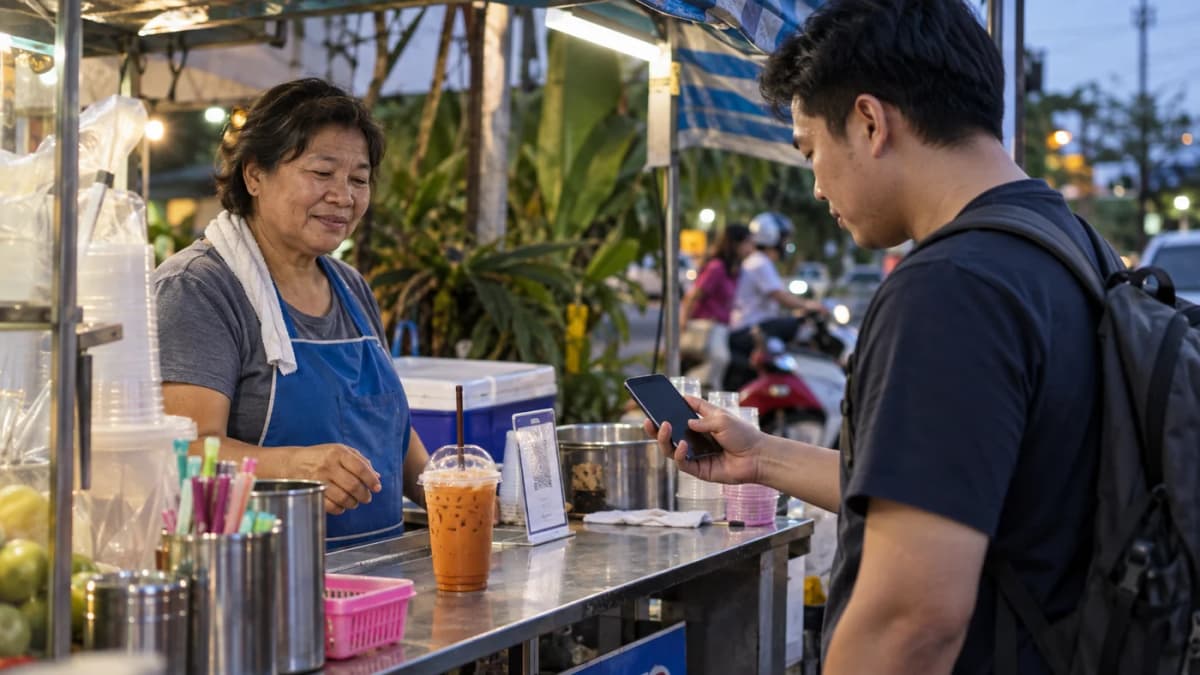
The Grab Driver Who Became a Banker When Rizal Pratama started driving for Grab in Jakarta in 2019, he kept a worn leather wallet stuffed with cash — tip money from passengers, small change from warung purchases, the occasional 50,000-rupiah note from a grandmother who didn't trust apps. By 2024, that wallet was empty. Rizal's entire financial life — payments, savings, micro-loans, even insurance — lived inside his phone. "I opened a bank account through the Grab app," he says. "I buy phone credit through GoPay. I pay my daughter's school fees through QRIS. The last time I touched physical cash was Eid, when my mother insisted on red envelopes." Rizal's transformation isn't personal — it's structural. Southeast Asia's shift from cash to digital payments is the fastest financial transformation in modern history, and it's happening through super-apps, QR codes, and regulatory frameworks that are rewriting how 680 million people move money. The numbers are staggering. Southeast Asia's digital payments market processed $180 billion in transaction value in 2025, up from $48 billion in 2020 — a 375% increase in five years. Indonesia alone accounts for $68 billion of that total, followed by Thailand at $42 billion and Vietnam at $35 billion. The region's cash-in-cash-out (CICO) network now exceeds 15 million agent points, more than the combined ATM networks of Europe and North America. And the trajectory is still accelerating: Google, Temasek, and Bain's 2025 e-Conomy SEA report projects $360 billion in digital payment transaction value by 2030. What makes Southeast Asia's cashless revolution unique isn't the technology — QR codes and mobile wallets exist everywhere. It's the speed at which a region of 11 countries, 12 currencies, and wildly different regulatory environments has converged on interoperable payment infrastructure. Thailand's PromptPay, Indonesia's QRIS, Singapore's PayNow, and Malaysia's DuitNow aren't just national systems — they're increasingly linked to each other, creating a cross-border payment corridor that could eventually rival Visa and Mastercard's global network. The Super-App Effect: How Grab, Gojek, and Shopee Rewrote the Rules The super-app model — a single platform offering ride-hailing, food delivery, payments, lending, insurance, and e-commerce — is Southeast Asia's defining fintech innovation. It wasn't designed as a financial strategy. It evolved because the region's underbanked population needed financial services delivered through channels they already trusted. Grab's trajectory illustrates the pattern. The company started as a taxi-booking app in Malaysia in 2012. By 2017, it had launched GrabPay as a payment service for third-party merchants. By 2018, Grab Financial Group was offering micro-loans, insurance, and investment products. By 2022, GXS Bank — a digital bank jointly operated with Singtel — received a full banking license in Singapore. Today, Grab Financial processes over $30 billion in annual payment volume across eight countries, and its lending arm has disbursed $4.2 billion in micro-loans to small merchants who couldn't qualify for traditional bank credit. Gojek followed a parallel path in Indonesia, merging with e-commerce giant Tokopedia in 2021 to form GoTo Group. GoPay, Gojek's payment arm, now serves 190 million registered users and processes 60% of Indonesia's digital payment transactions. The platform's merchant network includes 3.2 million warungs — small family-owned shops that were cash-only as recently as 2019. Through GoPay's QRIS integration, these warungs now accept digital payments from any QRIS-compatible app, effectively bringing Indonesia's informal economy into the digital financial system. Shopee, Sea Group's e-commerce platform, has taken a different angle: embedding financial services into the shopping experience. ShopeePay, launched in 2019, now has 55 million monthly active users across Southeast Asia. The platform's buy-now-pay-later service, SPayLater, has disbursed $8.7 billion in consumer credit since launch, with a default rate of 2.1% — below the regional average for unsecured lending. Shopee's insight was that e-commerce creates natural financial touchpoints: a customer who buys groceries every week is a better credit risk than one who applies for a standalone loan. Platform Country Registered Users Annual Payment Volume Key Products GrabPay 8 countries 180M $30B+ Wallet, lending, insurance, banking GoPay Indonesia 190M $45B Wallet, QRIS, micro-loans ShopeePay 6 countries 55M MAU $22B Wallet, BNPL, merchant payments TrueMoney Thailand, SEA 90M $18B Wallet, remittance, bills GCash Philippines 90M $12B Wallet, savings, insurance, crypto The QR Revolution: Thailand's PromptPay and Indonesia's QRIS While super-apps drove consumer adoption, government-led QR payment infrastructure created the interoperability layer that made cashless truly scalable. Thailand's PromptPay, launched in 2017, was the first major system to demonstrate that QR codes could replace card networks for everyday transactions. PromptPay's design was deliberately simple: link a national ID number or phone number to a bank account, generate a QR code, and scan to pay. No merchant terminal, no card reader, no monthly fees. By 2025, PromptPay had 82 million registered users — roughly 115% of Thailand's adult population — and processed 12.8 billion transactions worth THB 18.5 trillion ($520 billion) annually. The system's merchant acceptance rate exceeds 90% for businesses with annual revenue above THB 1.8 million, and even street food vendors in Bangkok routinely display PromptPay QR codes alongside cash registers. Indonesia's QRIS (Quick Response Indonesian Standard) took Thailand's model and scaled it across a far more fragmented market. Launched in 2019, QRIS unified 47 competing QR payment systems into a single interoperable standard. A customer using GoPay can scan a QRIS code displayed by a merchant who uses OVO, Dana, or LinkAja — the payment settles instantly regardless of which app initiated it. By mid-2025, QRIS had 55 million registered merchants and processed 4.2 billion transactions monthly, making it the world's largest QR payment system by merchant count. The cross-border dimension is where the real disruption lies. Thailand and Singapore launched PromptPay-PayNow linking in 2023, allowing users to send money between the two countries by scanning a QR code. Malaysia and Thailand followed in 2024. Indonesia and Singapore connected in early 2025. The ASEAN Payment Connectivity initiative, backed by the Bank for International Settlements, aims to link all QR payment systems in the region by 2027 — creating a seamless cross-border payment corridor from Myanmar to the Philippines. Financial Inclusion: The Unbanked Billion Before digital payments, Southeast Asia's financial inclusion gap was enormous. In 2019, 71% of adults in the Philippines and 66% in Indonesia were unbanked — meaning they had no formal savings account, no access to credit, and no way to receive digital payments. Cash dominated everything: rent was paid in envelopes, salaries were distributed in cash, and micro-entrepreneurs relied on informal moneylenders charging 20-30% monthly interest. Mobile wallets changed the math. GCash in the Philippines now serves 90 million registered users — more than the country's entire banked population in 2019. Through GCash, a jeepney driver in Manila can receive salary deposits, pay bills, buy insurance, invest in mutual funds, and access micro-loans — all without ever entering a bank branch. The platform's GInsure product has provided health insurance to 12 million previously uninsured Filipinos, many of them in the informal sector. In Cambodia, Wing Money has been quietly building the infrastructure that banks ignored. Wing's agent network — 12,000 points across the country — provides cash-in/cash-out services in villages where the nearest bank branch is a two-hour tuk-tuk ride. The platform processes 30% of Cambodia's GDP through a combination of person-to-person transfers, merchant payments, and remittance receipts from Cambodian workers abroad. Wing's latest product, Wing Bank, received a full banking license in 2024, making it the country's first digital-first bank. The financial inclusion numbers are real but incomplete. World Bank data shows that Southeast Asia's banked population grew from 48% in 2017 to 71% in 2024 — driven almost entirely by mobile wallet adoption. But "banked through a wallet" isn't the same as "banked through a bank." Most mobile wallet users have savings accounts with zero balance, no credit history, and no access to formal lending products. The wallet solved the payments problem but hasn't yet solved the financial services problem. The Regulatory Balancing Act Southeast Asian regulators face a tension that Western regulators never confronted: how to enable financial innovation without creating systemic risk in markets where 30-50% of adults are new to formal finance. The approaches vary dramatically across the region. Thailand's central bank (BOT) has been the most progressive. Its 2020 Payment Systems Act created a tiered licensing framework that allows non-bank operators to provide payment services under lighter regulation than traditional banks. The BOT also pioneered PromptPay's interoperability model, actively encouraging competition rather than protecting incumbent banks. The result: Thailand has the highest digital payment penetration in the region at 78% of adults, but its banking sector remains profitable and well-capitalized. Indonesia's approach has been more cautious. Bank Indonesia requires all digital wallet operators to maintain 100% reserve backing — meaning every rupiah in a user's GoPay wallet is held in reserve at a commercial bank. This prevents the "float" that makes digital wallets profitable for operators but creates liquidity risk. Indonesia also caps wallet-to-bank transfers at IDR 20 million monthly for unverified accounts, forcing users to complete KYC (Know Your Customer) verification before accessing higher limits. The trade-off: slower adoption but lower fraud rates. The Philippines' BSP (Bangko Sentral ng Pilipinas) has taken the most aggressive approach to digital banking. In 2021, it issued six digital bank licenses — more than any other Southeast Asian country — attracting entries from Tonik, Maya (formerly PayMaya), and ING. The BSP's goal is explicit: use digital banks to reach the 71% of Filipinos who remain unbanked. Early results are mixed. Maya's digital bank has attracted 5 million depositors in two years, but the average deposit balance is PHP 2,800 ($50) — too small to generate meaningful lending revenue. Cross-Border Payments: The 2026 Breakthrough The most consequential fintech development in Southeast Asia in 2026 isn't a new app or a new wallet — it's the emergence of cross-border payment corridors that work like domestic ones. Thailand's PromptPay-Singapore PayNow linkage, activated in February 2023, proved that cross-border QR payments could settle in real-time at near-zero cost. The service processes 120,000 transactions monthly, with an average transfer of THB 15,000 ($420) and a total cost of THB 50 ($1.40) — compared to $25-40 for a traditional SWIFT transfer. The expansion has been rapid. In 2024, Malaysia and Thailand linked their systems. In early 2025, Indonesia joined the network. By mid-2026, six ASEAN countries — Thailand, Singapore, Malaysia, Indonesia, the Philippines, and Vietnam — are operationally linked through bilateral QR corridors. The full multilateral link, which would allow any user in any of these countries to pay any merchant in any other country by scanning a QR code, is expected by Q4 2026. The implications for tourism, remittances, and trade are significant. A Thai tourist in Bali can now pay at a warung by scanning a QRIS code with their PromptPay app — no currency exchange, no card fees, no dynamic conversion markup. A Filipino worker in Singapore can send money home to Manila instantly through a QR scan, bypassing remittance services that charge 3-5% per transfer. A Thai exporter can receive payment from an Indonesian buyer in real-time, eliminating the 2-3 day settlement delay that ties up working capital. The Risks Nobody Wants to Talk About Southeast Asia's cashless revolution has created real vulnerabilities that the industry's boosters prefer to ignore. The first is fraud. Digital payment fraud in the region grew 45% in 2025, with Indonesia and Thailand reporting the highest absolute numbers. QR code fraud — where criminals replace legitimate merchant QR codes with their own — has become epidemic in Bangkok's night markets and Jakarta's traditional shopping districts. The BOT reported 34,000 QR fraud incidents in Thailand in 2025 alone, with average losses of THB 12,000 per victim. The second risk is concentration. Grab, Gojek, and Shopee collectively control 75% of Southeast Asia's digital payment market. This duopoly-like structure creates single points of failure: when Grab experienced a 6-hour outage in March 2026, millions of users across eight countries were unable to make payments, order food, or access their wallets. The incident exposed the fragility of infrastructure that entire economies now depend on. The third risk is data privacy. Super-apps collect granular data on user behavior — spending patterns, location history, social connections, and credit behavior — that traditional banks never had access to. This data enables better credit scoring and personalized financial products, but it also creates surveillance infrastructure that authoritarian governments could exploit. Indonesia's 2022 Personal Data Protection Law provides some guardrails, but enforcement remains weak, and the line between "personalization" and "surveillance" is blurry when a single platform knows what you eat, where you go, and how much you earn. The Bottom Line: What Comes Next Southeast Asia's shift to cashless ecosystems is irreversible. The infrastructure is built, the consumer behavior has shifted, and the regulatory frameworks are maturing. The question isn't whether digital payments will dominate — it's who will capture the value as the market matures. Three dynamics will define the next phase. First, consolidation: the region's 50+ digital wallet operators will shrink to 10-15 through mergers, acquisitions, and regulatory-driven exits. Second, credit: mobile wallets will evolve from payment tools into credit scoring platforms, using transaction data to underwrite loans for the region's 290 million unbanked adults. Third, cross-border integration: the ASEAN QR payment corridor will create the world's largest interoperable digital payment zone, rivaling the EU's SEPA system. For Thailand specifically, the opportunity is to lead rather than follow. PromptPay was the first-mover advantage; cross-border linkages are the next frontier. The BOT's regulatory sandbox approach — allowing controlled experimentation with new financial products — positions Thailand to attract fintech investment while managing risk. But the window is narrow: Indonesia's QRIS is scaling faster, and Singapore's regulatory sophistication is attracting the region's best fintech talent. Rizal Pratama, the Grab driver from Jakarta, doesn't think about any of this. He just knows that his wallet is lighter, his payments are faster, and his daughter's school fees arrive on time. That's the metric that matters. Everything else is infrastructure.

Ananas Editor Team · 12 min read

The AI-Driven Web: How Generative Search has Evolved by Mid-2026

Tech

The AI-Driven Web: How Generative Search has Evolved by Mid-2026

Sarah's Traffic Nightmare: The Day AI Overviews Hit Bangkok Sarah tapped her desk in a Bangkok coworking space, watching her cooking blog's analytics nosedive 40% overnight. It was January 2026, and Google had just flipped the switch on AI Overviews in Thailand. "They're answering every damn question before users even click," she muttered, scrolling through search results where her once-top-ranked recipes now lived under paragraph-long AI answers. Three years of SEO work was crumbling faster than a poorly baked soufflé. Her traffic graphs told the story of an industry in freefall. The same week, Bangkok's digital economy investments in AI startups suddenly made brutal sense. Local publishers were comparing notes in LINE groups - some saw 60% drops for informational queries. Sarah's "best tom yum paste brands" post, previously pulling 8,000 monthly visits, now barely cracked 3,000. Google's new AI Mode had turned her hard-won rankings into digital wallpaper. What stung most? The Overviews kept citing her. She'd spot her blog's name in those gray citation boxes, sometimes with verbatim recipe steps. Traffic from those mentions was up 130%, but it didn't offset the overall collapse. "They're eating my content and spitting out the answers," she told her team, already brainstorming how to pivot to video before the next algorithm tremor hit. The Great Search Upheaval: Why Publishers Are Panicking By mid-2026, Google's AI Overviews handle 59.73% of all searches according to February data. That's not some experimental feature - it's the main event. When Sundar Pichai announced 2 billion monthly AI Overview users last quarter, he buried the lede: those users make 10% more queries than regular searchers. The math is brutal for publishers. More questions asked, fewer clicks given. The zero-click search rate for informational queries now sits at 60%. Cooking blogs, tech explainers, medical FAQs - if the answer fits in three sentences, Google's AI serves it wholesale. CTR drops between 58-61% when Overviews appear. But here's the cruel twist: sites lucky enough to get cited enjoy 2.3x more traffic than old-school position-1 organic results. It's created a mad scramble to optimize for citation instead of ranking. Gartner's prediction of 25% organic traffic decline by 2027 now looks conservative. Publishers are hemorrhaging ad revenue while Google's AI answers monetize with shopping links and local service ads baked into responses. The opt-out controls rolled out in early 2026 after publisher pressure? They're a joke. Turning off AI citations means disappearing entirely from 60% of search results. For most sites, it's like choosing between drowning and dehydration. From SGE to AI Mode: Google's Search Revolution Remember when Google called this "Search Generative Experience" in 2023? The rebrand to AI Overviews in 2024 was just the start. By 2026, they've rolled out AI Mode - a persistent setting that personalizes answers based on your search history, location, and even Gmail receipts. Ask "best wireless earbuds" and it'll mention your Pixel phone compatibility before listing options. The citation UI got smarter too. Those tiny source links now expand into credibility scores showing how often a domain's been cited versus flagged for inaccuracies. But there's a dark side: AI content farms have weaponized this. They mass-produce "citation bait" - thousands of low-quality pages stuffed with bullet-pointed facts designed to get scraped into Overviews. One notorious operation runs 47,000 auto-generated medical sites, all feeding the AI beast. Revenue implications are staggering. Google's Q1 2026 earnings showed search ad growth slowing to 4.3% - its lowest in a decade - but AI Overview ad integrations now contribute 18% of total ad revenue. Those "sponsored picks" inside AI answers convert 37% better than traditional search ads. The message is clear: the future isn't ten blue links with ads above them, it's conversational AI with commerce baked into every response. Obituary for the Ten Blue Links The classic SERP is dead. In its place: answer snippets that look like they're from a helpful friend, not a search engine. Take Sarah's "easy pad thai" post. Previously, her #1 ranking meant 12,000 monthly visits. Now? The AI Overview shows cooking time, key ingredients, and a pro tip about tamarind paste - all pulled from her blog without a click. The citation gives her 800 visits, but she's lost 9,000. This pattern plays out across industries. Tech support forums see ticket volumes drop as AI solves basic issues in-search. Travel bloggers watch as Overviews list hotel recommendations pulled from their "best Lisbon hotels" roundups. Even B2B isn't safe - "CRM software comparison" queries now serve AI-generated feature matrices with pricing pulled from cited articles. The 2.3x traffic bump for cited sites sounds great until you realize it's 2.3x of a much smaller number. For every publisher celebrating their citation badge, ten more are laying off writers. Media companies that relied on search traffic are pivoting to memberships, but most lack the brand strength of The New York Times or Consumer Reports. The middle class of publishers - skilled enough to rank, but without diehard audiences - is getting wiped out. The Challengers: Who's Fighting Google for AI Search? Perplexity might be the smartest underdog. Their freemium model offers Pro users unlimited "Pages" - shareable research dossiers compiling AI answers with proper citations. It's become the go-to for academics and analysts. Their February 2026 funding round valued them at $8 billion, thanks to 300% YoY growth in power users. ChatGPT Search (powered by Bing) takes a different tack. It's the overpriced option for those who want GPT-5's reasoning on every query. Subscription fatigue is real though - after the $30/month ChatGPT Pro hike last year, many users balked at paying just to avoid ads in search. Microsoft's betting big on enterprise integration, with Copilot handling 43% of work-related searches in Teams. Then there's Arc Search. Their "browse for me" feature went viral last year, but the real innovation is how it learns from your open tabs. Ask about Thailand property investment and it'll reference that article you read yesterday about Bangkok vs coastal hubs. You.com keeps pushing its privacy angle, but without Google's data moat, its AI often feels generic. The truth? None have cracked 5% market share. Google's AI Overviews aren't just leading - they're rewriting the rules of the game. 6. Publisher revolt The summer of 2026 saw publishers finally push back against AI search scraping with coordinated opt-outs. Google's sudden about-face on crawler controls wasn't altruistic - it came after leaked documents showed major media conglomerates threatening to collectively block all AI bots via robots.txt. The irony? These same publishers spent years begging Google for traffic, only to realize they'd trained a monster that now regurgitates their work without visits. Smaller sites got hit hardest. Recipe blogs saw 60-70% traffic drops as AI answers summarized ingredients and steps. Tech tutorials fared slightly better, but only because complex code snippets still required source linking. The smart money moved to paywalled content or ultra-niche forums where human expertise couldn't be easily synthesized. Everyone else got stuck in a lose-lose scenario: block AI and vanish from search entirely, or allow scraping and watch referral stats tank. What really stung was the hypocrisy. Google's "helpful content" guidelines still penalize AI-generated pages, while their own Gemini search now produces near-identical machine-written answers. Publishers aren't dumb - they know this is about controlling the content ecosystem. The difference in 2026? For the first time, they've got leverage. When The New York Times started redirecting AI crawlers to parody articles, Google had to negotiate. 7. AI content farms Enter the citation hustlers. A new breed of sites emerged in 2025-26 pumping out thousands of AI-generated articles daily, optimized purely for AI search inclusion. These aren't your grandpa's content mills - they're sophisticated operations using GEO tactics to game system prompts. Their playbook is simple: identify trending queries, generate "source-worthy" passages with clean entity mapping, and let the AI do the rest. Google's response has been messy. They're suppressing obvious junk (like those "best toaster" lists with 47 near-identical options), but the gray area's huge. Some farms now hire freelance editors to lightly humanize AI drafts, creating a weird middle layer of semi-original content. The real winners? Aggregators scraping government databases and academic papers - their public domain content gets cited constantly without copyright risk. The dirty secret? These farms sometimes provide better answers than legacy media. When your local newspaper's restaurant review section got axed in 2024, AI summaries pulling from health inspections and menu databases filled the gap. It's not pretty, but for non-subscribers, it's often the only game in town. 8. GEO: The new discipline Generative Engine Optimization became a must-have skill by mid-2026, though it's more art than science. Early adopters realized AI citations favor clear information hierarchies - bullet points outperform paragraphs, data tables beat prose. The sweet spot? 120-180 word passages with definitive claims supported by structured data. Wikipedia's dominance isn't coincidental. What doesn't work: keyword stuffing (AI detects it instantly), ambiguous phrasing, or overly promotional language. GEO's all about being the most citable source, not the most visible. Surprise winner? Academic and .gov sites crushing it on factual queries. Loser? Lifestyle blogs drowning in vague "10 tips" listicles that AI now summarizes in one card. Practical tips from top GEO practitioners: First, structure content like a FAQ even if it's not - headers as questions, concise answers underneath. Second, own specific entities (become the go-to source for "2026 Thailand digital nomad visa rules," not generic travel advice). Third, publish raw data whenever possible - AI loves citing verifiable stats over opinions. But here's the catch: this only works for informational queries. Commercial intent? You're still stuck playing Google's old SEO game. 9. Southeast Asia's position Thailand's lagging 12-18 months behind US AI search adoption, creating a weird interim economy. Local publishers are torn between preparing for the inevitable and milking the last days of traditional SEO. Some savvy operators are exploiting the gap - repackaging GEO-optimized English content for Western AI systems while maintaining old-school Thai-language sites for domestic traffic. Digital nomad publishers became unexpected winners. With low overhead and four-day workweek adoption among tech companies enabling remote work, these lean teams pivoted fastest to GEO strategies. Chiang Mai now hosts "AI citation workshops" alongside co-working spaces. The play? Dominate niche verticals (think: "Muay Thai training camps for over-40s") before big players arrive. The region's real opportunity lies in voice search. With Southeast Asia's mobile-first users and messy multilingual queries, generative AI still struggles with local context. Publishers doubling down on audio/video content (which AI can't easily scrape) are seeing better retention. It's a risky bet - once multimodal AI cracks video parsing, that moat disappears overnight. 10. 2027 and beyond Gartner's prediction of 25% organic traffic decline by 2027 might be optimistic. Early data shows informational queries already dropping 30-40% year-over-year in AI-heavy markets. The ad economy's shifting, not dying - commercial intent searches still trigger traditional results, but bidding wars for those slots are insane. Small businesses are getting priced out. Zero-click searches now dominate simple queries ("what's the capital of Peru?"), but complex research journeys still drive site visits. The trap? Assuming all traffic is equal. GEO-optimized pages attract higher-value visitors (researchers, professionals), while generic SEO brings window-shoppers. Publishers surviving the cull are those who stopped chasing volume and started owning specific knowledge domains. The endgame's clear: search is splitting. AI handles quick facts, humans (and their websites) handle nuance. Winners will be those who stop fighting the tide and start building content the machines can't replicate - deep expertise, unique data, and real community. Everything else is just fuel for the algorithm.