EV Charging in Hua Hin: What to Check Before Buying or Visiting
Check charging access, payment, home installation and backup stops before choosing an EV or planning a drive to Hua Hin.

Editors
Jun 2, 2026 · 7 min read
Status
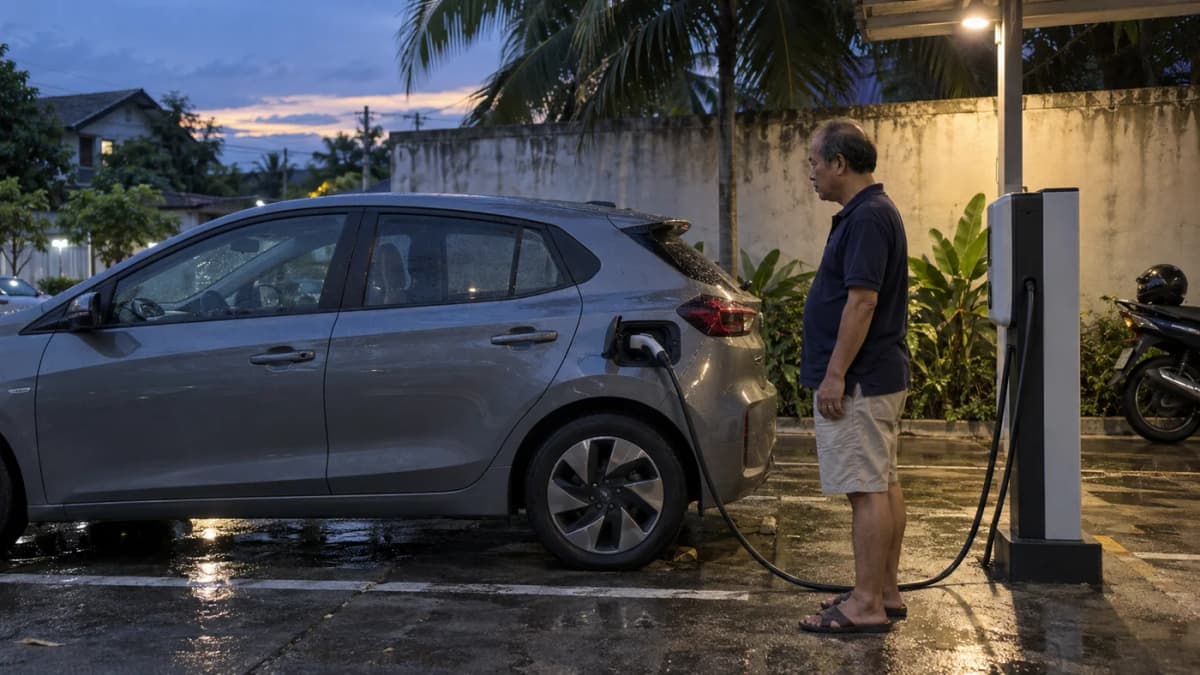
An electric car can fit life in Hua Hin quite well. Whether it fits your life depends on where you park, how you pay for charging and what happens when your usual charger is unavailable. Start there, before comparing showroom range figures.
This guide is for residents, renters and visitors planning an EV trip. It is not a live directory of Hua Hin chargers: locations, access rules and prices need checking in the operator's current app. A map pin alone does not prove you can charge when you arrive.
Start with the parking space, not the car
Write down where the vehicle spends most nights. A private driveway, an allocated condo bay and a hotel car park are three different arrangements. In each case, identify who controls the space and who can authorise electrical work.
For a rental, get the owner's written agreement before ordering a wall charger. For a condo, ask the management office about parking allocation, electrical capacity, installation approval and billing. Owning an apartment does not mean you can modify shared wiring or reserve a shared charging bay indefinitely.
Ask to see a working charger, not just a promise in a sales brochure. Find out who can use it, whether reservations are possible, what happens when several residents need it and whether there are parking or idle charges. The practical checks in our property climate-risk guide also matter: a charging space needs safe access in bad weather.
Check a public charger in three passes
1. Can your car use it?
The PEA charging information page lists AC Type 2, DC CHAdeMO and CCS Combo II equipment across its network. That does not mean every station has every connector. Match the actual connector and charging method to your exact vehicle, especially with an older car or an import. Do not improvise an adapter.
A high number on the charger is its available power rating, not a promise your battery will receive that power throughout the session. The US Department of Energy's charging explanation describes the role of battery capacity, charge level, vehicle charging capability and equipment. Those physical factors apply here too; its US plug diagrams and electrical rules are not a Thai installation guide.
2. Can you enter and pay?
Check opening hours, car-park access, guest restrictions and the operator's payment process. PEA describes payment through its VOLTA app. Set up the relevant app before the journey and confirm that it accepts your particular payment method. Do not assume a foreign card, cash or another network's balance will work.
For a hotel, ask whether “EV charging available” means a working socket or charger, whether a cable is supplied, and whether you must book the bay. Get the answer for your dates. A charger behind a closed barrier is not a useful backup.
3. What will this session cost?
Read the current tariff and any parking, minimum-session or idle conditions before starting. PEA's information page contains an older tariff table alongside a newer notice effective from May 2026. Check the latest applicable notice and the app's session terms rather than copying an old table. One operator's tariff is not a price for every charger in Hua Hin.
Save the receipt and note the energy billed. Kilowatt-hours, written kWh, measure energy; kilowatts, kW, describe power. Compare the actual total paid, including other charges, with your distance driven. Keep that separate from finance, insurance, tyres and installation costs.
Plan the return journey before leaving home
For a trip between Bangkok and Hua Hin, choose a primary stop and a genuinely usable alternative before setting off. Check both for the correct connector, access and payment. Recheck nearer departure: an old review or a location saved months ago cannot establish today's availability.
Allow for queuing, a failed session, traffic and the remaining journey after arrival. Use the vehicle's own trip estimate and manufacturer guidance, then leave a sensible margin for changed conditions. There is no single battery percentage that suits every car, route and driver.
Keep operator support details available without relying entirely on a live data connection. If a session fails, contact support; repeated error messages are not an invitation to force a connector. Move to your alternative while you still have enough range to do so.
Charging logistics do not replace the basics of driving safely in Thailand. Do not read an app while driving, stop in a traffic lane to examine a charger map, or follow another vehicle through floodwater.
Home charging needs a site assessment
PEA VOLTA's home-installation guidance covers the meter, simultaneous household demand, wiring and a dedicated protected circuit. Have a qualified installer assess the actual property. A charger bundled with a car does not establish that all necessary building work is included.
Request an itemised quote covering the equipment, cable route, protective devices, any required utility changes, testing and after-sales support. Clarify who handles approvals. Ask how the design deals with rain exposure and the parking layout. Do not choose a circuit size or replace a breaker yourself using a number from an article.
Do you want to charge from rooftop solar? Compare when the car is home with when the roof produces energy. Overnight parking does not automatically align with daytime generation. Our green-energy guide explains the difference between using solar, selling surplus and buying an energy investment.
Rain is not the same as flooding
PEA VOLTA's rain-safety guidance distinguishes normal rain with suitable, intact equipment from flooded charger bases, damaged connectors and severe-weather warnings. Follow the vehicle and operator instructions. Avoid damaged equipment, connectors that have fallen into water and any attempt to bypass an error.
Do not enter floodwater to reach a charger or assume a battery's water-resistance rating makes the car safe to drive through it. If the vehicle or equipment has been flooded, keep away from unsafe electrical components and contact the manufacturer, operator or a qualified recovery service before attempting to use it.
Before buying: one ordinary-week test
- List your regular journeys, parking arrangements and occasional long trips.
- Confirm one dependable charging arrangement and an independent backup.
- Test app registration, payment and access before relying on them.
- Obtain a site-specific installation quote if home charging is part of the plan.
- Check servicing, battery-warranty terms and the exact insurance cover offered.
Use our motor-insurance checklist to ask about your particular vehicle and use. For a second-hand EV, add an independent inspection and the questions in our flood-damaged car guide. A clean interior or a working screen does not establish battery condition.
The useful question is not whether Hua Hin is “EV-ready” in the abstract. It is whether your car, parking, payment and weekly routine work together without depending on one perfect charging stop.
Frequently asked questions
Can I use an EV in Hua Hin without a home charger?
Possibly, but first verify public or accommodation charging that fits your actual routine, plus a usable backup. Check connector compatibility, access, payment and the time you can leave the car.
Does a fast charger's advertised power determine my charging time?
No. The vehicle's charging capability, battery capacity and charge level also matter. Treat an advertised power rating as an equipment specification, not a guaranteed session time.
Can I install a charger in a rented home or condo?
Do not assume permission. Obtain the relevant owner's or building management's agreement and a qualified site assessment covering electrical capacity, safe installation and billing before committing.
Ananas Premium
Unlock Hua Hin's Best Property & Investment Insights
Enjoying our free content? Get unlimited access to premium articles, local market intelligence, member briefings, and exclusive checklists for ฿290 / $9.95 per month.
Sources & Verification
- Network connector types, VOLTA app payment and tariff notices; no live station availability or universal price asserted. — PEA — EV charging informationSource
- General charging-time variables only; US connectors and circuit rules not presented as Thai requirements. — US Department of Energy — charging stationsSource
- 7 May 2026 site-load, wiring and dedicated protected-circuit guidance; no DIY sizing recommendation. — PEA VOLTA — home charger preparationSource
- 20 August 2026 distinction between suitable equipment in normal rain and damaged/flooded equipment; no flood-driving permission. — PEA VOLTA — rain-safety guidanceSource