Weekly Signal

Don't miss the next big opportunity in Thailand. Get our weekly digest.

No spam. Unsubscribe anytime.

Explore

  • Guides
  • Videos
  • Real Estate
  • Business
  • Economics
  • Tech
  • Shopping
  • Life
  • Travel

Legal

  • Privacy Policy (PDPA)
  • Terms of Service
  • Cookie Policy
  • Advertising Disclosure
  • Content Disclaimer
  • Copyright & IP Notice

Ananas Insider

  • About Us
  • Contact Us
  • Become Our Author
  • Advertise With Us
  • About Ananas Premium

Social

Follow us for daily updates from Hua Hin.

Β© 2026 Ananas Insider

About UsAnanas PremiumContact
🍍 Made by AnanasIT.com
Ananas InsiderNot News
Join Ananas Premium
Saved posts
LoginRegister
GuidesVideosReal EstateBusinessEconomicsTechShoppingLifeTravelPremiumFlightsInsuranceCar Rental
THB/USD36.4836.48
THB/EUR39.7239.72
BTC/THB2,461,8002,461,800
Gold/THB83,42083,420
Hua Hin+32Β°C, Mainly clear+32Β°C, Mainly clear
AQI48 Β· Good48 Β· Good
Guides

Driving in Thailand: The Unwritten Rules Nobody Teaches You

Driving in Thailand isn't dangerous if you know the unwritten rules. Motorbikes, traffic lights, rain, parking β€” everything expats need to know to stay safe on Thai roads.

Ananas Editorial
Ananas Editorial

Editorial Team

Jun 24, 2026 Β· 13 min read

Status

Driving in Thailand: The Unwritten Rules Nobody Teaches You

Executive Summary

  • Thai traffic follows predictable patterns β€” drive with the flow, not against it.
  • Motorbikes are the biggest hazard: check left mirrors, watch for right-turn cuts.
  • Traffic lights are guidelines β€” but traffic cameras enforce them strictly (1,000 baht fines).
  • Rain makes roads treacherous in the first 30 minutes β€” pull over and wait.
  • A 500-baht helmet and proper insurance are non-negotiable for motorbike riders.

I Rented a Scooter in Hua Hin and Learned More About Thai Traffic Than Any Guidebook Could Teach

The rental shop owner handed me the keys to a Honda Click with a smile and a wave. "Be careful," he said β€” the only English phrase he offered. I nodded, started the engine, and pulled onto the road. Within thirty seconds, a motorbike appeared from my left blind spot, a pickup truck cut across my lane without signaling, and a stray dog wandered into the intersection ahead. Welcome to driving in Thailand. Three days and one near-miss later, I realized that everything I thought I knew about traffic was wrong. Thai roads operate on a different logic β€” one that's not taught in any driving school, not explained in any guidebook, and not obvious until you've experienced it firsthand. This is the guide I wish someone had written for me before I got behind the wheel.

The Fundamental Rule: Thai Traffic Is Predictably Unpredictable

Here's the paradox that confuses every newcomer: Thai traffic looks chaotic, but it actually follows a pattern. The pattern just isn't the one you learned. In Western countries, traffic rules are strict β€” everyone follows the same script. In Thailand, the rules are guidelines, and the real system is based on awareness and anticipation. Cars don't stop at red lights (unless a camera is watching). Motorbikes don't use turn signals. Pedestrians cross six-lane highways without hesitation. And somehow, despite all this, the system works β€” because everyone is paying attention to everyone else.

The key insight is this: in Thailand, you don't follow rules β€” you follow flow. Traffic moves like water, finding the path of least resistance. If you try to impose Western driving logic, you'll be frustrated and unsafe. If you learn to read the flow, you'll navigate like a local within a week. The adjustment isn't about being a better driver β€” it's about being a more aware one.

Speed: The Number That Actually Matters

Speed limits in Thailand exist on signs, but they're more like suggestions. The posted limit might say 80 km/h, but the actual traffic flow is usually 60-70. On highways, 100 km/h is common despite 90 km/h limits. In town, 40-60 km/h is realistic. The only exception is speed cameras β€” and there are a lot of them now. A fine for exceeding the limit by 1-15 km/h is 400 baht. Exceeding by 16-40 km/h costs 800 baht. Over 40 km/h over the limit? 1,000 baht and possible license suspension. The cameras don't negotiate, and they're often hidden in places you don't expect.

The real danger isn't the speed itself β€” it's the speed differential. When everyone is doing 60 and you're doing 40, you're a hazard. When everyone is doing 60 and you're doing 90, you're a hazard. The safest speed is the flow speed β€” whatever the cars around you are doing. Match the traffic, and you'll be fine.

Motorbikes: The Species You Need to Understand

Close-up of motorbike handlebars on a quiet Thai road with palm trees and golden afternoon light, showing the perspective of riding in Thailand

Motorbikes are the dominant species on Thai roads. There are more motorbikes than cars, and they don't follow car rules. They ride on the shoulder. They pass on the left. They weave between lanes at highway speed. They run red lights. They carry entire families (including children standing on the foot pegs). And they appear from directions you didn't know existed.

The survival strategy is simple: assume every motorbike will do something unexpected. Before you change lanes, check your left mirror β€” that's where they overtake. Before you turn right, check behind you β€” they cut inside on right turns. Before you reverse, get out and look β€” they hide in blind spots like ninjas. The motorbike isn't the enemy β€” the surprise is. Eliminate surprise, and motorbikes become manageable.

One specific rule that saves lives: at intersections, watch for motorbikes coming from the right at high speed. They have a Thai "right of way" culture where the vehicle coming from the right often proceeds first. It's not in any traffic law, but it's how the system works. Slow down at intersections, look right first, and you'll avoid the most common type of collision.

The Traffic Light: A Suggestion, Not a Command

Traffic lights in Thailand are more like polite suggestions than mandatory commands. A red light means "slow down and look around" β€” not necessarily "stop completely." In rural areas, drivers routinely roll through red lights at empty intersections. In cities, the behavior is more cautious, but you'll still see cars creeping forward on red. The green light means "go, but check anyway" β€” because cross-traffic might not have stopped on their red.

The exception is traffic cameras. Thailand has installed hundreds of them in recent years, and they enforce red lights and speed limits with zero tolerance. The cameras are often hidden β€” in trees, on poles, or in unmarked positions. A red-light camera fine is 1,000 baht. A speed camera fine varies but typically runs 500-2,000 baht. The cameras are automated, so there's no negotiation and no warning. Drive through a red light in front of a camera, and you'll get a ticket mailed to the rental company β€” plus a surcharge from the rental company for the hassle.

The Rain Factor: When Roads Become Dangerous

Rainy tropical Thai street at night with warm street lights reflecting in puddles and motorbike headlights in the distance, atmospheric monsoon scene

Thailand's rainy season (May-October) transforms driving from manageable to genuinely dangerous. The biggest risk isn't the rain itself β€” it's the transition. The first 30 minutes after rain starts are the most treacherous. Road surfaces that were dry and grippy suddenly become slick with a combination of water and oil that rises from the asphalt. Traction drops dramatically, stopping distances double, and motorcycle riders are especially vulnerable. If it starts raining, pull over and wait. The worst passes quickly.

At night in the rain, driving becomes a different activity entirely. Visibility drops to near zero in heavy rain. Road markings disappear under water. Potholes become invisible ponds. Motorbike taillights blur into red smears. The smartest thing you can do is wait at a 7-Eleven until the worst passes β€” which usually takes 20-30 minutes. Thai downpours are intense but short. The sun comes out, the roads dry quickly, and everything returns to normal. Patience beats heroics every time.

Seasonal flooding is another concern. During heavy monsoon periods, certain roads in Hua Hin flood regularly β€” particularly the low-lying areas near the beach road and the sois (side streets) that drain poorly. If you see standing water across the road, don't drive through it. The depth is deceptive, and your engine can flood in seconds. Find an alternate route or wait for the water to recede.

The Roundabout: Where Rules Go to Die

Thai roundabouts operate on a principle that might be called "mutual confidence." The official rule is yield to the right, but in practice, it's more like "whoever moves first, goes first." Large vehicles have de facto priority simply because nobody wants to argue with a truck. The safest approach is to slow down significantly as you approach, look in all directions, and enter when you're absolutely certain there's a clear gap. Don't trust that other drivers will yield to you β€” they probably won't. The roundabout is the one place where Thai traffic's "flow" logic breaks down, and caution becomes the only reliable strategy.

Parking in Hua Hin: The Hidden Challenge

Driving in Hua Hin isn't hard. Finding parking is. The main beach road has almost zero parking, and the popular areas fill up fast. Here's what works:

Morning strategy: Arrive at restaurants and attractions before 10am. Parking is easy at that hour. After 11am, the popular spots are full. After 2pm, you're circling.

7-Eleven parking: This is the unspoken hack of Thai driving. Most 7-Elevens have parking lots, and nobody questions you using it for 15-20 minutes while you run inside for supplies. It's not technically "visitor parking," but it works everywhere in Thailand, and the staff are used to it.

Sponsored

Sponsored placement

Sponsored placement

Temple parking: Wat temples almost always have free parking, even if you're not visiting. If you're near a temple, pull in, park, and walk to your destination. The temple won't mind β€” parking is considered a public service in Thai culture.

Night parking: After dark, park near your accommodation and walk. Driving at night in unfamiliar areas is risky, and parking is easier to find near where you're staying. Most guesthouses and hotels have parking for guests.

The golden rule: Never park in front of someone's shop or house. Even if there's no sign, no yellow line, and no indication that the space is reserved β€” it belongs to the business owner. You'll get honked at, glared at, or find your scooter moved. Thai business owners are territorial about their front spaces, and they're within their rights. Just don't do it.

The Honk Language: What Every Beep Means

Honking in Thailand isn't aggression β€” it's communication. But the vocabulary is different from what you're used to. A short, light beep (less than half a second) means "I'm here, be aware." It's the equivalent of a gentle tap on the shoulder. You'll hear this when motorbikes pass you, when cars approach from behind, and when pedestrians want to cross. It's polite, not hostile.

A longer honk (1-2 seconds) means "I'm passing, watch out." This is the sound of a motorbike overtaking you on a curve, or a pickup truck moving into your lane. It's informational, not angry. A sustained, angry honk means "you're doing something dangerous β€” stop." This is rare in Thailand. When you hear it, you've probably done something wrong, and you should correct immediately.

The friendly beep is an important social tool. When you're about to pass a slow-moving vehicle, a short beep before you pass is considered polite β€” you're letting them know you're coming. Without it, you might startle them. With it, you're following Thai driving etiquette. It's a small thing, but it makes a real difference in how other drivers perceive you.

The Helmet Question: Legal, Practical, and Life-Saving

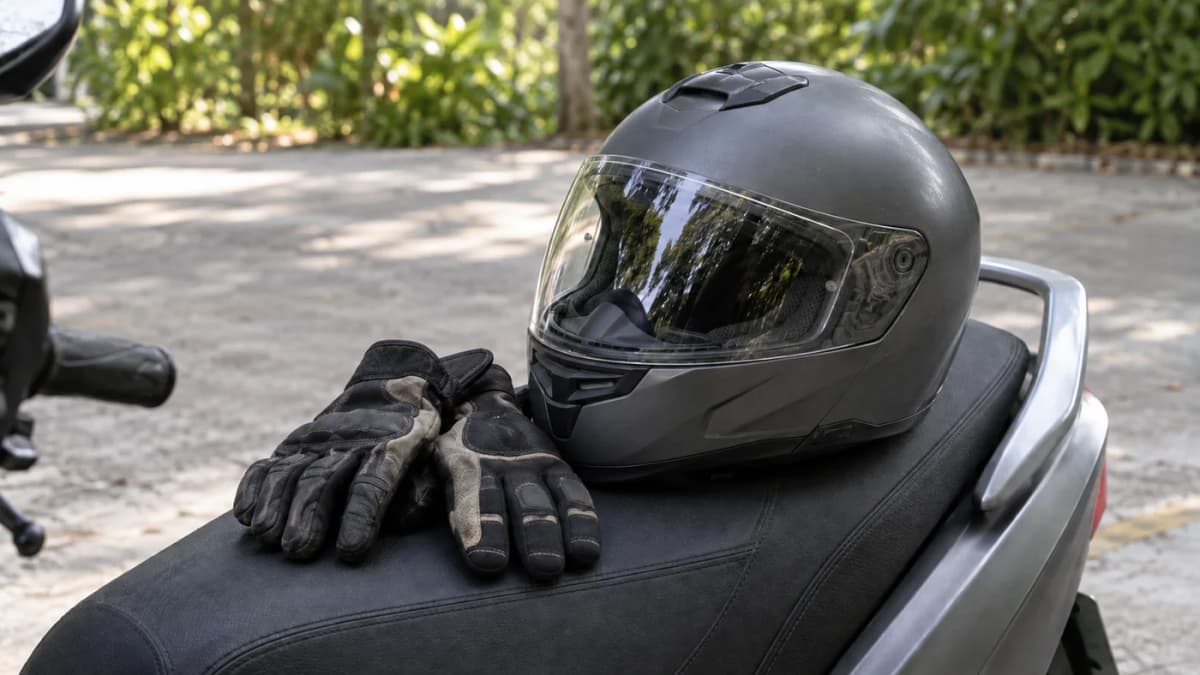
Wearing a helmet on a motorbike is legally required in Thailand. The fine for not wearing one is 500 baht. But the real reason to wear one is simple: motorbike accidents are the leading cause of injury and death for tourists in Thailand. A 500-baht helmet from 7-Eleven isn't a fashion statement β€” it's a potentially life-saving piece of equipment.

The helmet doesn't need to be expensive. It needs to fit correctly (snug, not loose), be fastened (straps under your chin), and meet basic safety standards. The cheap helmets sold at 7-Elevens and tourist shops are better than nothing. If you want better protection, motorcycle shops sell proper helmets for 1,000-3,000 baht. The investment is trivial compared to the risk.

One important note: passengers also need helmets. It's illegal to ride with a passenger who isn't wearing one, and the fine applies to both rider and passenger. Many rental shops only provide one helmet β€” ask for a second if you're riding with someone.

International Driving Permits: Do You Need One?

Technically, yes. Thailand requires an International Driving Permit (IDP) for foreign drivers. In practice, it's rarely checked by police β€” especially for motorbike rentals. But there's a catch: if you're in an accident without an IDP, your insurance may not cover you. Most travel insurance policies require a valid license (either local or international) to process claims.

The practical advice: get an IDP before you leave your home country. It costs $20-30 and takes a week to process. It's valid for one year and covers both car and motorbike driving. If you're in Thailand long-term, you can convert your IDP to a Thai driving license at the Department of Land Transport β€” which is a good idea anyway, since it's required for any vehicle registration or insurance claim.

The Insurance Reality Check

Most motorbike rental insurance in Thailand is basic at best. It covers theft (with a high deductible) and sometimes damage β€” but it usually excludes: riding without a helmet, riding without a valid license, damage from accidents where you're at fault, and damage from off-road riding. Read the fine print carefully before you sign.

For comprehensive coverage, consider a separate travel insurance policy that explicitly covers motorbike riding. This costs more but provides real protection. Medical costs in Thailand for foreigners can be high β€” a hospital stay can run 50,000-200,000 baht without insurance. The peace of mind is worth the investment.

One tip that saves headaches: take photos of the motorbike from every angle before you ride it. Document any existing scratches, dents, or damage. This protects you from being charged for damage you didn't cause when you return the bike.

Navigation: Google Maps Is Your Best Friend

Google Maps works excellently in Thailand. It shows real-time traffic, suggests alternate routes during congestion, and accurately pinpoints locations including small restaurants and shops that don't appear on other mapping services. The key feature is the traffic layer β€” it shows congestion in red/yellow/green, which helps you avoid the worst traffic.

For navigation, download the offline maps for the area you'll be traveling in before you leave WiFi. Thai mobile data is cheap (50-100 baht for a week of unlimited data at 7-Eleven), but having offline maps as backup is smart. Also, set your navigation to avoid tollways unless you want to pay β€” Thai tollways cost 20-50 baht per section, and they add up quickly.

One practical note: Google Maps' estimated arrival times are usually accurate in Thailand. If it says 25 minutes, expect 25-30 minutes. The traffic patterns are consistent enough that the estimates are reliable.

The Common Accidents and How to Avoid Them

Understanding the most common accident types helps you avoid them:

Motorbike rear-end collisions: The most common accident type. A motorbike rear-ends a car that slowed down unexpectedly. Prevention: brake gently and early, signal your intentions, and keep an eye on your mirrors.

Intersection collisions: Cars turning across traffic, motorbikes running red lights, pedestrians crossing unexpectedly. Prevention: slow down at every intersection, look both ways, and don't assume right-of-way.

Lane-change accidents: Cars changing lanes without checking blind spots. Prevention: signal early, check mirrors, and check again. The left side is especially dangerous because motorbikes pass there.

Rain-related accidents: Slipping on wet roads, hydroplaning, reduced visibility. Prevention: slow down, increase following distance, and pull over in heavy rain.

The pattern in all of these is the same: the accident happens because someone didn't pay attention or made an assumption. Defensive driving β€” assuming the worst and planning for it β€” prevents almost all of them.

The Bottom Line: Respect the System

Thai traffic isn't chaos β€” it's a different system. The unwritten rules are simple: drive slowly, stay aware, assume the unexpected, and respect the flow. The drivers around you aren't trying to hit you β€” they're navigating the same system you are. When you learn to read the flow, driving in Thailand becomes not just safe, but genuinely enjoyable. The freedom of exploring Hua Hin's back roads, hidden beaches, and mountain viewpoints on your own schedule is worth the learning curve. Just give yourself time to learn the rules that nobody teaches β€” and drive like your life depends on it. Because it does.

Ananas Premium

Unlock Hua Hin's Best Property & Investment Insights

Enjoying our free content? Get unlimited access to premium articles, local market intelligence, member briefings, and exclusive checklists for just $15/month.

Join PremiumLearn More

Continue reading

how to get a Thai driving license

Legal requirements for driving in Thailand

cost of living guide

Including transport costs in your budget

Related Articles

  • Guides

    The Expat's Guide to Thai Tax: What You Owe and What You Don't

  • Video Posts

    I Became a Buddhist Monk | The Truth About Meditation, Ego & the Universe

  • Real Estate

    Hua Hin Neighborhoods Ranked: Where to Live, Invest, and Avoid

  • Business

    Starting a Digital Nomad Business in Thailand: Legal Structure and Tax

  • Economics

    Strong Baht, Shrinking Budget: How Currency Changes Affect Expats in 2026

  • Tech

    AI Tools for Expats in Thailand: Banking, Translation, Legal, Daily Life

  • Shop

    Best Laptops for Digital Nomads 2026: 5 Tested Models Compared

  • Ananas Premium

    Premium

    Thailand Tax Optimization Guide for Remote Workers: Legal Strategies to Minimize Your Tax Burden

  • Life

    Pensions in the EU Compared: Where Retirees Get the Most Value in 2026

  • Travel

    Hua Hin Beaches Ranked: From Quiet Coves to Surf Spots (2026)

Sponsored

Trending Topics 24H

LifePensionsComparedShopBestLaptopsEconomicsStrong

Recommended Reading

  • LTR Visa Application Playbook: Every Document, Every Step, Every Trap β€” With Real Application Templates

    Ananas Premium

    LTR Visa Application Playbook: Every Document, Every Step, Every Trap β€” With Real Application Templates

  • How to Register a Company in Thailand as a Foreigner: BOI vs Standard Route (2026)

    Business

    How to Register a Company in Thailand as a Foreigner: BOI vs Standard Route (2026)

  • Bangkok to Hua Hin: Best Transport Options Compared

    Travel

    Bangkok to Hua Hin: Best Transport Options Compared

  • Hua Hin Neighborhoods Ranked: Where to Live, Invest, and Avoid

    Real Estate

    Hua Hin Neighborhoods Ranked: Where to Live, Invest, and Avoid

  • Hua Hin Property Investment Report: Neighborhood-by-Neighborhood Analysis with Price Data

    Ananas Premium

    Hua Hin Property Investment Report: Neighborhood-by-Neighborhood Analysis with Price Data

  • Southeast Asia's Fintech Landscape: The Shift to Cashless Ecosystems

    Tech

    Southeast Asia's Fintech Landscape: The Shift to Cashless Ecosystems

  • Thailand vs Singapore vs Malaysia: Where to Base Your Business in SE Asia

    Economics

    Thailand vs Singapore vs Malaysia: Where to Base Your Business in SE Asia

  • Hua Hin Food Guide: Where Locals Actually Eat (2026)

    Travel

    Hua Hin Food Guide: Where Locals Actually Eat (2026)

  • How to Open a Restaurant in Hua Hin: Licenses, Costs, and Reality Check

    Business

    How to Open a Restaurant in Hua Hin: Licenses, Costs, and Reality Check

  • The Ultimate Thailand Visa Decision Matrix (2026): LTR, Elite, DTV, Retirement, SMART β€” Which One Actually Fits Your Situation

    Ananas Premium

    The Ultimate Thailand Visa Decision Matrix (2026): LTR, Elite, DTV, Retirement, SMART β€” Which One Actually Fits Your Situation

Recommended Videos

I Became a Buddhist Monk | The Truth About Meditation, Ego & the Universe

Videos

I Became a Buddhist Monk | The Truth About Meditation, Ego & the Universe

Former NASA Employee John Dankowski Reveals TRUTH About NASA, Space & Aliens

Videos

Former NASA Employee John Dankowski Reveals TRUTH About NASA, Space & Aliens

Palliative Care: It’s Not About Dying, It’s About Living Fully

Videos

Palliative Care: It’s Not About Dying, It’s About Living Fully

Recommended for you

More stories to read next

Remote Work Visas Southeast Asia 2026: Thailand vs Malaysia vs Vietnam

Ananas Premium

Remote Work Visas Southeast Asia 2026: Thailand vs Malaysia vs Vietnam

A data-driven comparison of remote work visas across Thailand, Malaysia, and Vietnam. Real income thresholds, tax exposure, and hidden costs every digital nomad should know before relocating to Southeast Asia in 2026.

Hua Hin Food Guide: Where Locals Actually Eat (2026)

Travel

Hua Hin Food Guide: Where Locals Actually Eat (2026)

The best restaurants in Hua Hin aren't on Google Maps. A practical guide to eating like a local β€” markets, shophouses, and hidden gems that cost 60-70% less.

How to Buy a Condo in Thailand as a Foreigner: Complete Legal Guide

Real Estate

How to Buy a Condo in Thailand as a Foreigner: Complete Legal Guide

Condo ownership is the only way foreigners get true freehold in Thailand β€” but the 49% quota trap catches half of all buyers.

Hua Hin's Boutique Hospitality Boom: Small Hotels Changing the Local Economy

Business

Hua Hin's Boutique Hospitality Boom: Small Hotels Changing the Local Economy

Hua Hin's boutique hospitality sector is booming in 2026. Small design-led hotels are outperforming mass-market chains, creating local jobs, and transforming the coastal town's economy from package tourism to experiential leisure.

How to Open a Restaurant in Hua Hin: Licenses, Costs, and Reality Check

Business

How to Open a Restaurant in Hua Hin: Licenses, Costs, and Reality Check

Opening a restaurant in Hua Hin requires 7 licenses, 3 months of paperwork, and THB 500K before you serve your first customer. Here is the complete guide.

Thailand's New Visa Rules 2025-2026: Every Change Explained

Guides

Thailand's New Visa Rules 2025-2026: Every Change Explained

Thailand's immigration system was rebuilt in 2025-2026. Visa-free stays cut to 30 days, land-border runs capped at 2/year, and digital enforcement is now real. Every change explained.

The €100,000 Question: Where Europeans Keep the Most After Tax in 2026

Economics

The €100,000 Question: Where Europeans Keep the Most After Tax in 2026

A €100,000 salary sounds generous β€” until you see what the taxman takes. Across Europe, the difference between gross and net pay can vary by more than €36,000 for the same income. Here is the full breakdown.

LTR Visa Application Playbook: Every Document, Every Step, Every Trap β€” With Real Application TemplatesPremium

Ananas Premium

LTR Visa Application Playbook: Every Document, Every Step, Every Trap β€” With Real Application Templates

The BOI says 20 working days. Reality is 3-4 months. This playbook maps every step, every document, and every pitfall to get you through in 12 weeks.

Partner Spotlight

Elder Blossom Resort

A peaceful Hua Hin senior living community with private accommodation, gardens, wellness activities, and professional care support.

Ananas Video Studio

Hua Hin's professional podcast and video production studio for creators, real estate, hospitality, and business content.

Hua Hin Events

A local events platform for classical music, jazz, theatre, cabaret, and cultural performances around Hua Hin.

Ananas IT

Website, app, AI automation, hosting, and domain services for businesses that need reliable digital infrastructure.