Running a Small Hotel in Hua Hin: Guests, Costs and Rules
Plan a small Hua Hin stay around reliable service, lawful operation, maintenance and realistic break-even costs, not a promised hospitality boom.

Editors
Jun 15, 2026 · 6 min read
Status
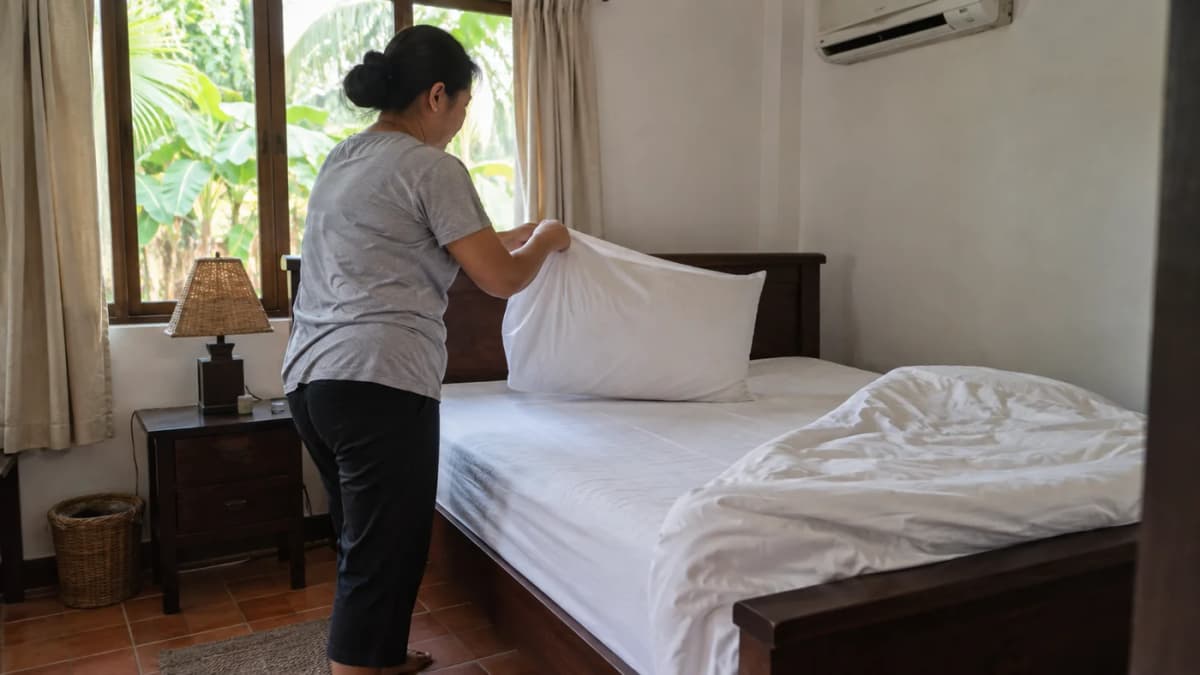
A small hotel can offer something a large resort struggles to copy: a host who remembers the guest, a room that feels cared for, and useful advice about the surrounding area. None of that depends on calling the property boutique.
For someone considering a Hua Hin hospitality business, the real question is whether those advantages can be delivered reliably at a sustainable cost. This guide is about planning and operating a small stay, not a claim that local hotels have a guaranteed occupancy rate or that a measured boutique boom is underway.
Define the guest before designing the room
Choose a guest need you can explain without a vague nationality label. A family may need safe sleeping arrangements and a clear food policy. Someone working remotely may care about reliable internet, desk lighting and daytime quiet. An older guest may need step-free access and an easy route to meals.
Walk the guest's first hour: finding the entrance, parking or arriving without a car, checking in, carrying luggage and getting water or food. If that journey is awkward, a stylish lobby does not solve the problem.
Test the address using our Hua Hin area-screening guide. Marketing the property as close to town or the beach is less useful than explaining the actual route and its limitations.
Small does not mean automatically exempt
Check the operating route before buying, leasing or refurbishing. The Hotel Act provides the licensing framework. Permission to own or occupy a building is not permission to run a hotel in it.
The 2023 ministerial regulation provides a non-hotel accommodation route for premises with no more than eight rooms and thirty guests, subject to official inspection and written acknowledgement. It is not a blanket exemption obtained by staying below a room count.
Ask the local registrar which route applies and what building, safety and notification requirements must be met. Check current rules and any applicable changes before starting. Do not split one operation into multiple labels and assume that creates an exemption.
For a foreign investor, business permissions, genuine company ownership and permission to perform work need separate review. Booking-platform acceptance is not legal clearance. Obtain independent advice before committing to a lease whose permitted use is only residential.
A good room begins with maintenance
Check the parts guests discover when the photographer has left: cooling, hot water, drainage, locks, mattress condition, sockets, mobile signal and internet. Inspect for leaks and odours rather than masking them. Ask qualified contractors to assess electrical, structural and fire-safety issues.
Plan cleaning access and linen storage. Separate clean supplies from used linen and maintenance chemicals. Make sure staff can report a defect without guessing whether it is serious enough to mention.
Coastal exposure and tropical rain should be included in the inspection and maintenance plan, not treated as a surprise expense later. Our property climate-risk guide helps frame the site-specific questions.
Sell what you can actually deliver
Use accurate photographs of the real property in the accommodation's own listing. Describe stairs, parking, room size, noise, breakfast hours and reception availability honestly. A pool shared with another business or a beach reached across a busy road needs an explanation.
Write practical arrival instructions and send them in a format the guest can open on a phone. Include the contact for a delayed arrival and the limits of any self-check-in arrangement. Collect only the information needed for lawful administration and protect it.
Ask the relevant authorities about guest-registration and reporting obligations. Build them into the check-in process rather than leaving them to whichever staff member happens to be on duty.
Calculate the money that reaches the business
Separate the advertised room rate from receipts after platform fees, payment costs, discounts and refunds. Then deduct the expenses associated with occupied rooms and the fixed costs that continue when rooms are empty.
Here is a deliberately invented example, not a Hua Hin tariff or forecast. Suppose a sold room-night leaves 1,300 baht after sales deductions. Cleaning, laundry, breakfast and other variable costs total 300, leaving a contribution of 1,000 baht towards fixed costs.
If monthly fixed operating costs are 180,000 baht, the business needs 180 sold room-nights to cover them. With ten rooms available for thirty days, that is 60% of the 300 possible room-nights. This ten-room example is not within the regulation's eight-room route and must not be used as an exemption example.
The calculation excludes financing, income tax, major capital works and the owner's return unless explicitly included in your fixed-cost figure. A room closed for repairs reduces available inventory. Lower prices and higher laundry or staffing costs change the break-even point.
Use actual quotes and evidence of demand before investing. Do not treat a busy holiday weekend as the average month. Keep cash for ordinary quiet periods and repairs rather than relying on a promised annual occupancy figure.
Local purchasing can be good business without becoming a slogan
Compare suppliers on reliability, quality, delivery, invoicing and payment terms. A nearby laundry or food supplier may make problems easier to resolve, but get clear arrangements and a backup. Do not promise a quantified local-economic impact without records.
Train staff to recommend places they can describe accurately, with opening details checked and no hidden promise that a guest will receive special treatment. Keep paid partnerships transparent. Useful advice is a service, not a reason to funnel every visitor to a commission partner.
If you intend to add a café or restaurant, use our restaurant-opening guide. Food permissions, hygiene, staffing and costs are an additional operation, not an automatic feature of a hotel approval.
Make the daily job repeatable
- One room-readiness checklist covers cleaning, maintenance and essentials.
- One shift record notes arrivals, departures, incidents and unfinished work.
- One person owns urgent maintenance and knows the backup contacts.
- Rates, deposits, cancellations and refund terms are clear before booking.
- Reconciliations distinguish guest payments, platform settlements and refunds.
- Tax and compliance deadlines have named owners and saved evidence.
Our payment-method guide helps distinguish customer payment from money reaching your account. The property-tax overview separates holding costs from income and transaction questions; hospitality tax treatment needs its own accountant's review.
A small property's advantage is not endless personal attention from an exhausted owner. It is a manageable promise delivered consistently. If the business only works when you ignore your labour, skip repairs and assume every room sells, simplify the plan before opening.
Questions operators ask
Does having fewer than eight rooms automatically remove hotel requirements?
No. The 2023 non-hotel route also has a guest limit and requires official inspection and written acknowledgement. Confirm the route and other applicable requirements with the local registrar.
Are the break-even figures actual Hua Hin hotel data?
No. They are invented teaching assumptions. Replace them with actual quotes, lawful operating capacity and documented revenue evidence before making a business decision.
Does buying a property give me permission to operate a hotel?
No. Property rights, hotel or non-hotel permissions, building requirements and foreign business or work permissions are separate questions.
Ananas Premium
Unlock Hua Hin's Best Property & Investment Insights
Enjoying our free content? Get unlimited access to premium articles, local market intelligence, member briefings, and exclusive checklists for ฿290 / $9.95 per month.
Sources & Verification