

USD/THBUnavailable
EUR/THBUnavailable
BTC/THBUnavailable
XAUt/THBUnavailable
Hua HinWeather unavailable
AQIUnavailable

Media Library

Videos

All video posts, market updates, business briefings, and travel guides published in the Ananas Insider editorial stream.

Nicole Petschek: Mindset, EFT and Claims Worth Checking
Video Posts

Nicole Petschek: Mindset, EFT and Claims Worth Checking

Changing a habit often begins with noticing a story you repeat to yourself. That can be useful without promising that thoughts will manifest anything or heal an injury. In this Tell Them Podcast episode, Nicole Petschek discusses subconscio

Dmitry · Ananas CEO

Bön, Dzogchen and Meditation: Tradition Versus Evidence

Video Posts

Bön, Dzogchen and Meditation: Tradition Versus Evidence

A conversation about Bön and Dzogchen can open a window into a tradition unfamiliar to many viewers. It should not require believing that scientists have proved supernatural powers. This Tell Them Podcast episode explores Tibetan contemplative practice. For viewers in Thailand, it is also important not to mistake these teachings for a description of Thai monastery practice. The viewing notes below separate religious teachings, personal accounts and findings that can actually be checked. Keep the tradition in its own context Bön and Dzogchen are not interchangeable labels for every form of meditation. If you want to study a teaching, begin with how its community explains it, who teaches it and what preparation is expected. Shenten Dargye Ling's biography of Khenpo Gelek Jinpa Rinpoche provides a primary community source for the teacher's background. That is a different kind of source from a laboratory paper. A religious community can describe its lineage and understanding of a practice. It cannot, merely by describing it, establish a medical effect. A researcher can measure a particular outcome without settling the meaning of the tradition. For comparison, our Thai monastery episode concerns a different setting. Do not take a practice discussed in one conversation as standard instruction for another community. What a study of g-tummo actually measured A 2013 PLOS ONE study of g-tummo investigated temperature changes during specific practices involving breathing, muscle tension and visualisation. It reported increased armpit temperature in trained practitioners under the study conditions. This was a small, specialised study, not proof that any viewer can control body temperature safely or that a monk demonstrated unrestricted “mind control.” The measurement method, participants and conditions matter. “Researchers observed a temperature change” is not the same claim as “meditation makes cold exposure harmless.” The article does not offer instructions for forceful breathing, breath-holding or exposure to cold. Reports about death need particularly careful wording The episode also raises contemplative ideas around death. A published EEG investigation of postmortem tukdam did not detect the EEG activity it was looking for in the recorded postmortem cases. Its observations and timing have limits; they do not prove a continuing consciousness or resolve all religious interpretations. Descriptions of a body's appearance are not, by themselves, measurements of awareness. When an interview makes a stronger claim, ask which observation supports it and whether the cited research actually tested that claim. Respect for a belief and a demand for clear evidence can coexist. How to explore meditation without chasing a spectacle Ask a prospective teacher what beginners learn, how questions are handled and which practices require supervision. A sensible introduction should allow you to explain health concerns and stop when necessary. You do not need to reproduce a remarkable anecdote to make a quiet practice worthwhile. The NCCIH overview notes that meditation research has limits and adverse experiences can occur. Keep clinical care separate from a spiritual teacher's role. If you are struggling while living abroad, our mental-health support guide is a better place to start arranging professional help than a demanding practice chosen from a video. Listen for the boundary between an idea and a result You might finish the conversation interested in a text, a community or the discipline of regular practice. Those are reasonable reasons to learn more. You do not have to convert a philosophical insight into a claim about medicine. Our mindset and EFT episode notes use the same distinction with personal-development claims. A meaningful account of change is not proof that thoughts heal an injury. The boundary helps the viewer get value from a conversation without borrowing promises the evidence cannot support. Frequently asked questions Did this episode prove supernatural mind control? No. An interview and a small study of a specific practice do not establish unrestricted control of the body or supernatural abilities. Should I copy advanced breathing or cold-exposure practices from the video? No. These notes do not provide instructions for those practices. Seek appropriately qualified guidance and medical advice where relevant rather than experimenting from an interview. Does the tukdam research prove consciousness continues after death? No. The cited EEG study did not detect the activity it sought in its recorded postmortem cases. Its limited measurements do not settle broader religious questions.

Dmitry

Healthy Aging: What Longevity Claims Can and Cannot Tell You

Video Posts

Healthy Aging: What Longevity Claims Can and Cannot Tell You

“Reversing your biological age” makes a better headline than taking a regular walk or sleeping properly. It also needs much stronger evidence. This Tell Them Podcast episode with Brian Eravelly discusses aging and longevity. Here is a way to approach the conversation without confusing an interesting theory, a test result and a proven health benefit. Healthspan is a more useful starting point Lifespan is how long a person lives. Healthspan concerns the years spent in good health and with useful everyday function. For someone settling in Thailand, the second question can be quite concrete: can you walk comfortably, manage daily tasks, maintain relationships and get appropriate care? A test sold as a biological-age estimate is not the same as those outcomes. Before paying for one, ask what it measures, how repeatable it is and what a clinician would do differently because of the result. A lower score does not, by itself, establish that a person will live longer or has reversed the process of aging. The National Human Genome Research Institute's epigenomics explainer describes chemical marks that influence gene activity without changing the DNA sequence. It does not establish that a commercial intervention can make you younger or that you can consciously control a fixed percentage of your cells. Choose a routine you can maintain The WHO physical-activity guidance supports regular movement and muscle-strengthening activity, and notes that activity counts beyond organised sport. The appropriate level still depends on health and ability. If you have a condition, symptoms or uncertainty about starting, ask a qualified clinician for individual advice. In Thailand, the practical obstacle may be heat, rain, traffic or a routine that disappears when visitors arrive. Choose a safe place and a manageable time. An indoor option for bad weather is often more useful than an ambitious plan you can follow only on perfect mornings. Our Hua Hin fitness guide helps you check facilities and build a routine. Treat a trial class as a chance to assess the instructor and your comfort, not a commitment to keep up with the most experienced participant. Be cautious when a conversation becomes a sales pitch What outcome was measured: a laboratory marker, symptoms or a meaningful health result? Was there a comparison group, and how long were people followed? Were unwanted effects reported, or only the best results? Does the speaker sell the test, supplement or programme? Would the claim still make sense without a dramatic before-and-after number? A personal success story can suggest a question worth studying. It cannot tell you what caused the change, whether other people benefit or whether a product is safe with your medication. Do not start a drug, high-dose supplement or demanding fasting routine because an interview made it sound universal. Make prevention easier to organise Keep a medication list, relevant medical records and a plan for routine appointments. Ask your clinician which checks make sense for your age, history and risks. A long menu of expensive tests is not automatically better care. Read our expat health-insurance guide before assuming a preventive visit or test is reimbursed. Check what is covered and what you would pay yourself. That makes it easier to choose care on its merits rather than on an advertising package. Sleep, social contact and a workable daily schedule deserve attention too. In our mindset and EFT conversation , we separate practical self-reflection from unsupported promises of physical healing. A helpful habit does not need a claim that it changes every cell. More years are not the only care goal As health needs change, ask what the person wants to preserve. Comfort, independence and time with family may matter alongside treatment targets. Our palliative-care explainer discusses that conversation without treating supportive care as giving up. Use the episode to identify questions for your own clinician. It is not a personalised longevity protocol, and the article does not endorse a product or promise age reversal. Frequently asked questions Does a lower biological-age score prove I will live longer? No. A test estimate is not proof of longer life or reversed aging. Ask what the measure means and whether it changes a sensible clinical decision. Is this episode a personalised longevity plan? No. It is a conversation. Medical conditions, medication and individual risks need assessment by a qualified clinician before changing treatment or using a supplement. What is a practical place to start in Thailand? Build a manageable movement routine, organise relevant medical records and discuss appropriate preventive care with your clinician. Choose arrangements you can maintain in local weather and daily life.

Dmitry

CBDCs, Cash and Thailand: What Digital Money Actually Means

Video Posts

CBDCs, Cash and Thailand: What Digital Money Actually Means

You can pay for lunch by scanning a code and still have no idea what a central bank digital currency is. That is not a contradiction. Cashless payment describes how a transaction happens; it does not tell you who issued the money. This Tell Them Podcast conversation with Gordon Clark explores CBDCs, cash and the future of payments. Start with the money, not the screen A central bank digital currency, or CBDC, is a digital form of money issued by a central bank. A balance at a commercial bank is a claim on that bank. A privately issued stablecoin brings a different issuer and different risks. Sharing a digital interface does not make them the same product. The European Central Bank's digital-euro FAQ describes the proposed digital euro as central-bank money and distinguishes it from crypto-assets. It also says the project is intended to complement cash, not replace it. That is one project's stated design, not a guarantee about every country's future choices. In Thailand, PromptPay is a payment system, not a new currency. Seeing a QR code at a market does not mean the seller is accepting a CBDC or cryptocurrency. Our cashless-payments guide explains the practical questions to check before relying on a particular payment method. A pilot is not a public rollout The Bank of Thailand's April 2024 retail-CBDC pilot conclusion describes a limited test and said there was no immediate plan for an official retail issuance at that time. Read that as a dated report, not as a perpetual promise or an announcement that all residents must now use a digital baht. If someone claims there is a new public launch, find the actual current central-bank announcement. Check who can participate, what the product is called and whether the notice concerns retail users or a separate wholesale project. An old pilot article with a new social-media caption is not enough. Privacy depends on the design It is reasonable to ask who sees transaction data, how long it is retained and what happens when a payment is disputed. “Digital” alone answers none of those questions. Different systems can have different rules for intermediaries, identification, offline use and access to records. Listen to the guest's concerns as viewpoints to investigate, not proof of a single inevitable outcome. A claim about surveillance should identify the relevant system and policy. A claim about anonymity should be tested just as carefully. Useful questions for any new payment service Who holds or issues the funds, and which official rules apply? Can a foreign visitor or resident actually open the required account? What are the fees, limits and steps for recovering access? Does the service work without a connection, or is that only a proposed feature? Who handles fraud reports, errors and refunds? What happens if your phone is lost while you are travelling? For a Thai bank account, see our foreigner's preparation guide . Account eligibility and the bank's actual requirements matter more than whether a video calls the system the future of money. Do not turn a policy discussion into an investment tip A prediction about CBDCs does not establish that Bitcoin will rise, that a stablecoin is safe or that a named issuer will fail. Our Thailand crypto guide separates regulatory checks from price speculation. Do not move savings because a podcast gives you a dramatic deadline. Keep practical resilience modest: more than one legitimate way to pay, working account-recovery details and a suitable backup for ordinary spending. Those preparations are useful whether the payment industry changes quickly or slowly. Frequently asked questions Is PromptPay a central bank digital currency? No. It is a payment system. A QR payment does not by itself tell you that the underlying money is a CBDC or cryptocurrency. Did Thailand's retail-CBDC pilot mean a public rollout? No. The Bank of Thailand's April 2024 conclusion described a limited pilot and no immediate issuance plan at that time. Check current official notices for later developments. Does a CBDC automatically mean cash will disappear? No. That depends on policy and design, not the term CBDC alone. The ECB states that its proposed digital euro would complement cash.

Dmitry

Learning Mandarin: Language, Culture and Everyday Practice

Video Posts

Learning Mandarin: Language, Culture and Everyday Practice

The first time you manage a small conversation in another language, the achievement can feel bigger than the words themselves. You have understood a person without waiting for a translation. In this Tell Them Podcast episode, John Dankowski discusses learning Mandarin Chinese, culture and the habits that language study can change. Learning Mandarin is not a promise of a new personality Language learning asks you to listen closely, remember unfamiliar patterns and tolerate mistakes. Those are meaningful challenges. They do not justify a claim that Mandarin uniquely increases intelligence or turns every learner into a different kind of thinker. A 2004 study in Nature on bilingualism and brain structure reported an association between second-language learning and grey-matter differences, with proficiency and age of acquisition relevant to the findings. It was not evidence that a particular language produces a guaranteed mental upgrade. A brain-imaging result and your ability to order lunch are different measures. The episode is more useful as a conversation about learning than as a scientific prescription. Take the guest's personal reflections as reflections. When a broader claim interests you, look for the actual research behind it. Choose a reason you will still care about next month “Become fluent” is a distant target. A nearer one could be speaking with a colleague, following a family conversation or understanding the basics of a place you visit regularly. The reason gives you a way to choose useful material instead of collecting resources indefinitely. If you live in Thailand, keep your priorities clear. Mandarin may be valuable for work, friendships or future travel, but it does not replace Thai for local situations. You can study more than one language without expecting the same daily exposure to each. A small routine beats an impressive app collection Pick a short audio example from a source you can return to. Listen without reading first, then check the transcript. Practise a few complete phrases aloud rather than a long isolated word list. Use the phrases with a teacher or conversation partner who can correct you. Write down the mistake that actually caused confusion and revisit it. This is a suggested routine, not a research-backed promise of fluency in a fixed number of days. Adjust it to your schedule and the feedback you receive. When the material is far above your level, choose something easier instead of concluding that you are bad at languages. Our guide to translation and phone tools explains where software can help and where a human check matters. An app can offer a pronunciation example; it cannot guarantee that every sentence it generates is natural or appropriate. Let people be people, not cultural examples Speaking another language creates opportunities to ask better questions. It does not give you a shortcut to understanding everyone who speaks it. Avoid turning one person's response into a rule about a country or presenting every misunderstanding as a deep cultural difference. A considerate learner asks how someone prefers to be addressed, whether this is a good time to practise and what a phrase means in that situation. Being corrected is not a social disaster. Ignoring a correction because an app said otherwise is usually less helpful. Stay curious and keep claims checkable Dankowski also joins the space and NASA conversation . Across both subjects, curiosity works best when it comes with a willingness to say “I do not know yet.” If a search summary tells you that a language changes the brain in a particular way, our AI search verification guide offers a simple habit: open the cited source, find the actual finding and check whether the summary has enlarged it. That is useful practice in any language. Frequently asked questions Does learning Mandarin guarantee higher intelligence? No. Research on language learning and brain structure does not establish that Mandarin produces a guaranteed increase in intelligence. Should Mandarin replace Thai if I live in Thailand? Not automatically. Choose languages around your local needs, relationships and work. Mandarin can be useful without replacing Thai in everyday Thai situations. Can translation apps replace conversation practice? They can help with examples and quick checks, but they do not guarantee natural language or suitable context. Feedback from a teacher or conversation partner remains useful.
Palliative Care in Thailand: Quality of Life and Family Choices

Video Posts

Palliative Care in Thailand: Quality of Life and Family Choices

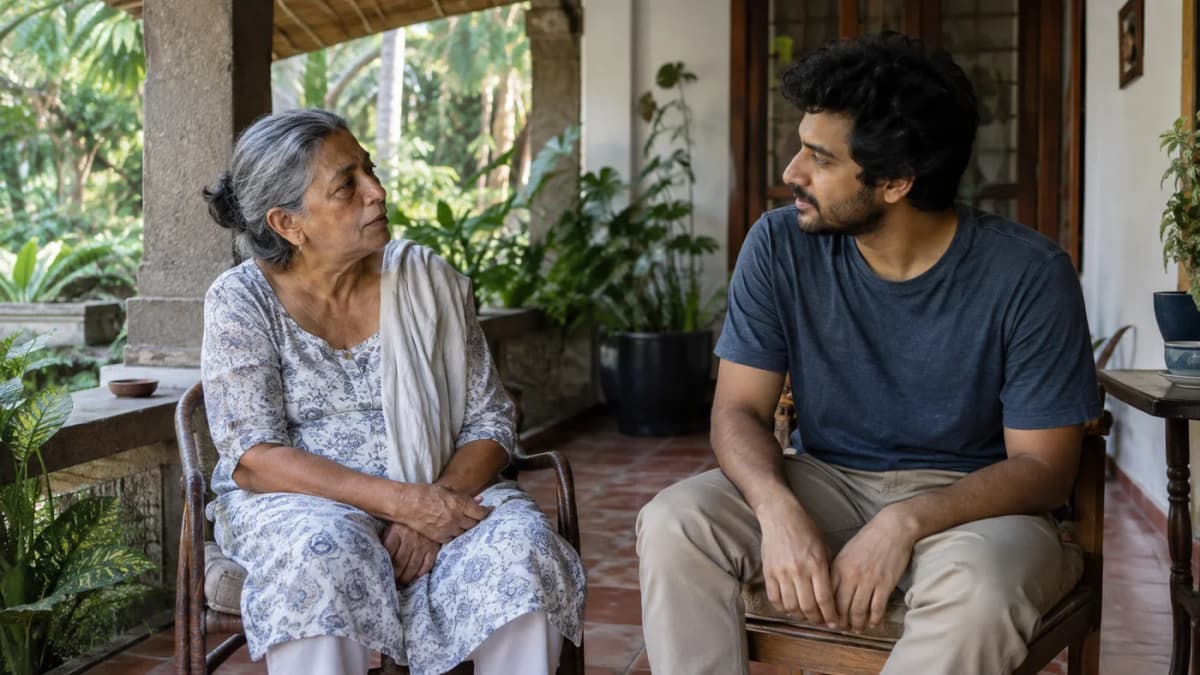
When someone suggests palliative care, a family may hear “there is nothing more to do.” That misunderstanding can stop people getting help with pain, difficult symptoms and decisions. This Tell Them Podcast conversation with Prof. Isarang discusses quality of life and family choices. The notes below explain the basics and suggest questions to take to a treating team in Thailand. Palliative care is not simply another word for hospice The World Health Organization describes palliative care as an approach to improving quality of life for people with life-threatening illness and their families. It addresses physical, psychological, social and spiritual needs. It can begin early and accompany treatment aimed at the illness; it is not restricted to cancer or the last days of life. Hospice services commonly focus on care near the end of life, but eligibility, funding and the services offered depend on the country and provider. Do not assume that a rule you know from another country's insurance system applies to a Thai hospital. Neither term means that a family must stop asking questions. The helpful question is what this particular team can offer, now, for this particular person. Start with what is making today difficult A referral conversation does not have to start with an abstract debate about dying. It can start with pain that prevents sleep, breathlessness, nausea, anxiety or a caregiver who is exhausted. Tell the treating clinician what has changed and how it affects daily life. New severe symptoms may need urgent assessment rather than waiting for a scheduled referral. A short written note can help: the current medicines, the most troublesome symptoms, what the patient wants to keep doing and the questions the family cannot yet answer. If the patient can make decisions, their preferences belong at the centre of the conversation. Questions to ask a hospital in Thailand Do you have a palliative-care team, or can the treating doctor arrange a referral? Can symptom support continue alongside the current treatment? Who should we contact after hours, and which changes require emergency help? Is an interpreter available for a detailed conversation, not just reception? What care is possible at home, what is supplied and what does the family have to arrange? Which charges are separate, and can the insurer confirm cover in writing? Availability should be checked directly. Our Hua Hin healthcare guide helps with planning a visit, while our health-insurance guide explains how to check exclusions and authorisation. A hospital accepting an insurer's card is not confirmation that every service is covered. Make room for the family's practical work A care plan can sound clear in a consultation and become difficult at home. Who collects medication? Can the patient reach the bathroom safely? Does someone know the contact number? Can the main caregiver sleep? Ask the team to explain instructions in language everyone involved understands. Keep an up-to-date medication list and agree who communicates changes. Do not change doses based on a podcast, a family chat or a general article. It also helps to name disagreements calmly. One relative may focus on another treatment, another on comfort and another on cost. Ask for a meeting where the clinician can explain options, likely burdens and uncertainty, rather than making the patient manage competing private conversations. Quality of life is personal For one person, the priority may be staying alert enough to talk. For another, it may be relief from pain or being at home. These wishes can change. Ask what matters now and revisit the answer rather than treating one conversation as permanent. The healthy-aging episode looks at maintaining everyday function before a crisis. It is a different topic, but the same useful distinction applies: more numbers on a chart are not automatically a better lived experience. For another conversation where the boundary matters, our mindset and EFT notes explain why personal recovery stories cannot replace clinical evidence. A patient should never be blamed for failing to think positively. If someone becomes acutely unwell, use the appropriate emergency route. Our Hua Hin emergency-help guide is for practical preparation, not a reason to delay urgent care. This article is general information and cannot assess a person's symptoms or treatment. Frequently asked questions Does palliative care mean stopping treatment? Not necessarily. Palliative support can accompany treatment aimed at the illness. Ask the treating team how the options fit together in the patient's situation. Is palliative care only for people with cancer? No. WHO describes it for a range of life-threatening illnesses. Eligibility and available services should be discussed with the treating provider. How can an expat ask about palliative care in Thailand? Ask the treating hospital about its team or referral options, language support, after-hours contacts and costs. Confirm insurance cover for the actual services proposed.

Space, NASA and Alien Life: A Conversation with John Dankowski

Video Posts

Space, NASA and Alien Life: A Conversation with John Dankowski

Space is a good subject for a long conversation. It is also a subject where a confident story can outrun the evidence. This Tell Them Podcast episode with John Dankowski explores working at NASA, the Moon and the possibility of alien life. Use the discussion as a starting point, not as an official statement from NASA. Three questions worth keeping separate What is working inside a large research organisation like? What evidence supports a particular space mission? And have we found life beyond Earth? Those are different questions. A person's workplace memories cannot settle every scientific question, just as a scientific paper cannot describe every employee's experience. For the Moon landings, start with the mission record rather than a short social-media clip. NASA's Apollo 11 overview identifies the crew and the July 1969 mission. Its account of the lunar laser-ranging experiment explains how equipment left on the Moon has been used for measurements. These are specific claims that can be checked, not a demand to believe a speaker because of a job title. Unidentified does not mean extraterrestrial A light or object that cannot be identified from the available information remains unidentified. That does not establish where it came from. Missing distance, camera details or weather information can make a recording difficult to interpret without making it evidence of an alien spacecraft. NASA's UAP questions and answers says it has not found credible evidence of extraterrestrial life and that there is no evidence UAPs are extraterrestrial. That is not a claim that life elsewhere is impossible. It describes the evidence available to the agency, a narrower and more useful statement. When an interview moves from personal experience to a sweeping conclusion, pause there. What observation supports the conclusion? Is it documented? Could another explanation fit? Interesting speculation is fine when everyone knows it is speculation. A quick check for a viral space claim Find the original recording, not a reaction video with a new caption. Check the date. An old incident can be presented as a new discovery. Separate a measurement from the interpretation someone adds to it. Look for the mission, instrument or research paper being discussed. Keep an unanswered question unanswered if the evidence does not resolve it. The same habit helps with everyday decisions abroad. Our guide to checking AI search answers explains how to follow a claim back to its source. A polished answer and a dramatic video title both need that extra step. Listen for how the guest thinks Some of the value of a podcast is in hearing how a person connects experiences, asks questions and explains uncertainty. You do not need to agree with every conclusion to find the conversation useful. Listen for the difference between “I saw this,” “I think this” and “research shows this.” Each asks for a different kind of follow-up. Dankowski also appears in our conversation about learning Mandarin . It offers another way to think about curiosity: getting comfortable with things you do not yet understand, without pretending the uncertainty has disappeared. If you use translation or search tools to explore a technical topic, our practical AI and phone-tools guide covers checks that help prevent a useful shortcut from becoming a misleading one. Do not paste private workplace material into a public tool while trying to verify an interview. Frequently asked questions Is this episode an official NASA statement? No. It is a Tell Them Podcast conversation with John Dankowski. NASA's own mission records and published guidance are separate sources. Does an unidentified aerial phenomenon prove alien life? No. Unidentified means the available evidence has not established an explanation. NASA says there is no evidence that UAPs are extraterrestrial. Where should I start when checking a Moon-landing claim? Start with the original mission records and the specific experiment or observation being questioned. Check the date and source before relying on a short edited clip.

Becoming a Monk in Thailand: Meditation and Monastery Life

Video Posts

Becoming a Monk in Thailand: Meditation and Monastery Life

A monastery stay can look wonderfully simple from the outside: fewer possessions, a quiet room and time to think. Living within a religious community is more demanding than that picture suggests. This Tell Them Podcast conversation explores one person's experience of becoming a Buddhist monk in Thailand, meditation and the ego. It is a personal account, not a guide to every Thai monastery. Ordination, a retreat and a visit are not the same thing A temple visit may last an hour. A retreat may involve a timetable, silence and instruction. Ordination means entering a religious role with commitments that should be explained by the community itself. Do not book a flight on the assumption that a temple accepts foreign visitors for any of these arrangements. Ask the monastery directly what it offers, which language is used and who can explain the rules. Establish the dates, accommodation, meals, clothing, accessibility and any costs or donations before arrival. If a contact cannot explain what you are agreeing to, slow down rather than treating uncertainty as part of the adventure. Our Thai etiquette guide is a useful starting point for respectful everyday behaviour. At a particular temple, follow local instructions and ask before taking photographs. People praying or living there are not props for your travel story. What the conversation can help you notice The episode's themes include routines, identity and the discomfort of letting go of familiar habits. Those are worth reflecting on without turning the guest's experience into a promise that monastic life will fix yours. A useful question is not “Can I get rid of my ego in a week?” It is “What happens when I cannot keep myself busy all day?” Boredom, irritation and the urge to check a phone may be more immediate than a dramatic insight. A teacher who can discuss ordinary difficulties clearly is more helpful than someone promising an instant transformation. Meditation is a practice, not an emergency service The US National Center for Complementary and Integrative Health's review of meditation and mindfulness describes possible benefits as well as limits in the research and possible negative experiences. Meditation should not replace medical or mental-health care. If you are dealing with severe anxiety, trauma symptoms or a recent crisis, discuss the proposed retreat with a qualified clinician. Ask the organiser how a participant can leave, get help or adjust the schedule. A demanding silent retreat and a short guided session at home are not interchangeable. For a broader support plan while living abroad, see our mental-health guide for remote workers . Keep access to your medication, emergency contacts and practical support rather than assuming a change of setting makes those unnecessary. Prepare for the unglamorous details Confirm that your immigration status covers the actual purpose and length of the trip; a temple's invitation is not a visa decision. Ask about sleeping conditions and shared facilities instead of expecting hotel comfort. Explain relevant dietary, mobility or health needs before accepting a place. Arrange a way home and an accessible contact outside the retreat. Respect boundaries around dress, speech, photography and contact with residents. There is no need to make your visit into a test of toughness. Knowing what you can manage, and communicating it, is part of taking the community seriously. Do not combine different traditions into one story The Buddhist setting of this episode is different from the Tibetan Bön material discussed in our Bön, Dzogchen and meditation-science episode . Similar words such as meditation do not make the teachings, training or research identical. Listen to each conversation on its own terms. You can leave this episode with a smaller, practical experiment: set aside a brief quiet period, notice distractions and decide whether you want guidance. That is more honest than borrowing someone else's account as proof of what must happen to you. Our mindset and EFT viewing notes make a similar distinction between a useful reflection and an unsupported healing promise. Frequently asked questions Can any visitor become a monk in Thailand? Do not assume so. Eligibility, training and arrangements depend on the monastery and the relevant authorities. Ask the community directly before making travel plans. Is a meditation retreat a substitute for mental-health treatment? No. Meditation may be helpful for some people, but it does not replace clinical care. Discuss a demanding retreat with a qualified clinician if you have relevant health concerns. Does this episode describe every Thai monastery? No. It presents a personal experience. Schedules, teaching, visitor arrangements and expectations differ between communities.