Hua Hin Beaches: Choosing Your Beach and Planning a Safer Visit
A practical guide to Hua Hin's coastal areas, beach access, transport and current-condition checks—without invented water-quality rankings or swimming guarantees.

Editors
Jun 22, 2026 · 6 min read
Status
The useful question is not which Hua Hin beach wins a universal ranking. It is which stretch fits the day you want: an easy walk from town, a visit around Khao Takiab, or an outing farther down the coast. Start with the geography, then check the actual beach entrance and conditions before committing to a swim.
This is a source-based planning guide, not a report of first-hand beach inspections or water sampling. It does not assign cleanliness scores or promise safe swimming at a particular beach.
Get the coast the right way round
Hua Hin lies on the western side of the Gulf of Thailand, with the sea generally to the east. It is a sunrise coast: evening light can be beautiful, but do not book a beachfront room expecting the sun to set into the sea directly in front of you. The Tourism Authority of Thailand's Hua Hin and Cha-am brochure identifies this orientation and the main coastal landmarks.
Cha-am is north of Hua Hin. Khao Takiab, Suan Son Pradiphat and Khao Tao are south of the town centre; Pran Buri is farther south. These are not all neighbourhoods within a single twenty-kilometre urban beach. The same brochure places Khao Takiab hill at the southern end of Hua Hin beach and describes Suan Son as a publicly accessible army-welfare beach area. Its older commercial listings should not be used as current opening times, prices or transport schedules.
Choose a beach by the outing, not an invented score
| Area to consider | Plan it around | Check before you go |
|---|---|---|
| Central Hua Hin beach | A beach visit alongside time in town. | The public entrance nearest your accommodation; where you will leave your belongings and return for shade. |
| Khao Takiab | A coastal outing near the hill and temple area. | The exact beach-side drop-off. A pin for the temple is not the same as a pin for level beach access. |
| Suan Son Pradiphat | A separate beach outing south of Khao Takiab. | Current access arrangements, parking charges if any, toilets and return transport. |
| Khao Tao area | A southern coastal stop rather than a quick walk from central Hua Hin. | The named beach entrance you intend to use; do not send a driver only a broad village-area pin. |
| Cha-am | A separate destination north of Hua Hin. | The journey from your actual starting point and the location of your intended beach stop. |
These are planning suggestions, not measured rankings. In particular, “quieter” is not a synonym for safer, cleaner or better for children. Facilities, crowds, tide and weather can make the same location feel very different on another day.
Central Hua Hin: make convenience work for you
For a first visit, choose a public access point close to somewhere you can comfortably return for water, a toilet and a break. This is a more useful starting point than trying to walk the entire coast or following a list of “secret” stretches without checking how to reach them.
Before walking away from your entrance, save its map pin and photograph a recognisable landmark. Check the way back while you still have daylight. Do not assume that every hotel frontage provides a public shortcut to the road or that a path clear at one tide will remain equally convenient later.
If hiring a chair, taking a horse ride or booking another activity, agree the full price, duration and inclusions first. This guide deliberately omits unverified tariff tables: an old blog price is not a quote from the operator in front of you.
Khao Takiab and the southern stops: choose one anchor
A southern beach day works better with one main destination than a rushed attempt to visit every place on a list. Decide whether your priority is a shoreline walk, the hill/temple area, lunch or time on the sand, then choose the entrance and transport around that activity.
For Suan Son or Khao Tao, arrange the return as carefully as the outward trip. Ask your accommodation or transport provider to confirm the precise meeting point, pickup time and fare. If travelling with a stroller, wheelchair or someone who finds steps difficult, ask specifically about the route from the drop-off to the sand and the nearest usable facilities. A map distance does not describe an accessible route.
Do not infer that a beach is sheltered or suitable for swimming just because it is near a hill or looks calm in a photograph. If swimming is the main purpose of the trip, local conditions should decide the plan after you arrive.
Swimming: use today's advice, not a beach league table
The FCDO's Thailand safety guidance warns about strong rip currents and tells visitors to follow swimming flags and local warnings, especially red flags. It also warns that jellyfish can occur close to shore and advises seeking local information. A clear-looking sea is not proof that swimming is safe.
This guide has no current, comparable laboratory results for each Hua Hin beach, so it does not label one “excellent” and another “fair”, or turn such a label into a safety guarantee. If a report is cited elsewhere, check the sampling location, collection date, measured parameter and issuing agency. A historical regional result cannot establish conditions at your chosen entrance today.
- Read signs on arrival and ask about current conditions and supervised swimming areas.
- Do not treat the absence of a flag or lifeguard as permission to enter.
- Keep children under close supervision and choose a plan that matches the least confident person in your group.
- If advice is unclear or conditions look unsuitable, make it a beach walk or another activity instead.
Weather: keep a flexible plan
Use the Thai Meteorological Department's Hua Hin forecast and current warnings before leaving, then reassess at the beach. A “dry-season” label does not promise a calm sea, and a rainy-season date does not tell you exactly when a shower will arrive.
Have a fallback that does not depend on entering the water. For example, a short shoreline walk followed by an indoor stop can still make a good outing if the sea is unsuitable. Avoid a tightly timed itinerary that leaves no room to change destination or arrange an earlier return.
A practical beach-day checklist
- Save the exact public entrance and your return pickup point.
- Check weather warnings and ask about local swimming conditions.
- Confirm transport, toilets, shade and any access or activity charges.
- Bring drinking water, sun protection and a way to keep essential belongings dry.
- Decide in advance what you will do if swimming is not advisable.
- Take your litter away and respect access notices and other beach users.
The best beach choice is the one that fits your mobility, transport and plans on the day. A reliable guide should help you make that choice without pretending to have measured the water, inspected every facility or experienced every stretch personally.
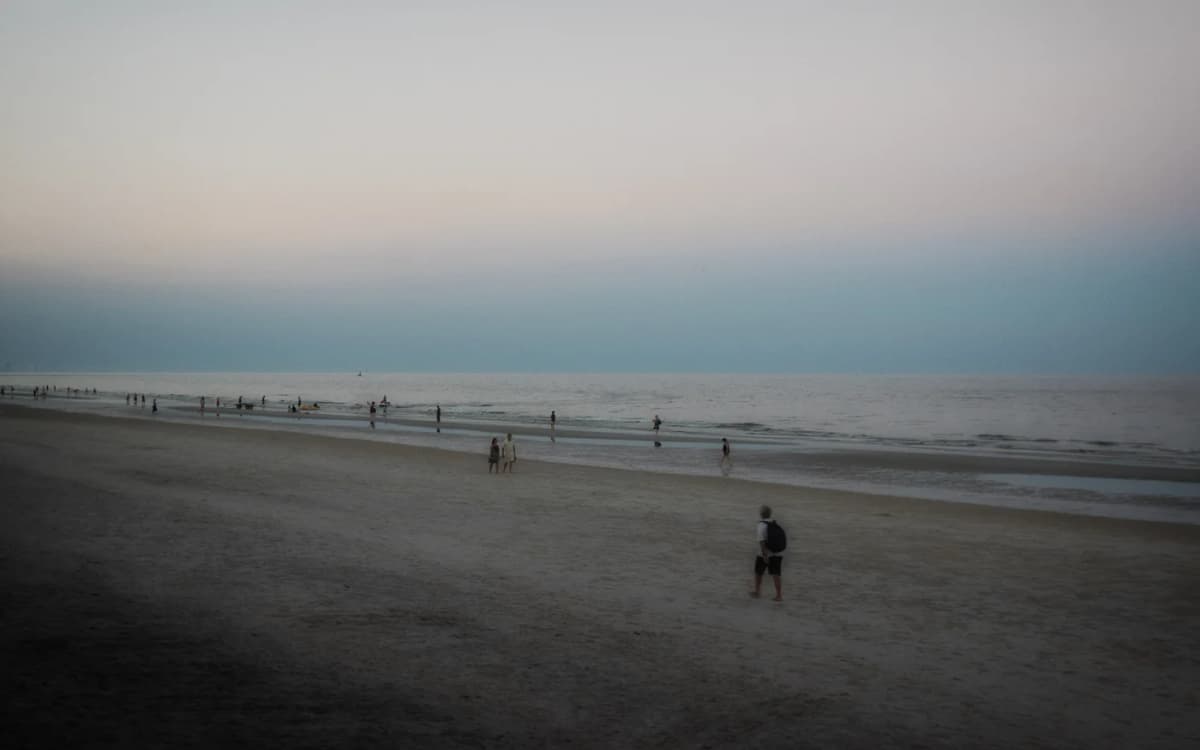
Editorial correction, 12 September 2026: corrected the coast's orientation and regional geography; removed unsupported water-quality rankings, blanket swimming assurances, invented observation scenes, unverified activity prices and misidentified hotels. Removed two unverified location images. The cover is an identified archive photograph, not a photograph taken during this review.
Ananas Premium
Unlock Hua Hin's Best Property & Investment Insights
Enjoying our free content? Get unlimited access to premium articles, local market intelligence, member briefings, and exclusive checklists for ฿290 / $9.95 per month.
Sources & Verification
- Coastal orientation and relative locations of Hua Hin, Khao Takiab, Suan Son, Khao Tao and Cha-am; historical brochure used only for stable geography. — Tourism Authority of Thailand — Hua Hin and Cha-am brochure, pp. 10–13 and 20–21Source
- Strong currents, swimming flags and jellyfish require current local safety advice, not blanket beach guarantees. — FCDO — Thailand swimming safetySource
- Official location-specific forecast resource to consult before a visit; no live reading reproduced. — Thai Meteorological Department — Hua Hin forecastSource