Buying Property in Thailand as a Foreigner: What Can You Own?
Separate condo ownership, land, buildings, leases and company shares before buying property in Thailand. Know which rights need independent legal review.

Editorial Team
Aug 6, 2026 · 7 min read
Status
“You can buy this property” can describe several different things in Thailand. You might acquire a condominium unit, take a lease, buy a building separately from its land, or become a shareholder in a company that owns an asset.
Those are not interchangeable. Before comparing the price, ask one plain question: what would be registered in my name, and what would still belong to someone else?
This guide maps the main distinctions for foreign buyers. It is a starting point for independent legal advice, not approval of a structure or a promise that a property is safe to buy.
A condo unit is not the same purchase as land
An eligible foreign buyer can acquire ownership of a registered condominium unit subject to the applicable requirements. The government's registration-document guidance describes the general foreign quota using total unit area. Your eligibility, funds evidence and the actual unit still need review.
A building marketed as “apartments” or “residences” should not be assumed to have individual condominium titles. Ask your lawyer to confirm the legal registration rather than relying on the development's sales name.
For the practical sequence from first checks to handover, use our condo buying guide. Direct condo ownership can avoid some land-structure questions, but it does not remove title, building, contract or use restrictions.
Foreign land ownership is restricted, not exception-free
The ordinary foreign buyer should not assume they can acquire a house's land in their own name. At the same time, saying “there are no exceptions” is inaccurate. The government's ownership overview describes conditional exceptions, including a residential investment route requiring permission.
An exception is not a general invitation to buy a villa. Have a qualified lawyer identify the current legal basis, eligibility, approvals and conditions for the specific buyer and plot. Do not infer eligibility from a visa, a large bank balance or an agent saying a transaction is common.
Property rights and permission to stay in Thailand are separate questions. Plan your lawful residence independently; a purchase should not be treated as an automatic visa or immigration benefit.
A villa can involve several separate rights
Ask who owns the land, who owns the building and which documents support each answer. Paying for a house does not automatically settle rights over the ground beneath it, the access road or shared estate facilities.
A proposed land lease and building ownership arrangement needs careful drafting and evidence. Confirm what can be registered, who is authorised to grant the rights and what happens to the building, alterations and fixtures when the arrangement ends. Do not assume signing a land lease makes you the building owner.
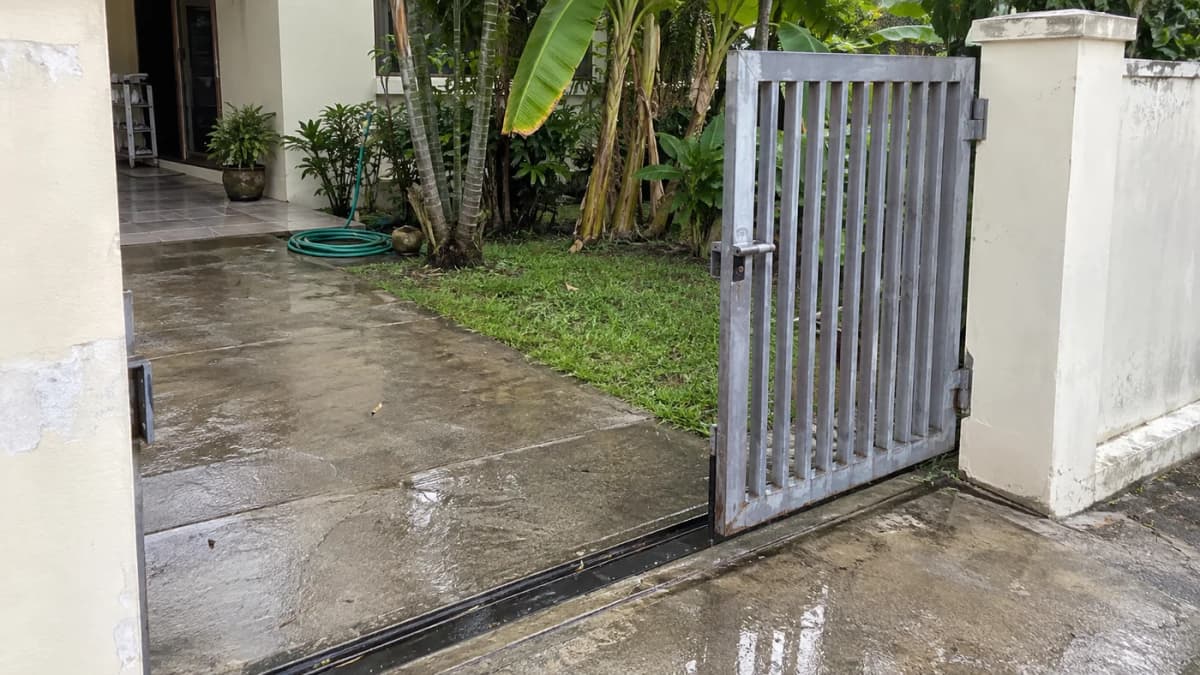
Walk the entrance and service routes, but have legal access established from documents. A driveway, open gate or neighbour's verbal permission is not proof of the access rights you need. Ask about shared roads, utilities, drainage and estate charges.
Our villa-versus-condo comparison covers daily responsibilities. The ownership decision must come from the actual rights, not simply whether you prefer a garden.
A registered lease is still a lease
For an ordinary fixed-term residential arrangement, check the applicable term and registration using the Department of Lands' lease guidance. A future renewal promise is not extra registered ownership today.
Ask about assignment, subletting, termination, death, inheritance and changes of owner. Which rights are registered, which depend on a contract, and which need someone's later consent? Have the adviser explain the distinctions in writing.
Our freehold-versus-leasehold guide looks more closely at dates and renewal claims. No arrangement should be advertised as permanent ownership simply because it has a long initial term.
A company owns its assets; shareholders own shares
If a company holds the property, buying shares is different from buying the property in your own name. Ask who controls the company, what it owes, what business it actually conducts and whether it can lawfully hold the asset and carry out the proposed activity.
A company certificate, a Thai-majority share split or being appointed a director does not, by itself, establish that the arrangement is lawful. Do not use Thai shareholders merely as names to disguise foreign ownership or business control. Genuine participation needs more than a percentage printed on a form.
This is not just an old warning. In its 7 September 2026 update, the Ministry of Commerce describes coordinated company and property-data checks with the Department of Lands to address nominee arrangements. The article is not a clearance of companies with foreign shareholders; neither is it proof that every such company is unlawful.
For a genuine business acquisition, engage both legal and accounting advice. Review liabilities, filings, shareholder rights, funding and the asset's title. Do not buy an existing company solely because the seller calls it a convenient property wrapper.
BOI promotion is not a personal-home shortcut
The Board of Investment's Section 27 land guidance links permission to promoted investment activities and the amount of land the BOI considers appropriate. It describes approvals and ongoing conditions, not a blanket right for any foreign individual or company to own a holiday villa.
Check the promoted entity, approved activity, project location, particular land permission and continuing obligations. Do not treat an investment-promotion certificate as automatic approval of every property purchase. If you are not acquiring land for a genuine eligible project, this is not a route to assume available.
Buying in someone else's name changes the answer
If a Thai spouse, partner or another person is the registered owner, do not assume that providing the money makes you that owner too. Ask a lawyer to explain the actual ownership, marital-property position, declarations and any lawful separate rights being proposed.
A private promise that “it is really yours” is not a title in your name. Avoid informal arrangements intended to hide the real transaction. Consider death, separation, sale and incapacity before paying, not after a dispute develops.
Ask for a rights map and a list of missing evidence
A useful written summary should identify:
- The asset: precise unit, land or building documents and registered owner.
- Your rights: what you acquire personally, what another person or company retains and what will be registered.
- Dependencies: consents, approvals, access and any underlying lease or finance.
- Changes: sale, assignment, death, default, expiry and enforceability questions.
- Costs: transaction-specific charges, ongoing obligations and professional work still needed.
The Department of Lands' transfer checklist illustrates why ownership, authority and supporting documents matter. The relevant procedure depends on the proposed transaction; there is no single document list or closing-cost percentage for every structure.
Pair the legal review with physical inspection using our due-diligence checklist. A sound building can have unsuitable rights, and a workable title can still come with expensive defects. Both need checking before a non-refundable commitment.
Frequently asked questions
Can a foreigner buy any Thai villa in their own name?
No. Land ownership is generally restricted, with conditional exceptions. Identify the land and building rights separately and obtain transaction-specific legal advice before relying on a listing marked freehold.
Does owning shares mean I personally own the company's house?
No. The company owns its asset; the shareholder owns shares. Review the company's lawful position, liabilities and your shareholder rights rather than treating them as personal property title.
Does BOI promotion automatically allow a personal villa purchase?
No. Land permission is connected to promoted activities and specific approvals and conditions. Do not treat it as a general personal-home entitlement.
Ananas Premium
Unlock Hua Hin's Best Property & Investment Insights
Enjoying our free content? Get unlimited access to premium articles, local market intelligence, member briefings, and exclusive checklists for ฿290 / $9.95 per month.
Sources & Verification
- Registered condo rights differ from a purchase of land. — Thailand.go.th — foreign-buyer registration documentsSource
- Foreign land ownership is restricted and conditional exceptions require review. — Thailand.go.th — foreign property ownership overviewSource
- Lease registration concerns use rights, not a freehold ownership transfer. — Department of Lands — ordinary lease registrationSource
- Commerce and land authorities describe coordinated company and property-data checks addressing nominees. — Ministry of Commerce — nominee enforcement update, 7 September 2026Source
- Land permission is tied to promoted activities, approvals and continuing conditions. — Board of Investment — Section 27 land permissionSource
- Registration depends on ownership, authority and transaction-specific supporting documents. — Department of Lands — condominium transfer checklistSource