Buying a Used Car in Thailand: How to Spot Flood Damage
A practical checklist for buying a used car after Thailand's floods: warning signs, Thai paperwork, independent inspections and reasons to walk away.

Editorial Team
Oct 1, 2026 · 11 min read
Status
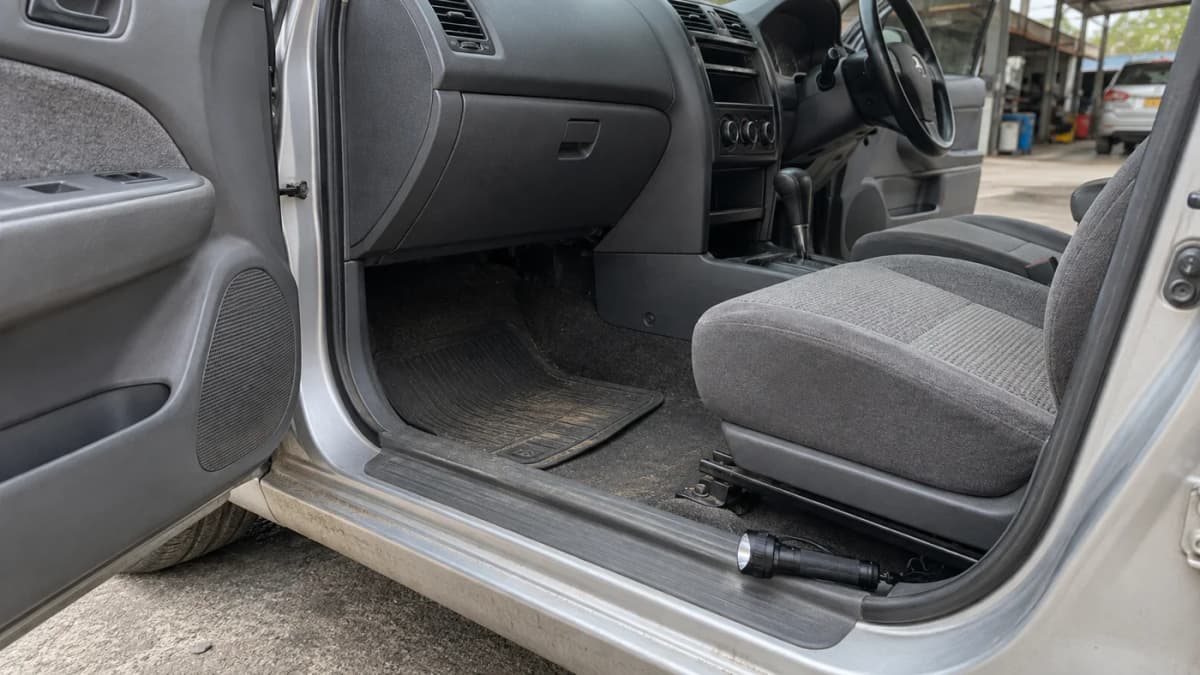
A used car can look spotless a few weeks after a flood. New mats, polished paint and a pleasant smell tell you how it was prepared for sale. They do not tell you what happened underneath the carpet or inside the wiring.
If you are buying a car in Thailand after heavy rain and flooding, use three checks together: the seller's account and records, your own careful viewing, and an independent pre-purchase inspection. Do these before committing money. No quick trick can certify that a car has never been under water.
Our Thailand flood-preparedness guide covers the weather and household side. This guide is about avoiding a purchase that leaves you with hidden water damage, recurring faults or a damp, mouldy cabin.
Why a car that runs well can still be a bad purchase
Water damage is not limited to the engine. AAA's technical advice explains that contamination can affect mechanical components, wiring, connectors and electronics. Some parts may work immediately after a flood, then fail weeks or months later as corrosion develops.
A clean dashboard and a smooth drive around the block cannot rule that out. Nor does replacing the carpet establish what happened to the padding beneath it or other affected parts. Flood exposure varies; it does not mean every vehicle will develop the same faults. Your task is to establish what happened, what was checked and what remains uncertain.
Do not clear a car simply because it is now offered in a place that stayed dry. NHTSA's buyer warning notes that flood-damaged vehicles can be sold far from where the flooding happened. Ask about the car's history, not just the current seller's address.
Before travelling to see the car, ask direct questions
Keep the listing and the seller's replies. Ask for the registration details and service records, then put these questions in writing:
- Has the car ever been flooded, had water inside the cabin, or needed repairs after water exposure?
- Where was it kept during recent floods? Is there any earlier flood history?
- Have the carpets, seats, wiring or electronic units been replaced? Why, and are there invoices?
- Were there insurance claims or major repairs? Can you provide the available records?
- May I arrange an inspection at a workshop I choose, before paying a deposit?
“Never crashed” does not answer a question about water. “Only the wheels got wet” needs a clearer explanation. Ask about the date, water level, time in water and work done afterwards. Treat uncertain answers as uncertain, rather than filling the gaps with the explanation you want to hear.
A seller may genuinely lack earlier records. That is not proof of dishonesty, but it reduces what you can verify. You can choose a better-documented car without having to prove this one is bad.
Check the Thai paperwork, not just the sales pitch
Inspect the original registration book and compare the recorded owner and vehicle identifiers with the actual car. The Department of Land Transport's used-car advice calls for checking the original book, chassis and engine numbers, colour and tax status, and completing the proper transfer. Avoid a deal that simply leaves signed transfer paperwork to be processed at some unspecified later time.
Ask DLT about documents required for your particular transfer, especially if you are a foreign buyer or finance is involved. A registration check addresses ownership and registration; do not treat it as a specialist assessment of hidden flood damage.
For a purchase from a used-car business, ask to see the vehicle label, receipt and sale contract. OCPB's August 2026 guidance says the required Thai-language label includes accident, fire and flood history, and the sale contract must record disaster history where applicable. Have someone competent translate the documents before signing. Do not assume dealer-specific requirements apply identically to a private sale.
Keep a copy of what the seller actually declares. A declaration that there was no flood history is useful evidence of the representation made, not an independent certificate that it is true.
Service invoices and authorised repair records can add context. Ask the seller to obtain records where access requires their permission. AAA explains the limits of vehicle-history reports: unreported damage and repairs, reporting delays and the car's current condition can be missing. Check what any report covers for this specific Thai vehicle. US title databases and “salvage title” rules are not a substitute for Thai checks.
At the viewing: look beyond the freshly cleaned surfaces
Arrange a daylight viewing with enough time. Bring a torch and your questions. Get permission before moving mats or opening compartments; do not dismantle the seller's car. If there is visible mould or heavy contamination, stop the close inspection and arrange professional assessment.
1. Smell and moisture
Notice a musty smell, dampness or unusually heavy perfume. The FTC's flood-car checklist flags mildew, water staining, silt and strong cleaning smells as reasons for concern. No smell does not clear the car, and perfume alone does not prove a flood. Ask why it is there.
A damp cabin can have a leak rather than a flood history. Either way, find the cause before buying; do not accept deodorising as an explanation for moisture.
2. Floor mats and the seat bases
Look under loose mats for moisture, staining or sediment. Shine the torch around the seat rails and visible mounting points. New carpeting or disturbed seat fixings deserve an explanation. Do not pull apart fitted trim or unplug anything under a seat; leave deeper checks to the inspector.
3. Seat belts and the luggage area
Extend the belts normally and look for unusual staining. Inspect the luggage floor and accessible spare-wheel well for mud, water marks or dampness. Ask the inspector to examine inaccessible areas. AAA's detailed viewing guide highlights belts, carpet, seat mountings and the spare-wheel area as useful places to check.
4. Lights and less visible corners
Look for trapped moisture or water marks inside lights, and sediment around accessible interior edges. One leaking lamp can have another cause. A repeated pattern across the cabin, luggage area and protected metal parts is more concerning than one isolated mark.
5. Rust in context
Surface rust is not a verdict. Ask whether its location and extent make sense for the car's age and use. Corrosion inside the cabin deserves attention, especially alongside sediment or dampness. Do not crawl under a car supported only by a jack: underside inspection belongs on proper workshop equipment.
Record observations, not accusations. “There is staining on this belt and sediment in the spare-wheel well” is more useful to an inspector than “I think this car looks suspicious.”
Test the ordinary controls, but do not mistake them for a flood test
For a car considered safe to operate, check windows, locks, mirrors, seats where powered, lights, air-conditioning and other fitted controls. Ask about warning lights and have the inspector verify the model's correct start-up checks. AAA Northeast's guidance notes that an electrical fault alone does not identify flood damage, but faults combined with water-related signs warrant concern.
A test drive is worthwhile only when the vehicle is safe, permission and insurance are confirmed, and the driver has the correct licence. Our Thailand driving guide covers that separate preparation. Do not take a recently flooded or visibly unsafe car out to “see whether it clears up.”
Book an independent inspection with a written brief
Choose a qualified workshop or inspector familiar with the model, independently of the seller. Say explicitly that you want a pre-purchase inspection for previous flood exposure, not just an oil service or a quick roadworthiness check. Agree on the scope, price and access before booking.
Use this as a briefing list, with the technician deciding the safe procedure:
- Cabin: inspect accessible areas beneath carpet and padding, seat bases, luggage cavities and signs of replacement or water entry.
- Electrical systems: assess relevant wiring, connectors and electronic units for contamination or corrosion.
- Diagnostics: request checks of the relevant control systems, including safety systems, using suitable equipment for the model.
- Mechanical condition: assess fluids, intake and drivetrain components, brakes and other areas that may have been exposed.
- Underside: examine corrosion, debris and repair work on proper lifting equipment.
- Records: compare findings with the seller's account and repair invoices.
Ask for a written report identifying the car, with photographs, findings and areas the inspector could not assess. A report that says “no evidence found in the inspected areas” has limits; it should not be presented as proof of the car's entire history. Likewise, a fault-code scan alone cannot settle the question of past flooding.
If a deeper inspection needs trim removal, agree on permission and cost. Do not let anyone casually disconnect airbag equipment or high-voltage components to demonstrate that they look clean.
Take extra care with hybrids and electric cars
Suspected flooding involving a hybrid or EV needs someone trained on that vehicle's high-voltage system. A dashboard battery-health percentage is not a flood assessment.
NHTSA warns that flooded electrified vehicles can present shock and fire risks. If there is reason to suspect battery damage, do not start or charge the vehicle for a demonstration, touch high-voltage parts or move it into a garage. Contact the manufacturer or a qualified specialist for handling and inspection advice.
When to walk away
For someone who wants dependable everyday transport, the sensible choice is often to reject unresolved flood risk. A discount does not tell you the eventual repair cost. Walk away, or pause the purchase until the issue is properly resolved, if:
- The seller refuses an independent inspection or access needed for a meaningful assessment.
- Water-related findings conflict with the seller's account and there is no convincing documented explanation.
- Significant cabin water exposure, contamination or electrical damage remains unresolved.
- Vehicle identifiers or ownership documents do not match, or the transfer cannot be properly completed.
- You are pressed to pay before the documents, inspection scope or deposit terms are clear.
A car with disclosed flood history may have been repaired, but proving the standard and extent of that work is a specialist task. If your goal is to avoid buying a flooded car, you do not need to accept that project.
Before a deposit, and if doubts appear afterwards
Get the agreed price, car identity, condition representations, inspection arrangements and deposit/refund conditions in writing before transferring money. Do not rely on an oral promise that a deposit is refundable. Keep the listing, messages, contract, payment evidence and inspection report.
Discuss disclosed damage and the vehicle's condition with your insurer before arranging cover. A new policy is not a way to fix an already damaged purchase. Our Thai motor-insurance guide explains the questions to ask about the policy you are actually offered.
If you discover suspected hidden damage after buying, obtain an independent written assessment and preserve the evidence. Stop using the car if there is a safety concern. Contact the seller in writing and seek advice before major repairs that could remove evidence, except work needed for immediate safety. For a consumer dispute with a business, OCPB lists 1166 and its complaint channels. The outcome depends on the transaction and evidence; this guide does not promise an automatic refund.
Frequently asked questions
Can a clean registration book or history report prove a car has never flooded?
No. Check ownership and vehicle details, review available repair records and arrange an independent inspection. A missing flood entry is not proof that water damage never occurred, especially where the event or repair was not recorded.
If the engine runs and all the electronics work, is the car safe to buy?
Not on that basis alone. Flood-related contamination and corrosion can cause delayed faults. Working controls and a test drive are useful checks, but they do not replace a properly scoped pre-purchase inspection.
Does replacing the carpet or removing a musty smell fix flood damage?
Not by itself. Cosmetic cleaning does not establish the condition of padding, wiring, connectors or other affected components. Ask what was exposed, what work was done and what a qualified inspector can verify.
Sources and Thai consumer guidance checked on 1 October 2026. This is a buying checklist, not a mechanical certification or individual legal advice. No inspection can guarantee discovery of every hidden defect.
Ananas Premium
Unlock Hua Hin's Best Property & Investment Insights
Enjoying our free content? Get unlimited access to premium articles, local market intelligence, member briefings, and exclusive checklists for ฿290 / $9.95 per month.
Continue reading
Sources & Verification
- Water contamination of mechanical/electrical components; delayed corrosion/failures; qualified inspection before starting recently flood-damaged vehicles. US insurance/approved-shop benefits not imported into Thai article. — AAA technical advice on flood-damaged vehiclesSource
- Mildew, stains, sand/silt, fresh upholstery and masking fragrance are concern indicators; mechanic inspection. US title rules/databases not recommended as Thai verification. — FTC flood-car buying checklistSource
- Carpet, seat fixings, belts, spare-wheel area, trapped moisture and corrosion; mould and hidden damage. Guide converts dismantling suggestions into permission-based professional tasks, no single-feature proof. — AAA viewing pointsSource
- Safety-system/electrical/mechanical damage; warning lights, motors, AC; one fault alone not evidence of flood. No US flood prevalence or market-price assertions imported. — AAA Northeast technical and electrical checksSource
- Unreported events/repairs, reporting delays and present condition can be missing; combine records with inspection and test drive. Coverage for a Thai VIN must be established, no invented national database. — AAA limits of history reportsSource
- Cosmetic restoration and delayed hidden problems; suspected high-voltage battery damage can cause shock/fire and requires specialist handling. No US legal title branding extrapolated; no DIY HV diagnosis. — NHTSA flood-damaged vehicle risksSource
- Original registration book, recorded owner/chassis/engine/colour/tax checks and proper transfer; avoid delayed open-transfer paperwork. Official page read in isolated browser after web-open error. — Thai DLT original registration and transfer adviceSource
- Used-car-business Thai label includes accident/fire/flood history; contract contains applicable disaster history. Dealer rules not universal private-sale guarantee. Receipt/contract/evidence and complaint channels, 1166. No automatic refund/legal outcome promised. — OCPB used-car dealer enforcement guidance, 20 August 2026Source