THB/USD36.48
THB/EUR39.72
BTC/THB2,461,800
Gold/THB83,420
Hua Hin+32°C, Mainly clear
AQI48 · Good
Travel

Hua Hin Night Market Guide: What to Buy, Eat, and Skip

Hua Hin night market guide: what to buy, eat, and skip. Honest food and shopping recommendations.

Ananas Editorial
Ananas Editorial

Editorial Team

Aug 23, 2026 · 11 min read

Status

Hua Hin Night Market Guide: What to Buy, Eat, and Skip

The Night Market That Tourists Love and Locals Avoid

Hua Hin has four main night markets, and the difference between them is the difference between a genuine Thai experience and an overpriced tourist trap. The Cicada Market that every travel blog recommends? It's excellent for art and live music but terrible for food value. The Hua Hin Night Market on Dechanuchit Road that tour groups flock to? It's a conveyor belt of overpriced pad thai and tourist-oriented souvenirs. The best night market in Hua Hin is the one most tourists never find.

This guide maps every night market in Hua Hin — what to buy, what to eat, what to skip, and when to go for the best experience. The goal isn't to tell you which market is "best" (that depends on what you want), but to help you avoid the overpriced, overcrowded, and underwhelming experiences that waste your evening.

The Four Markets: An Honest Comparison

MarketBest ForFood BudgetCrowd Level
Cicada MarketArt, live music, atmosphere300-600 THBHigh (weekends)
Hua Hin Night MarketSeafood, souvenirs400-800 THBHigh (daily)
Tamarind MarketFood variety, local vibe200-500 THBModerate
Chatsila MarketBudget shopping, local crafts150-400 THBLow

Cicada Market: The Art and Music Experience

Cicada is the market that travel blogs love. It's well-designed, artistically curated, and has live music every evening. The atmosphere is genuinely excellent — open-air pavilions, string lights, acoustic performances, and a mix of Thai and Western visitors enjoying the vibe.

What to buy: Handmade jewelry, Thai silk products, artisanal ceramics, hand-painted postcards, and locally designed clothing. The quality is generally higher than other markets, but the prices are also 20-50% higher. The art stalls are the main attraction — local artists sell paintings, prints, and sculptures that you won't find elsewhere in Hua Hin.

What to eat: Cicada's food court is decent but not exceptional. The pad thai is standard, the mango sticky rice is good, and the Thai iced tea is strong. The real food value at Cicada is the craft beer and wine — several stalls serve local craft beers (150-250 THB) and imported wines (300-500 THB). The food isn't the draw — the atmosphere is.

What to skip: The souvenir stalls. The same keychains, magnets, and t-shirts are available at every market in Hua Hin for half the price. The "handmade" products that are clearly mass-produced. The food stalls charging premium prices for standard dishes.

When to go: Friday and Saturday evenings (6:00-11:00 PM). The live music is best on weekends. Weeknight visits are quieter but have fewer performers. The market runs year-round, but the green season (May-October) has fewer visitors and a more relaxed atmosphere.

Hua Hin Night Market (Dechanuchit Road): The Tourist Classic

The main night market on Dechanuchit Road is the oldest and most famous in Hua Hin. It's a long strip of stalls stretching along the road, with seafood restaurants on one side and souvenir shops on the other.

What to buy: The same souvenirs as every other market in Thailand — elephant pants, wooden frogs, coconut soap, and "Made in Thailand" trinkets. The quality is lower and the prices are higher than at other markets. The only unique items are the vintage photographs of old Hua Hin — genuinely interesting historical prints that make good gifts.

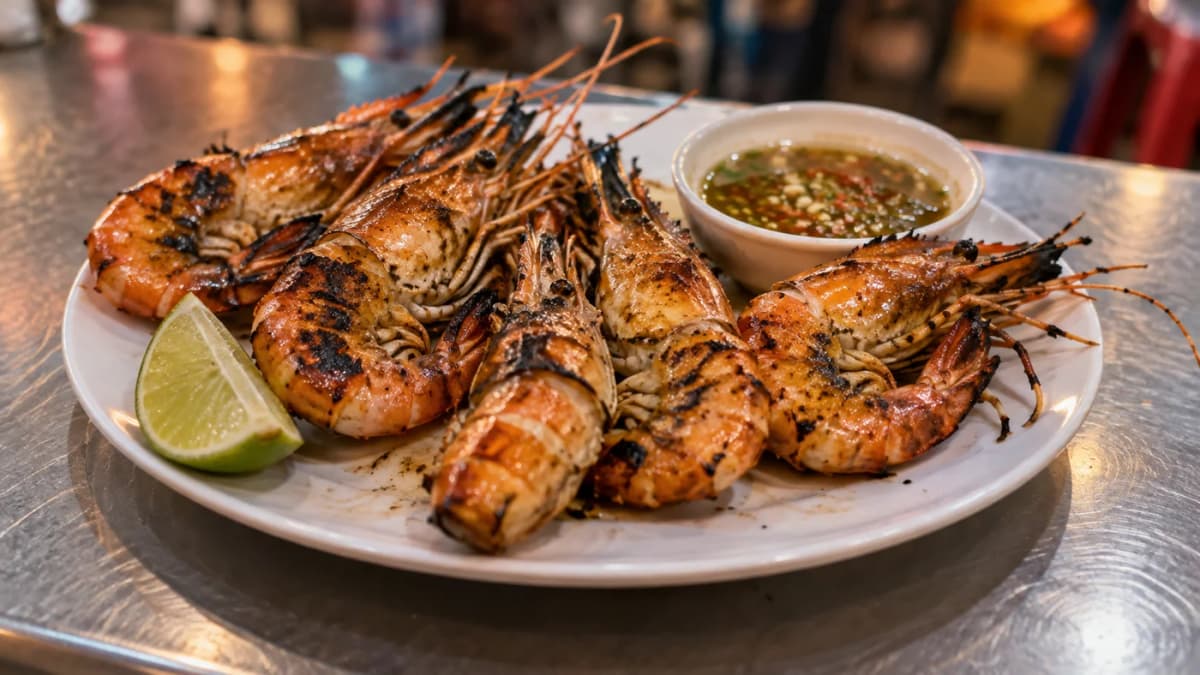
What to eat: The seafood is the main draw. Grilled prawns, steamed fish, and crab omelette are the specialties. However, the prices are tourist-oriented — 200-400 THB for a plate of grilled prawns that costs 100-150 THB at a local restaurant. The seafood is fresh and well-prepared, but the markup is significant.

What to skip: The pad thai, som tum, and other standard Thai dishes. They're overpriced and no better than what you'll find at any local restaurant. The clothing stalls selling "designer" items that are clearly counterfeit.

When to go: Any evening (6:00-11:00 PM). The market runs daily. Go on a weekday for smaller crowds; avoid weekends if you dislike shoulder-to-shoulder walking.

Tamarind Market: The Local Food Experience

Tamarind Market is the one that locals prefer. It's smaller, less touristy, and focused on food rather than souvenirs. The atmosphere is more "local market" than "tourist attraction."

What to buy: Very few shopping options — this is primarily a food market. The stalls sell Thai snacks, dried fruits, and local specialties. The real value is in the food, not the shopping.

What to eat: The food at Tamarind is better and cheaper than at the other markets. The som tum (green papaya salad) is genuinely excellent. The grilled chicken (gai yang) is cooked over charcoal and seasoned with Thai herbs. The mango sticky rice uses fresh, ripe mangoes (not the imported ones you find at tourist markets). Total food budget: 200-400 THB for a full meal with drinks.

What to skip: Nothing — the entire market is food-focused, and everything is worth trying. The only skip is the few souvenir stalls at the entrance — they're the same overpriced items as everywhere else.

When to go: Thursday-Sunday evenings (5:00-10:00 PM). The market is smaller on weeknights and some stalls don't open. Go hungry.

Chatsila Market: The Budget Option

Chatsila is the smallest and least touristy of the four markets. It's primarily a local market with a few tourist-oriented stalls mixed in.

What to buy: Local crafts, handmade soap, Thai snacks, and budget clothing. The prices are the lowest of any market in Hua Hin. The quality varies — some items are genuinely handmade, others are mass-produced. The market is worth a walk-through for the atmosphere, even if you don't buy anything.

What to eat: Basic Thai food at local prices. The som tum and gai yang are decent. The real value is the fresh fruit shakes (30-50 THB) and Thai desserts (20-50 THB). Total food budget: 150-300 THB.

When to go: Saturday and Sunday evenings (5:00-10:00 PM). The market is small and doesn't operate on weeknights.

Food Strategy: How to Eat Well at Any Market

Regardless of which market you visit, these strategies maximize food value:

Look for Thai customers: The stall with the longest line of Thai customers is almost always the best food. Thai people know which stalls are good and which are tourist traps. If a stall has no Thai customers, there's a reason.

Order what's being cooked fresh: Stalls that cook to order (grilled seafood, made-to-order pad thai) are fresher and better than stalls serving pre-made food from warming trays. The 5-minute wait for fresh-cooked food is worth it.

Avoid the "set menu" stalls: Stalls offering "3 dishes for 200 THB" are using cheaper ingredients to hit the price point. Order individual dishes from stalls that specialize in one thing — a stall that only sells som tum will make better som tum than a stall that sells everything.

Drink water, not soda: Thai iced tea (cha yen) is delicious but sugar-heavy. Fresh coconut water (30-50 THB) is hydrating and natural. Avoid the soda stalls — they're overpriced and unhealthy.

The Verdict: Which Market Should You Visit?

One evening only: Cicada Market (Friday or Saturday). The combination of art, music, and atmosphere makes it the most memorable experience. Arrive at 6:00 PM, walk through the art stalls, watch the live music, eat at the food court, and leave by 9:00 PM before it gets too crowded.

Food focus: Tamarind Market. The best food quality and value of any market in Hua Hin. Go on a Thursday-Sunday evening and eat everything.

Budget shopping: Chatsila Market. The cheapest prices for souvenirs and local crafts. Go on a weekend evening.

Seafood dinner: Hua Hin Night Market (Dechanuchit). The seafood is fresh and well-prepared, even if the prices are tourist-oriented. Go on a weekday evening to avoid crowds.

For more on Hua Hin's food scene, check the food guide and the cafe guide for daytime dining options.

Market Logistics: Getting There, Parking, and Timing

Cicada Market: Located on Soi 88, about 2 km north of central Hua Hin. By songthaew: 20-30 THB from the town center. By taxi/Grab: 80-120 THB. Parking is available in the adjacent lot (20-30 THB). The market is walkable from hotels along the beach road — it's a pleasant 15-20 minute walk from the Hilton area.

Hua Hin Night Market: Located on Dechanuchit Road, right in the heart of the town center. Walking distance from most central hotels. No parking needed — you're already there. The market stretches along the road, so enter from either end.

Tamarind Market: Located on Phetkasem Road, near Soi 88. Similar location to Cicada but on the main road. By songthaew: 20-30 THB. By taxi/Grab: 60-100 THB. The market is smaller and easier to navigate than the larger markets.

Chatsila Market: Located near the Hua Hin Railway Station. Walking distance from the train station and the town center. The market is small enough to find easily — just follow the local foot traffic.

Shopping Tips: What's Actually Worth Buying

Most night market souvenirs in Hua Hin are identical across all four markets. Here's what's actually worth buying and what's not:

Worth buying: Thai silk products (scarves, table runners) from Cicada — the quality is higher and the selection is better. Handmade ceramics from Cicada's art stalls — unique pieces at reasonable prices. Vintage Hua Hin photographs from Dechanuchit — genuine historical prints. Dried mango and coconut snacks from Tamarind — fresh, local, and delicious. Handmade soap from Chatsila — natural ingredients, unique scents.

Not worth buying: Elephant pants — available everywhere, identical quality, overpriced at markets. Wooden frogs and musical instruments — tourist novelty items, not genuine crafts. "Designer" clothing — counterfeit items that fall apart after one wash. Shell jewelry — mass-produced, not handmade. The same keychains and magnets you'll find at every tourist market in Thailand.

The negotiation rule: Night market prices are typically 20-30% above the "real" price. A gentle counter-offer (not aggressive haggling) is expected and accepted. If you buy multiple items from one stall, ask for a bundle discount. The exception: food stalls — food prices are fixed and haggling is not appropriate.

Green Season Markets: The Hidden Advantage

Visiting night markets during green season (May-October) has distinct advantages:

Fewer crowds: The tourist crowds thin significantly, making the markets more enjoyable. You can browse stalls without shoulder-to-shoulder walking, and the food stalls have shorter lines.

Better prices: Some vendors offer lower prices during green season to attract the smaller number of visitors. The discount isn't universal, but it's worth asking.

More authentic experience: With fewer tourists, the markets feel more like local markets and less like tourist attractions. The vendors are more relaxed, the music is more varied, and the overall atmosphere is more genuine.

The weather reality: Green season means afternoon thunderstorms. The markets are covered, so rain isn't a problem once you're inside. The humidity is higher, but the evening temperatures are slightly cooler than peak season. Bring a light rain jacket for the walk between markets.

Family-Friendly Markets: Taking Kids to Night Markets

Hua Hin's night markets are generally family-friendly, but some are better for children than others:

Best for kids: Cicada Market. The open layout, live music, and art stalls keep children entertained. The food court has kid-friendly options (fried chicken, spring rolls, fruit shakes). The market is flat and stroller-accessible. The art activities (some stalls offer painting or craft workshops) provide interactive entertainment.

Good for kids: Tamarind Market. The food focus means shorter browsing time and more eating time. The atmosphere is relaxed and the crowds are manageable. The fresh fruit shakes are a hit with children.

Moderate for kids: Hua Hin Night Market. The crowds can be overwhelming for young children. The food stalls are interesting but the prices are higher. The market is linear (one long street), which makes it easy to navigate but harder to escape when kids get tired.

Not ideal for young kids: Chatsila Market. The market is small and doesn't have much to entertain children. The shopping is limited and the food is basic. Better for adults who want a quick browse.

The practical tip: Go early (5:30-6:00 PM) when the crowds are thin and the children are fresh. Bring a stroller for children under 5 — the walking distances are longer than they appear. Pack snacks and water — the market food is delicious but takes time to prepare, and hungry children don't wait well.

Ananas Premium

Unlock Hua Hin's Best Property & Investment Insights

Enjoying our free content? Get unlimited access to premium articles, local market intelligence, member briefings, and exclusive checklists for ฿290 / $9.95 per month.

Continue reading

Sources & Verification

  • Hua Hin night markets offer food from 40-400 THB per dish — Hua Hin Food GuideSource
  • Mango sticky rice is the most popular night market dessert — Thai Food AssociationSource

Recommended for you

More stories to read next

Thai Culture Etiquette for Expats: The Unwritten Rules

Life

Thai Culture Etiquette for Expats: The Unwritten Rules

The unwritten rules of Thai culture aren't in any guidebook — hierarchy, face, wai, food sharing, and daily life etiquette that mark you as insider or outsider.

Retiring in Hua Hin: The Complete Checklist for 2026

Life

Retiring in Hua Hin: The Complete Checklist for 2026

Retiring in Hua Hin is simpler than you think — but only if you follow the right steps. Here's the complete checklist from visa to neighborhood to monthly budget.

Emergency Services in Hua Hin: Hospitals, Ambulance, Police — What Actually Works

Life

Emergency Services in Hua Hin: Hospitals, Ambulance, Police — What Actually Works

When an emergency happens in Hua Hin, the difference between a smooth experience and a nightmare comes down to knowing which hospital to call, which number to dial, and what your insurance actually covers.

Best Areas to Live in Hua Hin for Expats: The Complete Neighborhood Guide

Life

Best Areas to Live in Hua Hin for Expats: The Complete Neighborhood Guide

Hua Hin neighborhoods for expats: rent from 4,000-20,000 THB, beach access, walkability, and lifestyle. Complete guide to every area.

Thai Language for Expats: What You Actually Need to Learn

Guides

Thai Language for Expats: What You Actually Need to Learn

Thai language for expats: survival phrases, learning methods, and what you actually need to know.

How Foreigners Can Own Property and Land in Thailand: Every Legal Structure Explained

Real Estate

How Foreigners Can Own Property and Land in Thailand: Every Legal Structure Explained

Foreigners can legally own property and control land in Thailand through six distinct structures. No nominees, no gray schemes. Here is how each one works, what it costs, and who should use it.

Thailand Elite Visa vs Retirement Visa vs DTV: Which One Is Right for You?

Guides

Thailand Elite Visa vs Retirement Visa vs DTV: Which One Is Right for You?

Thailand Elite vs Retirement vs DTV visa: complete comparison for 2026.

Hua Hin Beaches Ranked: From Quiet Coves to Surf Spots (2026)

Travel

Hua Hin Beaches Ranked: From Quiet Coves to Surf Spots (2026)

Hua Hin's coastline stretches 20km with seven distinct beaches. A practical ranking by water quality, crowds, and what actually matters to residents and visitors.