Importing and Exporting in Thailand: A Small-Business Checklist
Before ordering stock, establish the importer, product classification, permits and landed cost. Keep customs evidence that an accountant can actually use.

Editorial Team
Aug 29, 2026 · 6 min read
Status
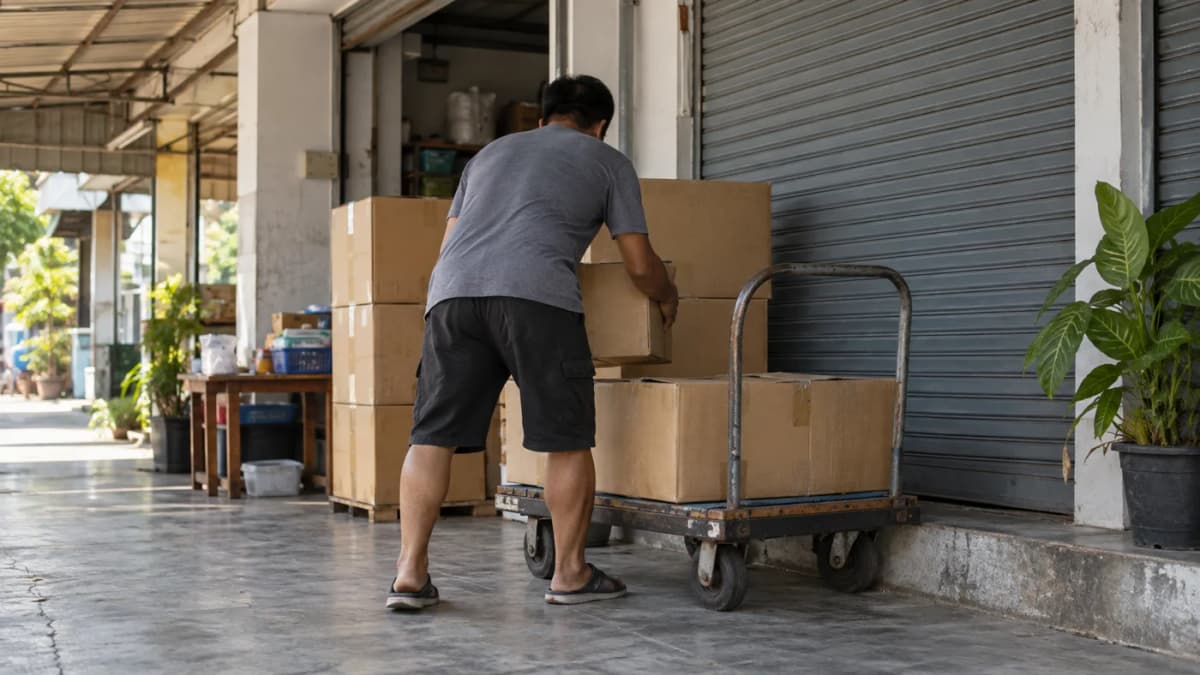
The time to discover an import problem is before the supplier ships, not after the cartons arrive. A product may need a permit, a particular label or evidence of origin. A cheap factory price can stop looking cheap once duty, freight, inspections and storage enter the bill.
This guide is for small businesses bringing commercial goods into Thailand or exporting them. Household moving allowances and tourist baggage rules are not a plan for importing stock. It was reviewed on 5 October 2026; confirm the rules for the exact product and shipment before paying a deposit.
Decide who is responsible for the shipment
Write down the seller, buyer, importer or exporter of record, customs broker and final delivery point. Agree on who provides the product information, applies for permits, pays each charge and keeps the records.
A broker can handle the declaration, but “the broker will sort it out” is not a substitute for accurate information. Send the product specification, composition, use, photographs, invoice and origin evidence early. Ask for a written explanation of the proposed tariff classification and any missing documents.
If the importing business is foreign-owned, customs registration does not answer whether the company's trading activity is permitted. Start with the company and foreign-business checklist. BOI benefits also cover specified approved activities and imports, not every shipment the company might buy.
Classify the product before calculating the duty
The tariff code depends on what the goods actually are. A supplier's code is useful information, but it is not a Thai classification ruling. Material, function, components and whether the item arrives assembled can change the result.
Ask the broker to identify the applicable Thai tariff entry, duty rate, valuation basis and any additional measures. Do not use a generic “electronics duty” or “clothing duty” percentage for everything in the category. For uncertain or high-value goods, ask Customs about the appropriate classification advice or ruling process.
Country of dispatch is not necessarily country of origin. Preferential duty under a trade agreement depends on the agreement's rules and supporting origin evidence, not simply on a parcel being sent from an agreement partner. Have the intended preference checked before treating duty as zero in your margin calculation.
Permits and product compliance come before loading
Thai Customs distinguishes prohibited goods from restricted goods. Restricted goods may require permission from the responsible agency. A customs duty payment does not replace that permission.
Food, cosmetics, medicines, certain electrical or radio products, plants, animals and other controlled goods can involve separate regulators. The exact product matters: do not assume every item in a broad category follows the same approval route. Ask about importer eligibility, product approval, testing, labels and permissions needed before shipment.
Samples are not automatically free of product controls, and a “gift” description does not turn commercial inventory into personal belongings. Do not understate the value or description to try to simplify clearance. Vehicles and other heavily controlled goods need specialist confirmation before purchase, not a generic shipping checklist.
Prepare a consistent document pack
The Customs Department's Laem Chabang import guide describes electronic declaration, verification, payment and release. Its supporting-document list includes the commercial invoice, packing list, bill of lading or air waybill, and any applicable import licence or origin certificate.
- Use matching business names, quantities, weights and product descriptions.
- Check that the transport document and invoice refer to the correct shipment.
- Provide composition, catalogue or technical information where needed.
- Keep permits and origin evidence with the declaration records.
- Record freight, insurance, currency and other valuation information.
- Retain the accepted declaration, assessment, payment and release evidence.
Allow time for documentary or physical inspection. An electronic declaration is not a promise that every shipment clears instantly. Agree on what happens if documents need correcting, and who authorises extra storage or testing costs.
Calculate landed cost, not just purchase price
Build the calculation in stages. Customs valuation is generally based on the applicable customs rules, with freight and insurance relevant to an import's CIF basis. CIF means cost, insurance and freight. The Revenue Department's import VAT explanation gives the VAT base as CIF price plus import duty, excise tax and other applicable taxes and fees.
Here is a deliberately simplified example, not a tariff quote. Assume a customs value of 100,000 baht, a hypothetical duty rate of 10%, and 7% VAT with no other additions to the tax base. Duty would be 10,000 baht. VAT on 110,000 baht would be 7,700 baht. The subtotal would be 117,700 baht before broker, handling, storage and inland delivery costs.
The general VAT rate remains 7% in the Revenue Department's August 2026 clarification. Your product may have exemptions or other taxes, and import VAT can arise even if your business is not VAT registered. Ask an accountant whether any import VAT is recoverable; do not assume it is always either a permanent cost or an immediate refund.
Then divide the complete landed cost by the saleable units, allowing for defects or damage. Add local delivery, selling fees, returns and your operating overhead. Our selling-online guide helps connect the shipment cost to a realistic selling margin.
Exports have their own checklist
Before accepting an overseas order, confirm the destination country's import rules with the buyer or its broker. A product permitted in Thailand may need different labels, standards or approvals at its destination.
Agree on the export declaration, transport evidence, any export permit and origin documents the buyer needs. Keep proof that the goods actually left Thailand. For a VAT-registered exporter, ask the accountant about the evidence for zero-rated treatment and any input-tax claim; an overseas customer name alone is not the whole file.
Digital services and downloadable products are a different tax and business-law question from sending cartons through Customs. Do not apply a goods-import duty calculation to a remote service invoice.
A small first order can still test the whole process
Start with a manageable commercial shipment only after checking the requirements. Use it to test documentation, delivery, product condition and the final landed cost. Do not split a larger order into misleading “personal” parcels to avoid controls.
Keep the records in a restricted business folder with a backup, using the habits in our document-organisation guide. Feed the actual costs into the company budget before scaling up. A shipment that arrives legally and at a known cost is a better starting point than an impressive order volume.
Common questions
Can household moving allowances cover business stock?
Do not treat personal household relief as permission to import commercial inventory. Check the commercial product, importer, declaration and any applicable permits separately.
Does buying from an FTA country guarantee zero duty?
No. Preferential duty depends on the applicable agreement, product rules of origin and acceptable evidence. The shipping country alone is not enough.
Does using a customs broker remove the need to check permits?
No. Establish the product requirements and responsible importer before shipment. A broker's declaration service does not replace required product or import permissions.
Ananas Premium
Unlock Hua Hin's Best Property & Investment Insights
Enjoying our free content? Get unlimited access to premium articles, local market intelligence, member briefings, and exclusive checklists for ฿290 / $9.95 per month.
Sources & Verification
- Product restrictions and relevant permissions must be checked before importing or exporting. — Thai Customs — prohibited and restricted goodsSource
- Import declarations, importer or representative, supporting invoices, transport documents, permits and origin evidence where relevant. — Thai Customs — Laem Chabang commercial import proceduresSource
- General 1.8-million-baht taxable-turnover threshold, import VAT obligations and CIF-plus-duty import VAT base; zero rating has conditions. — Revenue Department — value added taxSource
- Confirms continuing general 7% VAT and describes the announced extension through September 2027. — Revenue Department — VAT confirmation, 2 August 2026Source