Flying a Drone in Thailand: Registration and Preflight Checks
A practical preparation guide for camera-drone visitors: separate CAAT and NBTC registration, insurance, current flight approval and checks for the exact launch site.

Editors
Jun 15, 2026 · 8 min read
Status
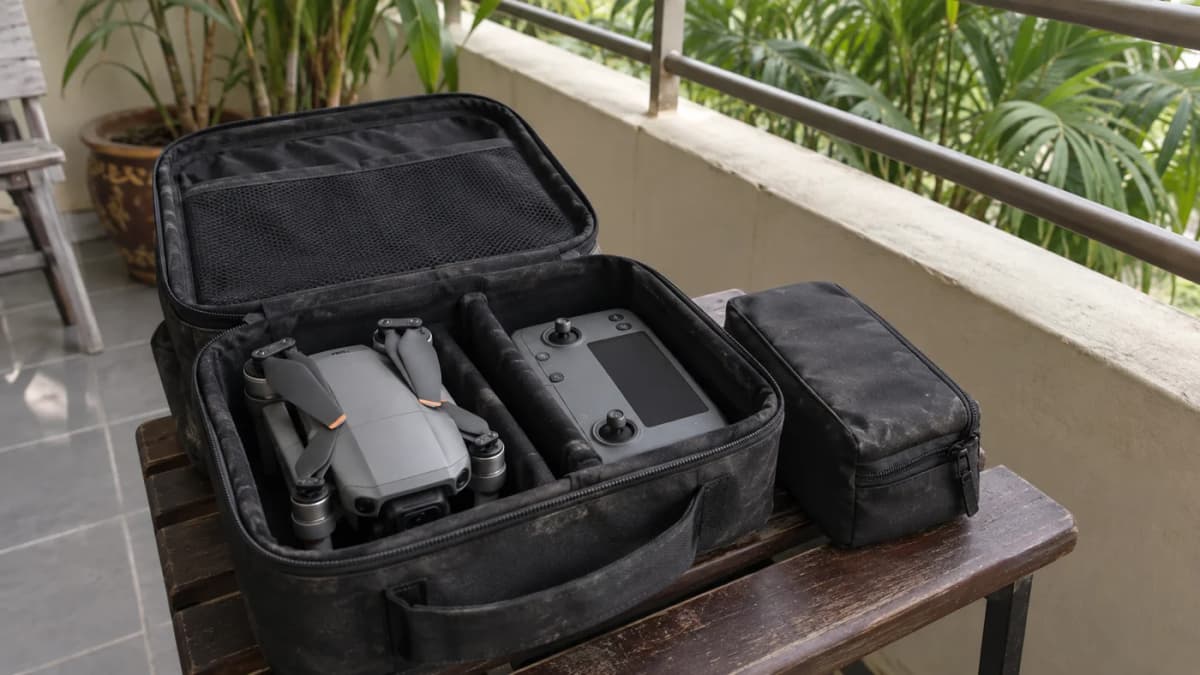
A small camera drone is easy to pack for Thailand. The paperwork is easier to overlook. A quiet beach, an empty field or a drone weighing less than 250 grams does not, by itself, give you permission to fly.
Plan the registration and the intended flight separately. This guide focuses on ordinary visitor preparation, not specialist operations. Rules and temporary restrictions can change during your stay, so check the official requirements again for the place and date of each flight.
Do not use weight as a camera-drone exemption
The government's tourist drone guidance says camera-equipped drones require Civil Aviation Authority of Thailand registration regardless of weight. It also describes the requirement for third-party liability insurance of at least one million baht. A lightweight model is not automatically outside these requirements.
There are two different authorities to understand. CAAT handles aviation requirements; the National Broadcasting and Telecommunications Commission, or NBTC, handles the radio-equipment registration. Completing one process should not be treated as completing the other.
Do not confuse “account created”, “application submitted” and “approved”. Keep the resulting documents and check that the names and aircraft details match your equipment. A receipt or pending application is not a reason to take off.
Start with the real official portals
Use CAAT's UAS Portal for the aviation process. For radio registration, start with NBTC's Any Registration member portal, which provides a foreign-applicant signup route using a passport. Follow the current instructions for your account and equipment rather than a copied screenshot of a discontinued service.
Complete the required operator qualification and knowledge-test steps, and retain the pilot certificate. Registering the aircraft alone is not proof that its operator has completed the process.
Prepare the information you are likely to need before travelling: clear equipment details, serial numbers, passport information and insurance documentation. Follow the portals' current identity and contact-number requirements. Do not assume that starting online overseas means every arrival-related step can be finished before entry.
Give yourself room to resolve an unreadable document, a mismatched name or a request for more information. A short holiday is a poor setting for a plan that depends on approval arriving on the first morning. If the process is not complete, leave the drone packed and enjoy the trip without it.
If you would rather have the paperwork coordinated for you, DroneClear Thailand's full-service drone registration handles the CAAT and NBTC workflow for one drone, with document checks and arrival-step coordination. Insurance is separate, you still take the required pilot test yourself, and authority approval is not guaranteed. Ask what the current package includes before booking.
For choosing between full-service and NBTC-only help, checking insurance and estimating the total, read our drone trip preparation and cost guide.
Check the current flight-approval notice
Rechecked on 6 October 2026, the Tourism Authority of Thailand's updated tourist guide cites CAAT Notice No. 16, effective 26 June 2026 until further notice. It describes restricted districts across seven border provinces, not a blanket ban on every part of those provinces.
The guide requires flight details through the UAS Portal at least three days ahead and notification to the Anti-Drone Centre at antidrone.police@gmail.com before each approved flight. Registration is therefore not a standing permission to fly anywhere on demand. Recheck whether this notice has been replaced before planning your operation.
Use exact coordinates, not just a town name. Identify the intended area, flight date, time and purpose, and follow the approval's conditions. If the permission covers one location or period, do not casually move the operation to a different beach because the original spot is busy.
A local person's permission to stand on their land answers a different question from aviation approval. Likewise, a flight approval does not remove the need to check access rules or permission from a park or property manager.
A scenic place is not necessarily a legal launch site
The official baseline guidance includes visual line of sight, daylight operation and an airport restriction within nine kilometres unless prior approval is obtained. It also sets a general height limit of 90 metres. These are boundaries to check, not a statement that every flight below that height is permitted.
Do not use an old travel blog's “best drone beaches” list as an approved-location map. Around Hua Hin, check the airspace, airport proximity and the rules of the exact site before considering a launch. Our beach guide is for planning a visit, not a list of authorised flying areas.
The same distinction applies to day trips around Hua Hin. Entry to an attraction or national park does not mean your drone is welcome there. Ask the responsible authority about the proposed activity and keep any relevant permission with your flight paperwork.
Insurance: check what the policy actually covers
Ask the insurer whether the policy satisfies the current registration requirements for your drone and covers the planned activity in Thailand. Check the insured person, aircraft identification, dates, territory, liability limit and exclusions. Save the evidence in a form you can present if requested.
A general travel policy, equipment warranty or replacement plan is not automatically the required aviation liability cover. Damage to your own drone and harm caused to another person are different risks. Do not choose a policy only because its name includes “travel” or “camera”.
If you need standalone cover, DroneClear's drone insurance options offer weight-based policies separately from registration handling. Confirm the correct aircraft details, cover dates and issued policy terms; liability insurance is not automatically protection against damage to your own drone.
If the use changes from a holiday flight to paid work or a more complex operation, ask both the insurer and CAAT what changes. Do not extrapolate a friend's approval to your own circumstances.
Keep an ordinary flight separate from specialist operations
A government announcement in May 2026 introduced a Specific Category framework for certain operations outside the general conditions. Do not apply its permit terms to every visitor flight or assume ordinary registration covers a non-standard operation.
If your proposed filming involves night operation or another departure from normal limits, ask CAAT about the appropriate authorisation before booking the work. A client's request or an attractive shot is not a reason to improvise around the rules.
A practical check before every launch
- Paperwork: confirm the required registrations, insurance and flight approval are complete and valid for the proposed operation.
- Location: check coordinates, current restricted areas, airport proximity and site permission.
- Conditions: read the approval's limits and current official notices; do not rely only on a consumer flight app's map.
- Weather: compare actual conditions and the forecast with the equipment manufacturer's limits. Do not treat a single general wind speed as safe for every drone.
- People: check the required separation from people, vehicles and buildings. An empty launch point is not permission to fly over a crowd. Respect privacy: avoid filming into homes or making people feel watched.
- Equipment: inspect the aircraft and batteries, and plan a safe landing area without blocking paths or access.
- Decision: if anything important remains unclear, postpone the flight. You do not need to use the drone just because you carried it here.
For seasonal planning, read the Hua Hin weather guide. In persistent rain or worsening conditions, a non-flying day can be the sensible plan rather than a missed opportunity.
Pack for the journey, not just the shot
Check your airline's current battery and equipment rules before travelling, including how batteries must be carried. Do not assume every drone battery has the same capacity or that an allowance quoted for another airline applies to yours.
Keep readable offline copies of the approvals and insurer contact details, with a separate backup. Carry the equipment securely and do not photograph paperwork containing personal information for a public post. If you decide not to fly, keep the drone packed; you can still enjoy the place without turning the visit into a permit problem.
Questions visitors ask
Does a camera drone under 250 grams avoid registration in Thailand?
No. Official tourist guidance requires CAAT registration for camera-equipped drones regardless of weight. Check the separate NBTC radio-registration requirements as well.
Does registration mean I can fly immediately anywhere in Thailand?
No. Check current flight approval, restricted areas and site rules for your exact operation. The June 2026 notice described above adds advance submission and notification requirements; recheck for replacements before flying.
Is a tourist beach guide proof that drone flying is allowed?
No. A place being open to visitors does not establish flight permission. Check the airspace, current restrictions, approval conditions and the responsible site authority separately.
Ananas Premium
Unlock Hua Hin's Best Property & Investment Insights
Enjoying our free content? Get unlimited access to premium articles, local market intelligence, member briefings, and exclusive checklists for ฿290 / $9.95 per month.
Sources & Verification
- Notice 16 effective 26 June 2026: restricted districts, advance flight submission and Anti-Drone Centre notification. — Tourism Authority of Thailand — updated tourist drone guideSource
- Camera-drone registration regardless of weight, liability cover and baseline operational boundaries. — Thailand.go.th — tourist drone baseline guidanceSource
- Official aviation portal identified by government tourist guidance; no invented interface steps. — CAAT — UAS PortalSource
- Official radio-equipment registration portal with passport-based foreign-applicant signup. — NBTC — Any RegistrationSource
- May 2026 framework for certain operations outside general conditions; not a universal visitor certificate. — Royal Thai Government — Specific Category announcementSource
- Independent one-drone service handles CAAT/NBTC workflow; insurance separate and operator test remains personal. Product pages checked6October2026. — DroneClear — full-service registration and insurance linked above