How to Keep Travel and Work Documents Organised in Thailand
A practical document system for travel and life in Thailand: clear folders, offline copies, careful sharing and a recovery plan that does not rely on one phone.

Editorial Team
Sep 17, 2026 · 8 min read
Status
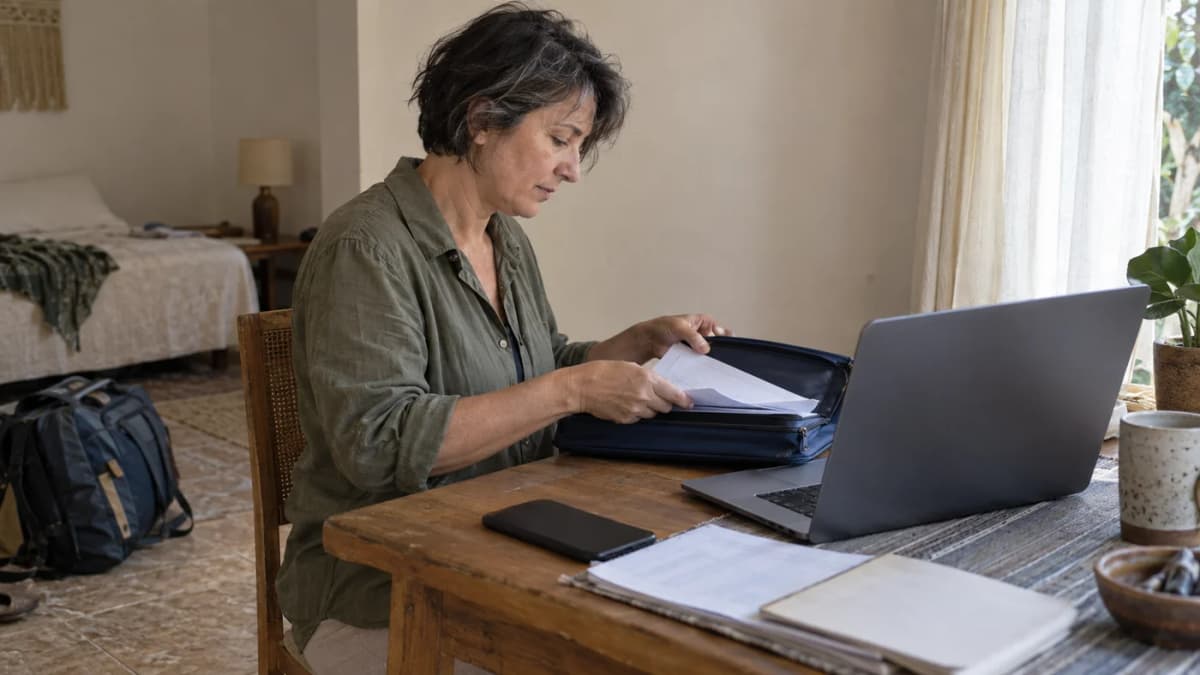
The booking confirmation is in one email account. Your insurance certificate is buried in a chat. The signed agreement is on the laptop you left at home. None of these files is particularly hard to store. Finding the right one when someone is waiting is the awkward part.
A small, organised document library in Dropbox can help, whether you are visiting Thailand for two weeks, settling in Hua Hin or handling client work while travelling. The useful setup is simple: separate private and work files, name them clearly, prepare essential copies offline and keep a recovery route that does not depend on one phone.
Referral disclosure: Our registration links are referral links. Eligible new users can receive 500 MB of extra storage after completing the referral requirements; we may receive extra storage too. Details were checked on 17 September 2026.
Build a small document kit, not a second junk drawer
Start with the files you would actually need away from home: booking confirmations, insurance information, a rental agreement and a few current work documents. Decide separately whether sensitive identity or medical copies belong in your cloud account. Uploading everything makes searching harder and increases what could be exposed if access goes wrong.
For a longer stay, use our first 30 days in Thailand checklist to identify the practical paperwork you need. This storage guide is not a visa-document checklist. A saved scan is a reference copy, not an automatic replacement for an original, certified copy or document requested by an authority.
Try this folder structure inside your private library:
- 01 Travel: one folder per trip, containing transport, accommodation and the current itinerary.
- 02 Living: the current lease, household agreements and receipts you have a reason to keep.
- 03 Personal: selected private records, with particularly sensitive material handled according to your security needs.
- 04 Own Business: your own administrative files, separated by project or year. Client-controlled work stays in the client's approved system.
- 99 Archive: completed trips and superseded documents you still need to retain.
These are categories, not permission settings. Putting a file in a folder called “Private” does not make it private if that folder sits inside a shared parent. Keep the whole personal library outside shared workspaces, and share only the specific item someone needs.
Give files names you can recognise on a phone
“Scan 0047” means very little at a reception desk. A name such as “2026-10 Accommodation confirmation.pdf” gives you a date and a purpose without opening the file. For work, try “Project Cedar — Agreement — Signed.pdf” and keep drafts in a separate subfolder.
Do not put passport numbers, full dates of birth or other sensitive identifiers in filenames. They can appear in notifications, search results and shared links. Use calendar reminders for renewal dates; a tidy folder cannot remind you that a policy is about to expire.
The mobile app for Dropbox includes document scanning and can save multiple pages as one PDF. Check each page for glare, missing edges, readability and correct order before filing it. The official scanning instructions explain the controls. Do not rely on automatic text search to find every Thai-language scan; meaningful filenames are still useful.
Make the essential files available without internet
Seeing a filename in the mobile app does not mean the document is stored on your phone. In Dropbox, individual files can be marked available offline on all plans; making a whole folder available offline on mobile requires an eligible paid plan. Check the current offline-access instructions for your device.
- While connected, select the essential files and use their “Make Available Offline” option.
- Wait for the downloads, then refresh the offline list to check that you have the latest versions.
- Switch off Wi-Fi and mobile data temporarily. Open each essential file in the app and check every page.
- Reconnect afterwards. Repeat the check when a booking or document changes.
Mobile offline copies do not necessarily refresh continuously over cellular data under the default settings. Review those settings before travelling. Keep the offline selection small: it uses device storage and leaves copies on the device you carry.
This is especially helpful between connections, but it does not replace a working data plan. Our Thai mobile-operator guide covers that separate decision.
Share one document, not your entire life
Suppose an accountant needs one invoice or a client needs the signed version of an agreement. Share that file, check the recipient and choose viewing rather than editing when changes are unnecessary. Review existing access as well as the new link.
For sensitive information, use an approved recipient-specific method rather than an unrestricted link. Ask what information is genuinely required, and prepare a separate reduced-data copy when appropriate and accepted. Keep the original intact. If a business provides a secure submission portal, use its required process instead of insisting on your own storage service.
Password-protected and expiring shared links are available on certain paid plans, not every account. The official link-permission guide also makes an important distinction: restrictions on a link do not remove access already granted directly. When the job is finished, review both routes. Revoking a link cannot pull back copies someone has already saved.
Protect the account before adding private records
Use a unique password and turn on two-factor authentication. An authenticator app is useful when you change SIM cards or cannot receive a text abroad. Save emergency recovery codes securely somewhere you can reach without signing into the same cloud account. Keeping the only copy beside the files it unlocks defeats the purpose.
Follow the official account-security setup, lock and update your devices, and protect the email account used for recovery too. Do not put passwords, card security codes or recovery secrets in an ordinary shared document.
Dropbox describes encryption during transfer and storage in its security overview. That is not a promise that every account is suitable for every confidential document, or that a wrongly shared file becomes safe. Highly sensitive records may need a different storage method. Employer and client requirements take priority over convenience.
For work, separate personal ownership from business ownership. Agree where the official copy lives, who can access it and what happens when the project ends. Our remote-work setup guide explains how to keep files, approvals and project decisions together without multiplying tools.
Have a plan for a lost phone or an accidental deletion
Before leaving, ask yourself: could I reach my account from another trusted device, and could I recover important files if I deleted the wrong folder? Test the process with a harmless sample document, not your only copy of something important.
Cloud sync and an independent backup solve different problems. Sync keeps working copies in step; it is not a permanent archive of everything you have ever saved. Keep an appropriate separate backup of irreplaceable files, protected and stored apart from your travelling device. For client data, follow the agreed retention and backup rules rather than making unauthorised extra copies.
The standard recovery window for deleted files and earlier versions on Basic, Plus and Family plans is 30 days, according to the current retention policy. Other plans and add-ons differ, and permanently deleted files cannot simply be recovered. Check your own account's terms before relying on recovery.
Start free, then decide whether you need more
Dropbox Basic currently starts with 2 GB of storage and allows up to three linked devices. That can be a sensible starting point for a modest document collection, depending on file sizes. Photos and video will fill it much faster. Check the account setup and limits before choosing a plan.
If you are new to the service, register with Dropbox through our referral link. The published reward for an eligible invited friend is 500 MB of additional storage, not 1 GB. The 1 GB figure applies to the inviting account on certain paid plans.
Use the invitation to create a new account, install and sign into the app, and verify your email. The reward page updated in September 2026 accepts either desktop or mobile installation; the older referral instructions still describe desktop setup. Desktop is the route documented by both. Follow the live signup requirements and confirm the bonus in your account; registration alone does not guarantee credit.
Start with one trip or one small project. If you can find the right document quickly, open the essentials without a connection and explain who has access, the system is doing its job. You can expand it later.
Frequently asked questions
Does the referral give a new user 1 GB of extra storage?
No. The published invitee reward checked on 17 September 2026 is 500 MB after the referral requirements are completed. The 1 GB reward applies to the inviter on certain paid plans.
Can I open my travel documents without mobile data?
Yes, if you have made the required files available offline and finished downloading them beforehand. Test them with Wi-Fi and mobile data switched off, and refresh your copies when documents change.
Can a scan replace an original document in Thailand?
Not automatically. Keep originals where required and check the receiving organisation's instructions. Cloud copies help you find and share information; they do not change document requirements.
Ananas Premium
Unlock Hua Hin's Best Property & Investment Insights
Enjoying our free content? Get unlimited access to premium articles, local market intelligence, member briefings, and exclusive checklists for ฿290 / $9.95 per month.
Sources & Verification
- Invited friend 500 MB; inviter Basic 500 MB or eligible paid 1 GB; older desktop-only setup. — Official provider help: referral rewardSource
- Updated September 7 2026: referral signup, desktop OR mobile installation/sign-in, email verification. — Official provider help: current completion requirementsSource
- All users can mark individual mobile files offline; whole mobile folders eligible paid only. Not offline by default; cellular refresh settings matter. — Official provider help: offline accessSource