Off-Plan Property in Thailand: Checks Before You Pay
How to check an unfinished Thai property: ownership, developer identity, approvals, reservation terms, payment milestones, delays and handover.

Editorial Team
Aug 21, 2026 · 8 min read
Status
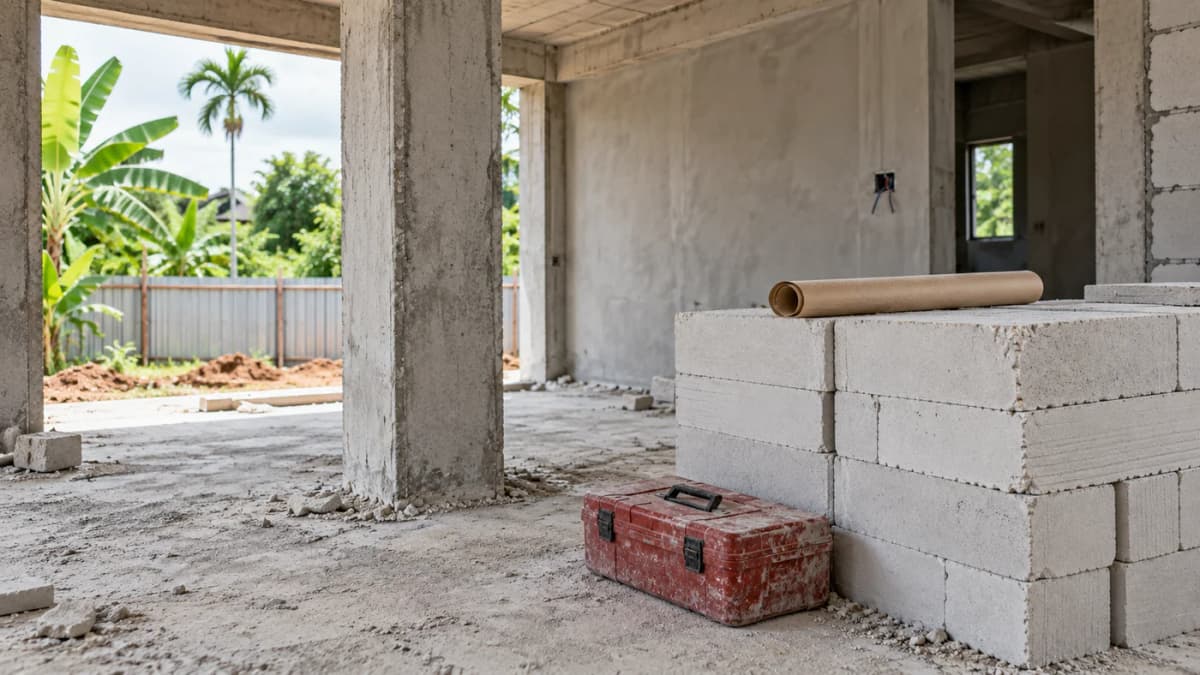
A show apartment answers one question well: do you like the proposed home? It cannot tell you whether the project will be delivered on time, whether you can take the promised ownership, or what happens to your money if construction stops.
Buying off-plan in Thailand means committing before the home is ready. That is not automatically a bad decision, but it needs a different set of checks from buying a completed property. Do them before a booking payment, while walking away is still straightforward.
Work out exactly what is being sold
Ask for the unit or plot identifier, approved layout, usable area, specification and ownership structure in writing. Is the proposal for a condominium freehold, a lease, a house, land, or some combination? These are not interchangeable rights. A reservation receipt does not itself transfer property ownership.
For a foreign buyer, have an independent Thai property lawyer confirm eligibility and the documents required for the actual transaction. The condominium foreign-ownership ceiling is generally 49% of the total area of all units, not 49% of the unit count. BOI's property guidance describes that area-based rule. Obtain project-specific confirmation rather than treating a salesperson's “foreign quota available” message as a guarantee.
Ask your bank and lawyer about the funds-transfer evidence before sending money. A residence visa does not, by itself, settle your property rights. Nor should a company, a friend's name or promised lease renewals be treated as a shortcut around ownership restrictions.
Check the developer behind the brand
A familiar marketing name may sit above a different company signing your contract. Obtain that company's registered name, number, address and authorised signatories. Check who owns the project land and who receives your payments.
The Ministry of Commerce explains how DBD DataWarehouse+ provides company records and filed financial information. Use those records to establish the entity and review it with your adviser. A registered company or published balance sheet does not prove that this project has enough funding to finish.
Ask about completed projects and whether you can inspect one or speak to its management. Treat resident comments as leads to investigate, not audited evidence. A group's track record is relevant, but a separate project company may have different assets, borrowing and obligations.
Ask for approvals, not just progress photos
Have the lawyer examine the land record, ownership, access rights and registered burdens. If there is a mortgage, ask how the relevant property will be released at transfer. A mortgage alone does not prove wrongdoing, but “the bank will sort it out” is not an adequate written mechanism.
Request the permits and approved plans relevant to this project, then have the appropriate professional verify them with the issuing authority. Ask whether an environmental impact assessment is required and, if so, whether the required approval covers the project being offered. A submitted application is not the same as approval.
ONEP describes searching approved EIA projects by project, owner and location. Use the exact entity and site details when checking. A failed search alone is not a legal conclusion: clarify the applicable requirement and records with your adviser and the authority.
For a visit, arrange permission and safe access. Photographs of concrete, workers or a crane do not establish legal approvals, construction quality or a reliable completion date. Don't enter an active building site unescorted.
Read the reservation terms before paying
Get the reservation document and proposed sale agreement together. Identify what you are reserving, how long the reservation lasts, what must happen next and which events allow a refund. Ask what happens if legal review finds that you cannot obtain the promised ownership or a material description is wrong.
Thailand does have consumer rules relevant to these transactions. OCPB's February 2026 enforcement notice refers to controlled-contract rules for condominium reservation businesses. Ask your lawyer whether those rules and other mandatory protections cover the proposed sale; do not assume a developer's printed form is compliant simply because many buyers signed it.
Save the brochure, floor plan, dated offer and messages about included items. Put material promises into the agreement. A private conversation about a sea view, furniture package or rental return is much harder to use when the signed paperwork says something different.
Make the payment schedule understandable
Each payment should have a clear amount, due date or milestone, recipient and receipt. Check whether earlier booking money is credited toward the purchase price. Have someone add the figures independently so you know the total commitment, not just the attractive first payment.
Ask who confirms that a construction milestone has actually been reached, what evidence you receive and whether you can arrange independent review. A payment tied to progress may be useful, but it does not turn an unfinished building into your registered property or eliminate insolvency risk.
If an arrangement is called escrow, ask who the independent holder is, what legal agreement governs it, when funds can be released and what happens on cancellation or default. Do not assume a developer-controlled account is protected because someone uses that word.
There is no deposit percentage that makes every project safe. Consider how much you could lose or have tied up, and whether you could still afford alternative housing and professional help. Keep a reserve outside the transaction.
Understand delay, changes and the exit route
A contract needs more than an estimated completion month. Have the lawyer explain the handover obligation, permitted extensions, notice process, remedies, termination conditions and any refund procedure. Ask how broad exceptions work and what evidence is required when a delay is claimed.
Check the clauses covering layout, floor area, materials and shared facilities. Who may change them, how are you told, and what are your options if the change matters? Do not infer an automatic cancellation right or a fixed compensation rate from another buyer's story.
Keep a separate housing plan. If a delayed handover would leave you without a home, read our Hua Hin rental guide and budget for an extension or a different lease. Also check financing approval and expiry dates rather than assuming a loan offer will remain available indefinitely.
Price the home without the rental promise
Request a written estimate of transfer costs, taxes, initial common fees, reserve-fund payments, furniture, utilities and ongoing management. Confirm with the lawyer and Land Office which charges apply and who pays them. Promotional fee reductions and eligibility conditions can change; a generic percentage is not your closing statement.
If rental income is part of the pitch, ask who owes it, how long the obligation lasts, what costs are excluded and what happens if that operator cannot pay. Our guide to property prices and rental claims helps separate an advertised yield from a realistic cash-flow calculation.
Compare the proposal with completed homes you can inspect. A completed property removes the wait for construction but still needs title, condition and management checks. Neither option is automatically the better investment.
Prepare for handover before the final demand
Agree the inspection process, required documents, defect reporting and rectification procedure before the deadline arrives. An independent technical inspection and a legal transfer review do different jobs. Use the 47-point property checklist as a brief for both.
Compare the delivered layout and equipment with the signed specification. Ask about warranties, service contacts and operation of shared systems. Get unresolved items recorded, with responsibility and follow-up dates. Whether money can be withheld or transfer postponed is a contractual and legal question, not a step to improvise alone.
When to stop the transaction
Pause if you cannot identify the seller, obtain the agreement, reconcile the payment figures or verify a material approval. Pressure to pay before independent advice, unexplained account changes and refusal to document promises are reasons to step back. None proves a crime on its own; all make further commitment harder to justify.
If trouble starts after payment, preserve records and obtain prompt independent advice. OCPB offers consumer guidance through its official site and hotline 1166. A valid claim does not guarantee quick recovery, especially where the paying entity lacks assets. Avoid sending another payment simply because you hope it will rescue the first one.
Frequently asked questions
Does a reservation payment make me the owner?
No. A reservation payment does not itself transfer property ownership. Have a lawyer explain the rights created by your documents and the steps required for registration.
Is the condominium foreign quota based on the number of units?
No. The general 49% ceiling is based on the total area of all condominium units, not their count. Your eligibility and the project's available quota still need checking.
Does a construction milestone payment remove the risk?
No. A milestone schedule does not guarantee completion, protect every payment from insolvency or transfer title. Verify the evidence, contract and payment arrangement independently.
Ananas Premium
Unlock Hua Hin's Best Property & Investment Insights
Enjoying our free content? Get unlimited access to premium articles, local market intelligence, member briefings, and exclusive checklists for ฿290 / $9.95 per month.
Sources & Verification
- The general condominium foreign-ownership ceiling is based on total unit area. Have your eligibility and the project's quota checked before committing. — BOI OSOS — condominium ownership orientationSource
- DBD provides company registration and filed financial information. Those records are a starting point for checking the seller, not a completion guarantee. — Ministry of Commerce — DBD DataWarehouse+ explanation, August 2026Source
- ONEP describes searching approved EIA projects by name, owner and location. Ask an adviser which approval requirements apply to the specific development. — ONEP — official Smart EIA explanationSource
- OCPB's 2026 enforcement notice refers to controlled-contract rules for condominium reservations. Have the proposed documents checked against the applicable requirements. — OCPB — February 2026 reservation-contract enforcementSource