How to Prepare for Heavy Rain and Flooding in Thailand
What to keep at home, what to pack for evacuation and how to stay safer during Thailand's heavy rains, floods and power cuts.

Editorial Team
Oct 1, 2026 · 10 min read
Status
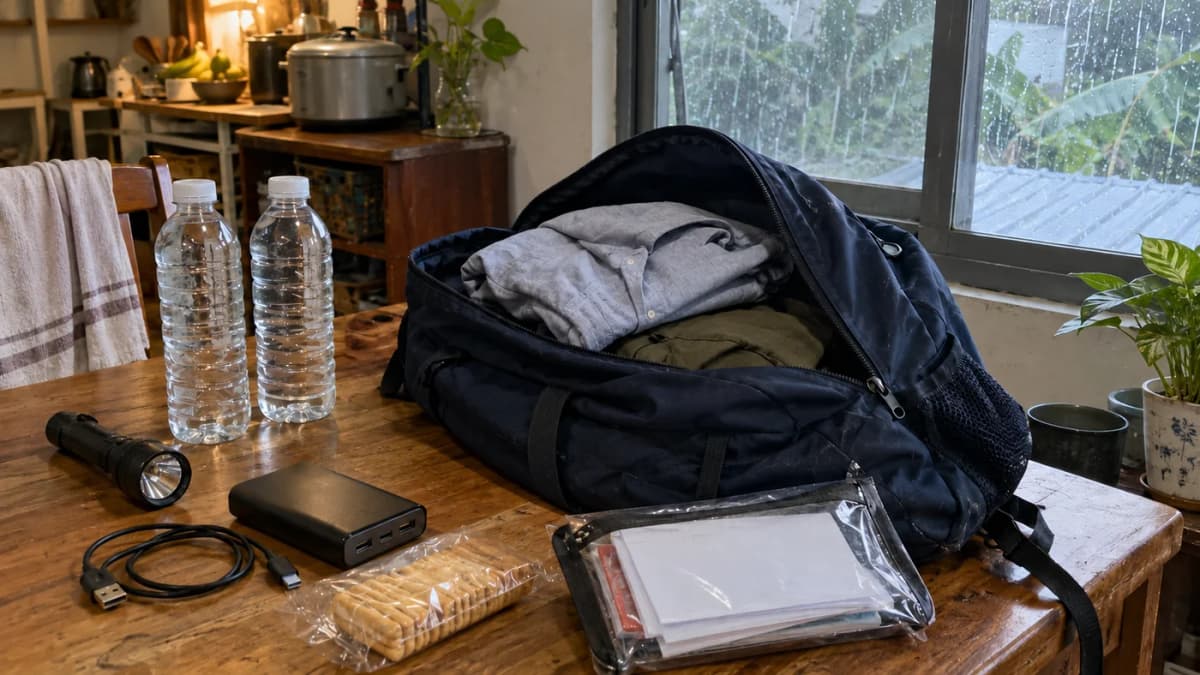
The rain has stopped, but the road outside is still under water. Your phone is running low, the water pump has no power, and the nearest shop may not be reachable. Preparing for heavy rain in Thailand means thinking about those ordinary problems before they arrive.
If you are in immediate danger, follow local evacuation instructions. Do not walk, ride or drive through floodwater. Call 1784 for disaster assistance, or 1669 for a medical emergency. A household checklist is useful before an emergency; it is not a reason to delay leaving.
Why this matters now: the October 2026 floods
On 1 October 2026, The Nation reported DDPM's flood update: flooding remained in 30 provinces and Bangkok, affecting more than 1.17 million households. The report linked the situation to heavy rainfall and water arriving from the North. Water levels were falling in some places but still rising in others.
That is a dated national snapshot, not a warning for every address or a prediction for tomorrow. It also explains why a break in the rain is not enough to decide that a riverside home is safe. Check the current notice for your own district, including evacuation instructions and road closures.
Separately, TMD's advisory issued at 5pm on 1 October warns of thunderstorms, gusty winds and heavy rain in parts of Thailand during 4–7 October 2026, with flash-flood, overflow and landslide risks near waterways, foothills and lowlands. That is a forecast for specified dates, not a statement that those hazards are happening everywhere now. Check later bulletins before making plans.
Check the warning, then check your building
Use the Thai Meteorological Department's warnings for weather information and DDPM's disaster information alongside your provincial or municipal announcements for local conditions. TMD's weather hotline is 1182. Read the issue time, affected area and expiry time; an old screenshot passed around a group chat can look current.
If a notice is in Thai, ask building staff or someone you trust to help interpret it. Machine translation can help you read, but confirm any instruction that determines whether you leave. Save your full address in Thai and a map pin while you still have a connection.
Ask your landlord, hotel or condo management a few direct questions:
- Has water entered this building, parking area or access road before?
- Which exit and route should residents use if the usual entrance floods?
- Who gives evacuation instructions, and where is the designated meeting point?
- What happens to lifts, water pumps and access gates during a power cut?
- Who can help a resident who cannot use stairs independently?
A high-floor apartment still depends on the building below it. A dry room does not guarantee access to drinking water, transport or medical care. For seasonal travel planning, our Hua Hin weather guide separates climate averages from actual forecasts.
What to keep at home before heavy rain
Start with the things your household actually uses. Store them somewhere dry and accessible, above places water has previously reached. Check expiry dates and rotate the supplies rather than forgetting a sealed box until the next storm.
Safe water, with a quantity you can plan
The CDC's emergency-water guidance recommends at least one US gallon, about 3.8 litres per person per day for three days, covering drinking and basic uses such as cooking and brushing teeth. For two adults, that is roughly 23 litres as a starting reserve. Store more if you can, especially in hot conditions, and plan separately for pets and additional household needs.
Unopened commercially bottled water is the simplest option. Keep it out of sun and away from chemicals. A separate supply of utility water may help with cleaning or toilets, but do not assume that water from a tank or a flooded supply is safe to drink. Follow your water provider's safety advice.
Food and everyday essentials
The American Red Cross supply list is a useful starting point. Adapt it to your household and local information:
- Food: at least three days of shelf-stable items you can eat without cooking, plus a manual opener where needed. Include suitable food for children and dietary needs.
- Light and power: a torch or headlamp, spare batteries, charged power banks and the right phone cables. A battery radio offers another way to hear updates.
- Health: a first-aid kit, regular medicines, a medication list, glasses and other essential medical items.
- Hygiene: soap, toilet paper, sanitary products, nappies if needed and rubbish bags.
- Practical basics: some cash in small notes, spare keys, dry clothes and essential pet supplies.
Ask your pharmacist or clinician how much of your regular medicine to keep and how to store it during an outage. Refrigerated medicines need their own plan. A bag of ice is not automatically the correct temperature, and a flooded medicine package needs professional advice before reuse.
Think through one evening without electricity: can everyone see safely, eat, charge a phone and take necessary medicine? Buy the missing essentials first. A large collection of gadgets can wait.
Pack a small bag you can leave with
Your home water reserve will be heavy. Do not make the evacuation bag so large that nobody can carry it. Pack drinking water you can carry, ready-to-eat food, regular medicines, a torch, phone power, basic hygiene items and a change of clothes. Keep important documents protected from rain.
For foreigners, include your passport and essential immigration papers, insurance details, accommodation information and emergency contacts. Prepare selected copies offline and keep a paper contact sheet too. Our travel-document storage guide explains how to test offline access. A cloud account alone is not much help when your only phone has no battery.
Agree on a meeting point and someone outside the affected area who can receive updates. Plan transport before roads close, including assistance for anyone with limited mobility. If you have pets, confirm that your destination accepts them and keep carriers or leads ready. The CDC's flood-preparation guidance stresses planning evacuation routes and never ignoring an order to leave.
Prepare the home while it is still safe
Move documents, electronics and other valuables off low floors. Charge devices. Bring loose balcony or garden items inside where you can do so safely. Photograph belongings and keep your insurer's contact details accessible; check your own policy rather than assuming it includes flood damage.
Move a car or motorbike to a safer permitted location before access becomes flooded. Agree on parking with the building or landowner. Do not go into an inundated basement later to rescue a vehicle.
Have management explain the electrical shut-off arrangements in advance. Switch off or unplug equipment only while the area, your hands and the controls are dry and safely accessible. Never enter water to reach a breaker, socket or appliance. If you cannot isolate power safely, leave the affected area and contact the utility or building management.
PEA's September flood-safety notice warns against touching electrical equipment in wet areas. Its assistance number is 1129. MEA's service information gives 1130 for Bangkok, Nonthaburi and Samut Prakan. Check which provider serves your property.
Renters should report leaks and drainage concerns early. Do not alter wiring, climb onto a wet roof or build a barrier that blocks a neighbour's escape route. Preparing belongings is worthwhile only while people remain safe.
If water starts rising
Follow evacuation instructions promptly. Do not wait for water to reach the living room. If your planned route is already flooded, do not attempt to cross it: contact local responders and follow their advice. If trapped, move to the highest safely accessible point away from electrical hazards and call for help, giving your location and the number of people with you.
A pickup ahead of you getting through does not make a road safe for your scooter or car. Water can hide damaged surfaces, open drains, currents and live wiring. The US National Weather Service's flood advice is clear about avoiding flooded roads and obeying barriers. There is no water-depth rule in this guide that makes crossing safe.
Keep children and pets away from floodwater. Do not go out for photos or try to retrieve possessions from a flooded room. If you need medical help in Hua Hin, our local emergency guide covers contacts and what to tell the dispatcher.
During a power cut, avoid creating another emergency
Use battery lighting. Never run a generator in a home or garage, even with the doors open. The CDC's carbon-monoxide guidance says portable generators must be outdoors, more than 20 feet, about 6 metres, from windows, doors and vents, with a battery-powered or battery-backup carbon-monoxide detector in the home. A small balcony beside windows is not a safe workaround. Never burn charcoal or use a portable gas camping stove indoors.
Keep the fridge closed and note when the power went off. The CDC's food-safety guidance gives an unopened refrigerator about four hours without power. After that, discard perishable food unless a safe cold source has kept it at 4°C or below. Do not taste food to decide whether it is safe. Food touched by floodwater needs to be discarded or handled under the specific official guidance, not simply wiped clean.
When the water goes down
Return only when local authorities say it is safe. A damaged building or wet electrical system needs professional assessment; do not reconnect flooded appliances because they look dry. The CDC's returning-home checklist covers these hazards and recommends contacting your insurer and photographing damage before cleanup, when safe.
If your skin has touched floodwater, wash with soap and clean water. Seek medical care for a contaminated puncture wound, or a wound that becomes red, swollen, painful or starts oozing. Tell the clinician about the exposure. The CDC's floodwater advice explains why clear-looking water is not necessarily clean.
For cleanup, use suitable boots, gloves and eye protection; mould cleanup also needs respiratory protection. Keep children away from the work area and seek help for extensive damage. Follow product labels and official cleanup advice; never mix bleach with other cleaners. Follow local advice before using tap water again.
If you are shopping for a replacement vehicle after flooding, use our guide to spotting flood damage in a used car before paying a deposit. It covers records, viewing clues and a properly scoped independent inspection.
Thailand contacts to save before you need them
- 1784: DDPM disaster assistance.
- 1669: emergency medical help, listed in the Thai government's assistance hotlines.
- 1129: PEA electricity assistance in its service areas.
- 1130: MEA electricity assistance in Bangkok, Nonthaburi and Samut Prakan.
- 1182: TMD weather information, not a rescue dispatch number.
Also save your building manager, local authority, insurer and a trusted contact. When asking for help, give the address or map pin, floor, nearest landmark, number of people and any urgent medical or mobility needs. Do not assume every hotline can provide immediate English-language assistance.
Frequently asked questions
How much emergency drinking water should I keep in Thailand?
Start with about 3.8 litres per person per day for at least three days, following CDC guidance for drinking and basic uses. Two adults need roughly 23 litres for that starting reserve. Allow more for heat, pets and additional household needs.
Should I switch off electricity if my home starts flooding?
Only if you can reach dry controls safely, with dry hands and without entering water. Never wade to a breaker or touch wet electrical equipment. If access is unsafe, leave the affected area and contact your utility or building management.
Does living on a high condo floor mean I can ignore a flood warning?
No. Access roads, lifts, pumps and other shared services may be affected even if your room stays dry. Follow building and local-authority instructions, keep essential supplies and have an evacuation plan suited to your household.
News context and safety sources checked on 1 October 2026. This is a preparedness guide, not a live warning feed. Local emergency instructions take priority.
Ananas Premium
Unlock Hua Hin's Best Property & Investment Insights
Enjoying our free content? Get unlimited access to premium articles, local market intelligence, member briefings, and exclusive checklists for ฿290 / $9.95 per month.
Continue reading
Sources & Verification
- Dated national reporting: flooding persisted in 30 provinces and Bangkok, more than 1.17 million households; heavy rainfall plus northern inflows. Secondary news source explicitly attributed, not a current address-level warning. — The Nation: DDPM flood update, 1 October 2026Source
- Official warning entry point and 1182 weather hotline. Forecast must be checked for issue/validity dates; no expired September warning republished as current. — Thai Meteorological Department: warnings and contactSource
- Official disaster information; contact 1784. No invented shelter address, evacuation zone, app or LINE handle. — DDPM disaster information systemSource
- At least one US gallon per person/day for three days, more for heat and other needs. Rounded 3.8 L × 2 × 3 = 22.8 L, approximately 23 L. Unopened commercial bottles preferred. — CDC: emergency water supplySource
- Water/food, light/radio, batteries, health and hygiene items, contacts, cash, documents and household-specific supplies. No US-only NOAA reception claim or universal Thai medicine amount. — American Red Cross: survival kitSource
- Household communication and evacuation planning, assistance for special needs, protected documents, pet arrangements, obey evacuation orders. — CDC: preparing for floodsSource
- Avoid touching electrical equipment in wet areas; PEA Contact Center 1129. — PEA: flood electrical safety, 28 September 2026Source
- MEA service areas Bangkok, Nonthaburi and Samut Prakan; 1130 assistance. Historical page used only for provider/contact, not current road status. — MEA: service area and 1130Source
- Avoid flooded roads and barriers, electrical hazards; highest safely accessible point and call for help if trapped. US emergency number not imported into Thailand. — National Weather Service: during a floodSource
- Generator outdoors more than 20 ft (~6 m) from openings; CO detector; never use generator in home/garage, charcoal or portable gas camp stove indoors. — CDC: carbon monoxideSource
- Refrigerator closed about four hours, perishables need safe cold source 4°C or below beyond that; no tasting to test; flood-contaminated foods require official handling/discard. — CDC: emergency food safetySource
- Wait for local permission, professional damage inspection, no wet controls/appliances, photographs/insurance before safe cleanup. — CDC: return home after a disasterSource
- Avoid contact, wash exposed skin; contaminated puncture and infection signs need clinical attention, no preventive antibiotic recommendation. — CDC: floodwater safetySource
- Protective gear, respiratory protection for mould, follow labels, do not mix bleach/cleaners; no universal bleach dilution transplanted. — CDC: safe cleanupSource
- Official English government list confirms emergency ambulance 1669. Replaces initially indexed NIEMS resource that live QA found HTTP 404. No English-speaking responder availability guarantee. — Thai Government PRD: assistance hotlinesSource
- Forecast for 4–7 October 2026, region-specific storms, gusty wind and heavy rain; runoff, overflow and landslide risk near waterways/foothills/lowlands. Explicitly future date-qualified, not universal current conditions. Full official page read in headed browser, snapshot page-2026-10-01T10-44-37-593Z.yml. — TMD advisory No.1 (235/2026), issued 1 October 2026 at 17:00Source