Opening a Restaurant in Hua Hin: Checks Before the Lease
Check the operator, premises, food-permission route, hygiene, menu economics and records before committing to a Hua Hin restaurant lease.

Editors
Jun 20, 2026 · 7 min read
Status
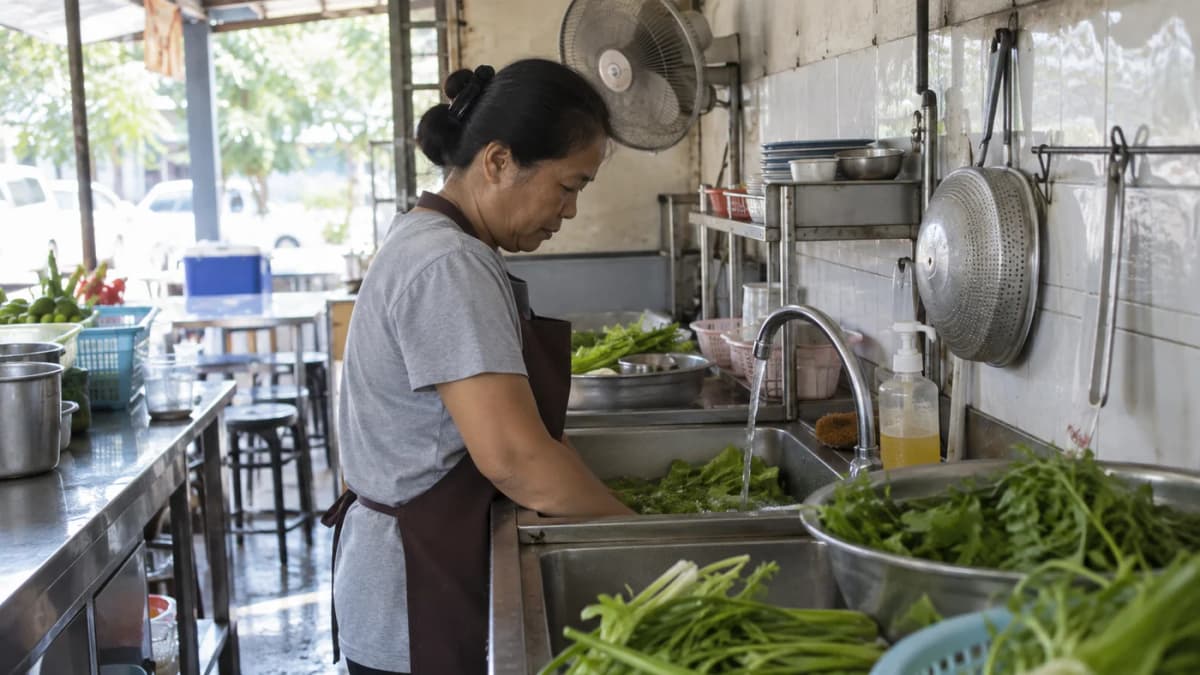
A restaurant plan in Hua Hin should survive a quiet weekday, a staff absence and a broken fridge. If the numbers only work on holiday weekends, or the premises cannot support the kitchen you need, it is better to discover that before signing a long lease.
Start with the legal operator, the premises and a costed menu. Decoration comes later. This guide is a preparation checklist, not a promise that one budget, seven licences or a particular company structure will fit every restaurant.
Decide who is lawfully operating the business
Foreign ownership and day-to-day work are different questions. The BOI's restaurant-business FAQ identifies food and beverage sales under List Three (19) of the Foreign Business Act and the foreign-business-permission issue.
That FAQ is older orientation, not approval of a 2026 structure. Ask a Thai lawyer to confirm the operator's ownership, applicable licence or certificate route, genuine shareholders and the activities being permitted. Do not assume ordinary company registration or BOI terminology makes a foreign-owned restaurant automatically lawful.
Have your intended work checked separately. Owning shares is not clearance to cook, manage shifts or serve customers. Explain the actual tasks you plan to perform and get advice on immigration, work permission and restrictions before doing them.
Check the kitchen before committing to the address
Inspect the premises with an appropriate contractor and speak to the responsible local authority. Confirm that the proposed use and alterations can be approved. A previous restaurant's documents should not be assumed transferable to your operator or your new layout.
- Electrical supply and safe capacity for the equipment you intend to use.
- Water, drainage, wastewater arrangements and grease control.
- Exhaust, ventilation, heat and the effect on neighbours.
- Food storage, cold storage, preparation and handwashing space.
- Fire precautions, access, exits and any required building work.
- Waste collection, deliveries, parking and safe access for customers.
Check the lease's permitted use, fit-out consent, repair obligations, rent increases, deposit terms and exit provisions. Ask who owns improvements and whether you must remove them when leaving. Put approval risks and conditions into the negotiations rather than assuming a deposit is refundable.
Use our area-screening guide to test the location. For a restaurant, observe the times your intended customers would arrive. Count actual activity, not just passing vehicles, and do not turn a single visit into a market forecast.
Food-premises permission is a local-authority job
The government's guidance distinguishes a food-selling or storage place outside a market with more than 200 square metres, which follows a licence route, from one with no more than 200 square metres, which follows a notification-certificate route.
Apply through the local organisation responsible for the premises. Ask it how the area is measured and what your operation requires. This is not an ordinary restaurant licence issued by the Thai FDA. Food manufacturing, importing or packaged products can raise separate questions.
Obtain the local document list, applicable fee, inspection process and renewal conditions. Confirm requirements for food-handler training and health evidence. National procedure pages do not establish a guaranteed Hua Hin processing time or one flat fee for every restaurant.
Design hygiene into the daily work
The Department of Health hosts an English translation of the 2018 food-premises hygiene regulation, covering food, equipment, water and handling. Ask the local team and a qualified food-safety adviser to confirm the rules and any updates applying to your menu and layout.
Keep raw ingredients, ready-to-eat food, washing and waste flows from conflicting. Specify safe storage and monitoring for each item, cleaning schedules and who records problems. Do not improvise a universal temperature rule from a general article.
Train staff to explain ingredients and allergens accurately. A menu claiming allergen-free needs reliable control, not simply the absence of an ingredient in the recipe. Make it easy to flag an uncertainty to the customer.
Ask about additional permissions separately
If you intend to sell alcohol, confirm the licence and current restrictions with the Excise authorities before building the menu around it. Permitted hours, dates and locations are not something to infer from a neighbouring business. Check signs, outdoor seating, music and entertainment with the relevant authorities as applicable.
Make a permissions register: activity, approving authority, applicant, documents, renewal date and status. Company registration, food-premises permission, building approval and work permission are not interchangeable entries.
Cost the menu before choosing the fit-out
For every dish, calculate usable ingredient yield, portion size, sauces, garnish, packaging, waste and any delivery-platform deductions. Check supply consistency and substitutions. A low purchase price for ingredients does not necessarily mean a low cost per serving.
Separate setup costs from monthly costs. Setup may include legal work, deposits, fit-out, equipment, initial stock and inspections. Monthly costs include payroll, rent, utilities, cleaning, pest control, waste, administration, marketing and maintenance. Do not count a refundable deposit as an ordinary monthly expense, but do include it in cash required to start.
Get current quotes for the actual premises and equipment. There is no responsible universal minimum budget of 500,000 baht for every Hua Hin restaurant. Budget a delay scenario in which rent and other obligations begin before you can open.
A simple break-even check
Suppose, only as an invented example, monthly fixed operating costs are 90,000 baht. Each customer bill contributes 150 baht after the relevant variable costs. You need 600 bills a month to cover those fixed costs: 90,000 divided by 150.
Across twenty-six opening days, that is about twenty-four bills per day. This is not a local sales estimate. If the contribution falls to 100 baht, you need 900 bills, or about thirty-five per opening day. Owner pay, tax, financing and capital replacement must be included or clearly treated separately.
Run the calculation again for takeaway and delivery if their deductions differ. A higher total sales number can still leave less money for fixed costs. If the plan requires every seat to be occupied for hours, test whether the kitchen, staff and actual demand can support it.
Set up the records from the first sale
Confirm tax registrations, bookkeeping, invoices, payroll and employment obligations with an accountant. The Revenue Department's VAT guidance identifies the general 1.8-million-baht annual turnover threshold for taxable activities. It is turnover, not profit; get advice on your obligation and timing rather than waiting until year-end.
Keep business payments separate from personal spending. Our bank preparation guide explains why documentation matters, while the payment-method guide helps distinguish customer payment from settlement into your account.
If the restaurant serves a small hotel, read our small-hospitality operating guide. Keep room and food economics clear; a busy breakfast service does not prove the restaurant can support a separate evening operation.
Open with a plan you can deliver
Practise service with a manageable menu and agreed staff roles. Check the till, refunds, order flow, cleaning and closing records. Do not confuse a soft opening with permission to operate before approvals are in place.
A good first month is one in which you can see what is happening: what customers buy, what each sale contributes, which tasks fail and what needs changing. Build that visibility before adding more dishes, longer hours or another site.
Questions future owners ask
Is an ordinary restaurant's food-premises licence issued by the Thai FDA?
The ordinary food-premises licence or notification-certificate route is handled by the responsible local authority. Manufacturing, importing or packaged products may raise separate regulatory questions.
Does a small restaurant avoid food-premises paperwork?
No. The government guidance distinguishes the licence route above 200 square metres from the notification-certificate route at 200 square metres or less. Confirm your premises and activity with the local authority.
Does owning a restaurant company let me work there automatically?
No. Company ownership, foreign-business permission and permission to perform work are separate matters. Have your actual duties and status reviewed before working in the business.
Ananas Premium
Unlock Hua Hin's Best Property & Investment Insights
Enjoying our free content? Get unlimited access to premium articles, local market intelligence, member briefings, and exclusive checklists for ฿290 / $9.95 per month.
Sources & Verification
- ListThree19 food/beverage foreign-business issue; older orientation explicitly labelled, not current structure approval. — BOI OSOS — restaurant business FAQSource
- Local-authority licence route outside market; supporting documents and local conditions. — Government services — food premises over200sqmSource
- Local notification-certificate route, not no-paperwork exemption. — Government services — food premises at most200sqmSource
- Official-hosted translated regulation read directly; hygiene and handling framework, with local confirmation of applicable updates. — Department of Health — Food Selling Place Hygiene Regulation, 2018, English translationSource
- General taxable turnover threshold1.8m, not profit; registration requires fact-specific advice. — Revenue Department — VATSource