Green Energy in Thailand: Solar, Tariffs and Investment Checks
Separate rooftop savings, green electricity tariffs and financial investments, then check the contracts and costs behind each offer.

Editors
Jun 15, 2026 · 7 min read
Status
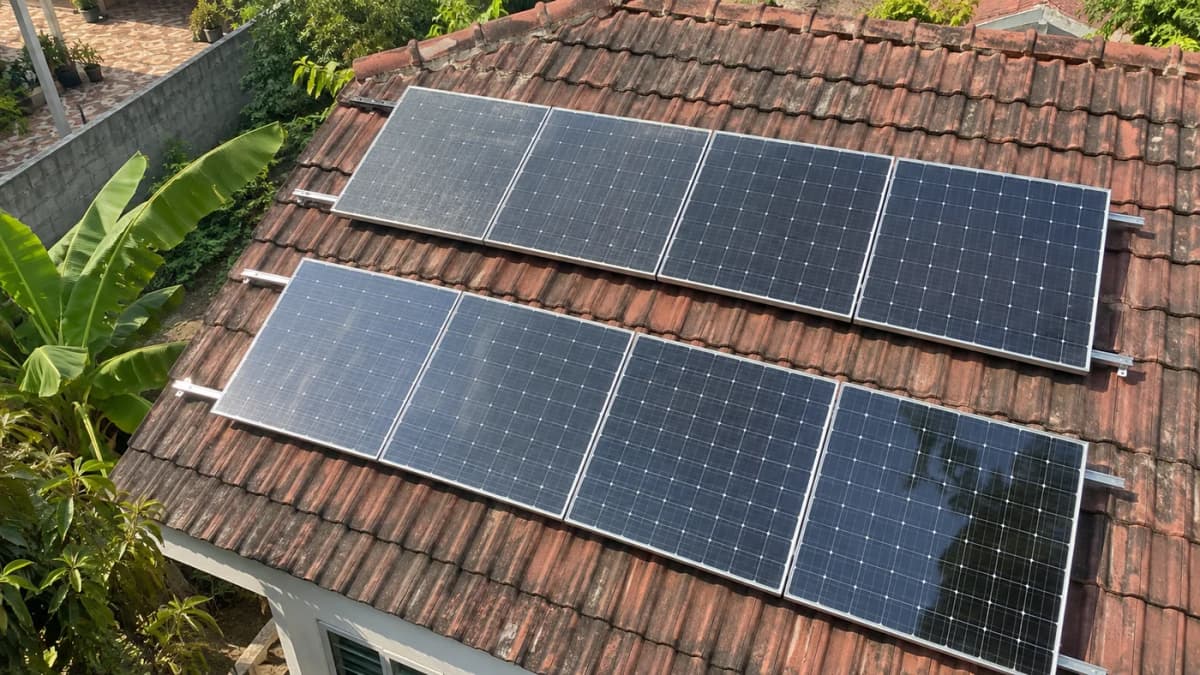
A solar quote, a green electricity tariff and an investment in an energy company may all arrive with the same photograph of shining panels. They are not the same purchase. One buys equipment, another buys electricity and its associated renewable-energy certificates, and another puts your money at risk in a business.
In Thailand, the first useful step is to identify which of those offers you are actually considering. Then check the paperwork and the numbers for that offer. A national energy-transition headline cannot tell you whether a particular roof, contract or investment is worthwhile.
Which decision are you making?
- Reducing a home or business bill: assess a particular roof, electricity use and installation contract.
- Buying green electricity: check the utility programme, eligibility, tariff and certificate arrangements.
- Operating an energy business: investigate the site, permits, grid connection, customers and ongoing costs.
- Investing through a financial product: examine the issuer, instrument, fees, liquidity and potential loss.
Keep these decisions separate even if one salesperson discusses all four. Savings on your own electricity bill are not a dividend. Owning shares in a solar business does not give you a right to install panels on a roof or sell power to a utility.
For a rooftop, start with the bill and the clock
Gather your electricity bills and, where available, usage data showing when power is consumed. A busy daytime workshop and a home mostly occupied after sunset need different assessments, even if their monthly bills are similar.
PEA's May 2026 rooftop guidance recommends matching system size to household use and explains that on-grid solar mainly generates during daylight. Sunlight and the installation area affect output. That is a better starting point than buying the largest array that physically fits.
Ask an installer to separate expected generation from the amount you are likely to use immediately. Those are not interchangeable. Request the assumptions about shade, seasons, equipment performance and changes in your electricity use, along with an explanation you can understand.
An EV adds another timing question. Is the car parked at home while solar is producing, or only overnight? Use our Hua Hin EV charging guide to check the parking and charging arrangement before counting it as a convenient daytime load.
“Use it” and “sell the surplus” need different checks
Do not treat a system that makes electricity as automatic permission to export it or receive payment. Ask the serving utility which connection process and purchase programme, if any, apply to your meter and property.
PEA's July 2026 household programme Q&A identifies residential customers who own the meter and distinguishes installed generation from the programme's proposed export limit of 5 kW AC per participant. This is a particular programme, not a universal size limit for all Thai solar installations or a promise of acceptance.
Get the applicable conditions, approval status and any electricity-purchase agreement in writing. Check how exported energy is measured and paid, and when payments begin. Do not calculate export income by assuming the utility will pay your retail purchase price for every unit you generate.
If a proposal includes a tax deduction, grant or promotional discount, have eligibility and timing checked before using it in your calculation. A deduction is not automatically a cash refund of the same amount. This guide does not assume that every buyer, tenant or business qualifies for an incentive.
Make the savings calculation show its workings
Ask for separate estimates of electricity used on site, permitted paid exports, maintenance, finance costs and equipment replacement. Include installation work beyond the panels: roof preparation, wiring, protective equipment, utility requirements and testing.
For illustration only, suppose a fully installed system costs 180,000 THB and produces 30,000 THB of annual bill savings after the running costs included in the estimate. Dividing 180,000 by 30,000 gives a simple six-year payback. If those net savings are 20,000 THB, the result is nine years. These are fictional teaching inputs, not Thai market prices, tariffs or a generation forecast.
That calculation is still incomplete as an investment valuation. It ignores financing, changing savings, the timing of money, major replacements and resale value. Ask what happens under less favourable assumptions and how long you expect to control the property. Use the same cost categories when comparing quotes.
Keep those costs in your wider household budget. An installation paid upfront still needs cash available for ordinary bills and unexpected repairs; projected savings are not money already in your account.
For a home purchase, consider energy equipment alongside the building's other costs in our villa-versus-condo guide. A roof suitable for solar does not settle the ownership, maintenance or budget questions.
Inspect the contract as carefully as the panels
Have a competent professional assess the roof and electrical system. Ask who is responsible for roof leaks, structural work, installation damage, permissions and removal if the roof later needs replacing. Do not climb up to inspect the mounting yourself.
Separate the equipment warranty from installation workmanship, roof waterproofing and the promised level of performance. Find out who answers a service call locally, what labour or transport costs remain yours and what happens if the seller stops trading.
For leased premises, record the owner's permission, equipment ownership, access for repairs and the end-of-lease arrangement. If the installer retains ownership and sells you the electricity, read minimum-purchase, price-adjustment, termination and transfer clauses before signing.
Ask whether the system provides backup power. The Australian government's solar design guide explains that many grid-connected systems stop during outages, and some battery systems do not power a property during one either. This is a technical distinction, not an Australian rule being applied to Thailand. Backup needs deliberate design for the intended appliances.
Include rain exposure, heat, water entry and safe maintenance access in the site assessment. Our climate-risk property checklist helps organise those questions; an energy upgrade does not make a building flood-proof.
Green tariffs are not rooftop ownership
The official EGAT UGT platform describes Utility Green Tariff as a way for eligible customers to buy electricity with associated renewable-energy certificates. It distinguishes UGT1's unspecified sources from UGT2's specified sources. Check the serving utility's current eligibility, allocation, contract and price for the service you need.
For a business, ask what documentation you receive and what environmental claim it supports. Do not assume a certificate means a private cable from a solar farm, uninterrupted backup power, a lower bill or ownership of the generating plant. Have any reporting claim reviewed against the standard your customer actually requires.
If someone wants investment money, change the checklist
Request the legal issuer's name, the exact instrument, audited accounts where applicable, fees, borrowing, payout conditions and how you can exit. For a project, distinguish a proposed grid connection or customer contract from one already approved and executed. Independent legal and technical review should match the money at risk.
Use Thailand's SEC Check First for relevant capital-market providers and products, and consult the Investor Alert link there. This is not a registry approving every electrician or private solar project. A familiar name or search result does not prove a promised return is safe.
There is no universal “Thai green-energy return” to insert into a spreadsheet. Do not use emergency funds for a commitment you cannot understand or exit. The useful opportunity is the one whose costs, rights and risks you can verify, not the one with the most impressive panel photograph.
Frequently asked questions
Will rooftop solar automatically earn money from exported electricity?
No. Connection approval and any purchase programme depend on the serving utility and applicable conditions. Confirm eligibility, acceptance, metering and payment terms before counting export revenue.
Will panels and a battery keep my home powered in an outage?
Not necessarily. Backup capability depends on the system design and configuration. Ask the installer which appliances can run independently of the grid, under what conditions and for how long.
Is buying green electricity the same as investing in a solar project?
No. A green tariff buys an electricity service with associated certificates under its programme. An investment gives you the rights and financial risks of a particular instrument or business.
Ananas Premium
Unlock Hua Hin's Best Property & Investment Insights
Enjoying our free content? Get unlimited access to premium articles, local market intelligence, member briefings, and exclusive checklists for ฿290 / $9.95 per month.
Sources & Verification
- 9 May 2026 match generation to use and daylight/site conditions, not a universal system-size recommendation. — PEA — rooftop sizing guidanceSource
- 4 July 2026 residential meter-owner conditions and 5kW AC proposed export limit distinct from installed self-use capacity. — PEA — 2026 household rooftop Q&ASource
- General technical backup-design principle only; Australian orientations, planning rules and incentives not imported into Thai advice. — Australian Government — solar designSource
- Electricity with bundled renewable-energy certificates, UGT1 unspecified versus UGT2 specified sources; current tariff/eligibility/allocations must be checked. — EGAT — official UGT platformSource
- Search capital-market providers/products and linked Investor Alert; not approval registry for all installers or private projects. — Thai SEC — Check FirstSource