Selling Online in Thailand: A Practical Small-Business Guide
Choose a manageable sales channel, verify the legal setup and calculate what an order really leaves after fees, shipping and returns.

Editorial Team
Aug 25, 2026 · 7 min read
Status
Your first online order in Thailand is only a success if the item reaches the customer, the payment reaches you and there is something left after costs. A busy shop with thin margins and difficult returns can be more stressful than a quiet one.
Start with a small, manageable range and a clear answer to three questions: are you allowed to run this business, can you fulfil the orders, and does each sale make economic sense? Choose the platform after that.
This guide is for a practical small-business launch, not a promise of income. Official tax, business and platform information was checked on 4 October 2026. Seller rules and charges can change; check the terms applying to your own category and account.
Check the legal setup before buying stock
A seller login is not a business licence. For a foreign founder, ownership, the activity performed in Thailand and permission to work need separate consideration.
The BOI's online-sales FAQ discusses how foreign ownership and business activity affect licensing. It is an orientation page, not a current universal checklist or a guarantee of BOI promotion. Ask a qualified Thai adviser or the relevant authority to confirm the structure for your actual retail, wholesale, import or service activity.
BOI's work-permit guidance also makes clear that immigration and work requirements matter. Do not assume that selling through a foreign website, having a Thai partner or holding a visitor visa removes these questions.
Before launch, confirm any commercial-registration, direct-marketing, product, import and consumer-protection obligations relevant to your setup. A small turnover is not blanket permission to skip them. Regulated goods deserve specialist checks before purchasing inventory or making advertising claims.
Choose one channel you can operate well
Each route changes how customers find you and how much work you carry yourself. The options below are a planning comparison, not a ranking by market share or a current tariff sheet.
Shopee or Lazada
A searchable product catalogue with platform checkout can be a useful starting point. Plan for seller verification, category terms, fees, dispatch deadlines and returns.
TikTok Shop
Consider this route for products you can explain through useful short demonstrations. Allow time and money for content production, shop rules, creator costs and consistent fulfilment.
LINE or social messages
This can suit conversations with an audience you already reach. You still need order tracking, payment checks, careful handling of customer data and dependable support.
Your own website
You control the product information and buying experience. You also take responsibility for customer acquisition, checkout, payment integration and site maintenance.
Verify current Thailand seller eligibility and the required identity, company, bank and warehouse documents before paying for advertising. Do not borrow another person's identity to get through signup.
A website or message channel is not automatically cheaper. Payment processing, messaging plans, advertising and staff time can replace marketplace charges. Do not move marketplace customers off-platform in ways that breach its rules.
Calculate what one order really leaves you
Download the applicable fee schedule rather than copying a single commission percentage from a blog. TikTok Shop's commission guidance distinguishes categories and shop types. Its transaction-fee notice describes a separate charge and a calculation-base change from 21 March 2026. Commission alone is not the total selling cost.
Include product cost, packaging, shipping you absorb, all platform or payment charges, discounts you fund, advertising and a sensible allowance for returns. Check when settlement occurs and whether charges are refunded after a return.
Here is a hypothetical worksheet, not a Thai platform or courier quote:
- Selling price: 350 baht.
- Product cost: 140 baht; packaging: 12 baht; seller-paid delivery: 40 baht.
- Combined selling charges: 35 baht; return allowance: 15 baht; advertising allocated to the order: 30 baht.
- Amount left: 78 baht before tax, wages and other overheads.
Replace every number with your own costs. If the order only works when nobody returns anything and advertising is free, reconsider the price or product before scaling.
Make the product page answer the obvious questions
Show the real product, not a generated version that makes it look better. Include its dimensions, materials, contents, condition and any important exclusions. Photograph the details that cause misunderstandings: a fastening, a connector, a colour in ordinary light or the actual size beside a familiar object.
Use Thai descriptions where appropriate for your intended customers, with a fluent reviewer checking meaning and tone. An English version can help another audience, but neither language guarantees conversion. Explain delivery, support and return arrangements clearly.
Do not copy another seller's pictures, invent certifications or advertise health benefits you cannot lawfully support. Honest product details are more useful than generic claims about being premium or the best.
Test packing, dispatch and the return journey
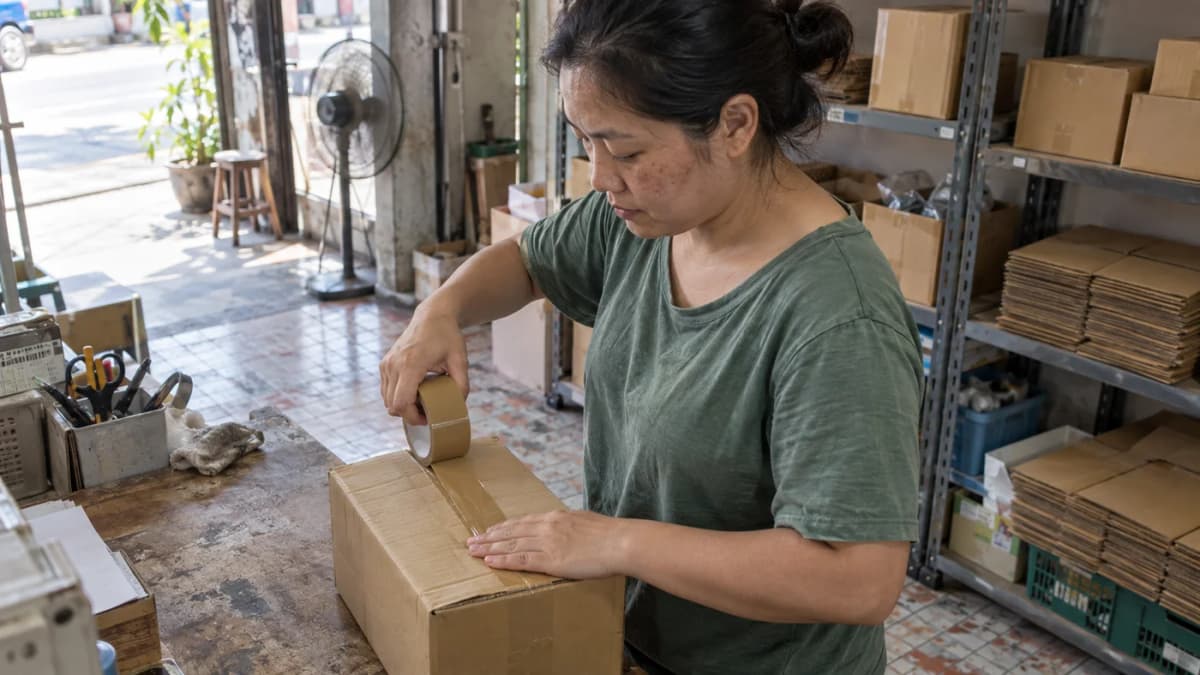
Pack a sample as you would a customer's order. Check whether it survives handling, whether the parcel dimensions change the quoted price and whether the courier can collect from your actual address.
Obtain quotes for the routes and services you need, including provincial delivery, collection, remote-area conditions and return handling. There is no single nationwide parcel price that fits every size and destination.
If you offer cash on delivery, ask about collection charges, remittance timing and refused parcels. COD is a business choice to evaluate, not a guarantee that every customer will accept the delivery. Also check whether any warehouse or fulfilment service is actually available for your shop type and stock.
Payments need an order trail
Record the order reference, items, amount, buyer's delivery details, payment status and dispatch tracking. Confirm money in your authorised account or platform records before treating a screenshot as paid.
Our cashless-payment guide explains why bank transfers, wallets and cross-border QR purchases should not be treated as one interchangeable service. Ask your provider which merchant arrangement suits the business.
The personal bank-account preparation guide is useful for your own banking, but a company account has a separate process. Match the settlement account to the seller's required identity or entity.
Keep tax records from the first sale
The Revenue Department's VAT guidance describes the general 1.8-million-baht annual turnover threshold for taxable supplies and registration within 30 days of reaching it, subject to the applicable rules and exceptions. The threshold concerns turnover, not profit. Being below it does not mean all income is tax-free.
Ask an accountant how VAT, income tax, invoices and imports apply to your setup. Record gross sales, refunds, platform deductions and expenses; the amount that lands in your bank is not the complete sales record.
Our document-storage guide can help organise business records. Restrict access to customer information, keep a backup and avoid collecting identity documents you do not need.
Launch small enough to learn
Start with stock you can count and dispatch reliably. Set support hours you can meet, publish accurate lead times and keep a reserve for refunds. Test the complete order journey before increasing advertising.
Review what customers ask, why parcels come back, what an order costs and whether the final payout matches your calculation. Expand because those checks work, not because a calendar says it is time to reach a thousand orders.
Frequently asked questions
Can a foreigner sell online in Thailand just by creating a shop account?
No. Platform acceptance does not settle business licensing, immigration or permission-to-work requirements. Confirm the lawful setup for your ownership, activity and products before trading.
Is a marketplace commission the full cost of selling?
No. Payment and other platform charges, delivery, packaging, advertising, seller-funded discounts and returns can also affect the amount left from an order. Use the current terms for your own shop.
Does the Thai VAT threshold refer to profit?
No. The general 1.8-million-baht threshold concerns annual turnover from taxable supplies, subject to applicable rules and exceptions. Confirm registration timing and your other tax obligations with an accountant.
Ananas Premium
Unlock Hua Hin's Best Property & Investment Insights
Enjoying our free content? Get unlimited access to premium articles, local market intelligence, member briefings, and exclusive checklists for ฿290 / $9.95 per month.
Sources & Verification
- Ownership and activity affect foreign-business licensing; older orientation FAQ not used for blanket commercial registration, staff ratios, minimum capital or BOI eligibility. — BOI OSOS — Online sale business in ThailandSource
- Separate immigration and permission-to-work considerations; no universal route, timeframe, staffing ratio or visa exemption asserted. — BOI OSOS — Getting Visa and Work PermitSource
- General taxable-supplies THB1.8m turnover threshold and registration within 30 days; exceptions and other tax duties retained, no current VAT-rate claim. — Revenue Department — Value Added TaxSource
- Commission varies by product category and shop type; current rates not flattened into a universal percentage. — TikTok Shop Thailand — Normal Seller Commission FeeSource
- Transaction fee separate from commission and calculation base changed 21 March 2026; no complete platform fee quote claimed. — TikTok Shop Thailand — Transaction FeeSource