Sustainable Living in Hua Hin: Practical Habits for Your Home
A realistic guide to lower-waste living in Hua Hin, from checking a rental and reducing food waste to finding a collection route and questioning expensive green upgrades.

Editors
Jun 16, 2026 · 8 min read
Status
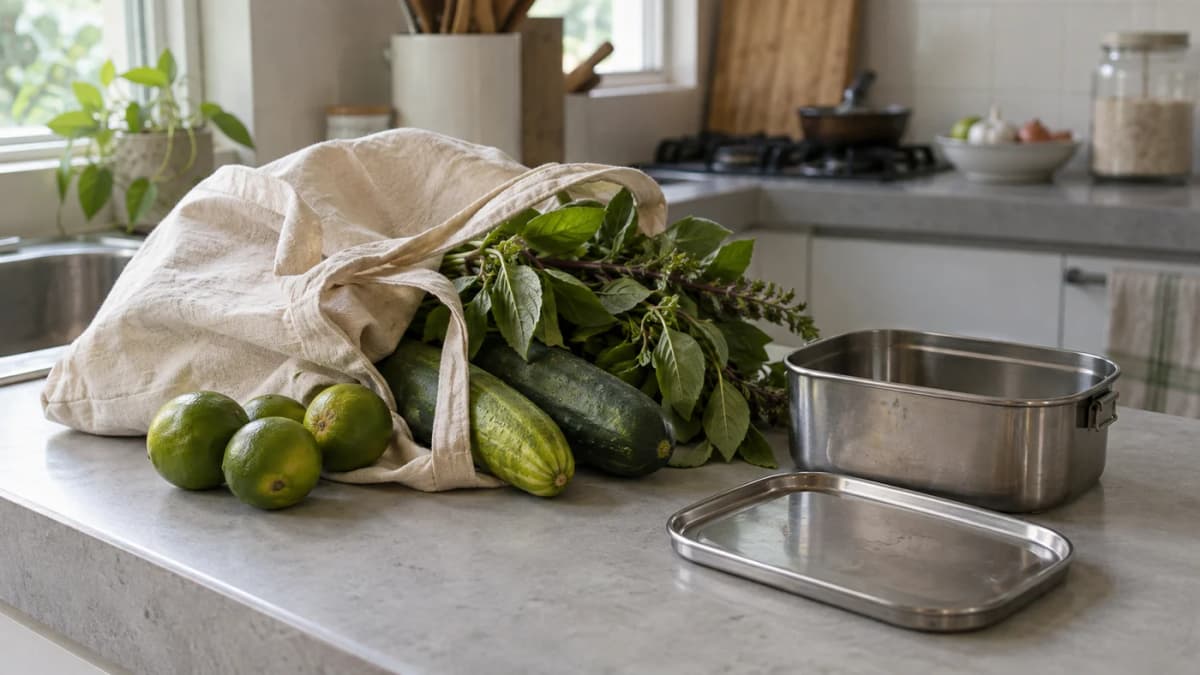
A reusable bag is easy to buy. A home that needs less cooling, a reliable route for recycling and groceries you actually finish take a little more thought. Those are useful places to start if you want a lower-waste life in Hua Hin.
You do not need a new villa or an expensive collection of eco-products. Start with the home you have and the journeys you already make. This guide focuses on practical checks, not claims that Hua Hin has solved waste, water or transport for every neighbourhood.
Choose a home around your real week
Before signing a rental agreement, map the places you will visit regularly: groceries, work, school, a pharmacy and somewhere to exercise. Then check the routes on foot at the times you expect to use them. A short distance on a map can still involve an awkward crossing, little shade or a road you do not feel comfortable walking along.
In central Hua Hin, Khao Takiab or farther inland, assess the actual property rather than giving an entire neighbourhood an “eco” label. If you already live here, try combining errands into fewer trips before deciding you need a different vehicle.
During a viewing, ask:
- Which rooms receive strong afternoon sun, and are there curtains or external shade?
- When were the air conditioners serviced, and can you see recent electricity bills with the occupants' permission?
- How is electricity charged, and who is responsible for leaks and appliance repairs?
- Where does household rubbish go, what is separated, and who actually collects it?
- Where can you safely store a bicycle, reusable containers or sorted materials?
A low advertised rent tells you little about total running costs. Compare the likely transport and utility costs too, using the actual billing arrangement rather than a generic expat budget.
Make cooling more efficient without making yourself miserable
Start with shade, sensible room use and maintained equipment. Close doors and windows while running the air conditioner, use curtains against direct sun, and arrange filter cleaning according to the appliance instructions. Ask a technician about equipment that leaks or struggles to cool; repeatedly lowering the setting will not repair it.
EGAT's energy-saving guidance suggests air conditioning at 26–27°C with a fan and choosing efficient appliances with its No. 5 label. Treat that as an efficiency suggestion, not a universal health requirement. Use a cooler setting if you need it, and do not leave a vulnerable person in an uncomfortably hot room to meet a savings target.
Compare electricity use in kWh, not only the bill total. Record the dates, days spent at home and any change in room use. Weather and billing periods can change the comparison, so one lower bill is not proof that a gadget paid for itself.
For seasonal planning, our Hua Hin weather guide separates long-term climate patterns from the forecast you need for a particular day.
Reduce packaging without gambling on drinking water
Carry a bottle filled from a source you know is safe. If you use a water-delivery service, ask about returnable containers, seals, cleaning and the water's source. If you are considering a filter, ask what it removes, what testing supports that claim and when parts need replacing. “Filtered” alone does not explain the treatment.
The CDC advises travellers not to drink tap water unless reasonably certain it is safe. That is more useful than a blanket claim about every Hua Hin building, tank and tap.
A total dissolved solids reading is not a drinking-water safety certificate. The CDC's testing guidance distinguishes dissolved solids from checks for germs and other contaminants. Do not treat a cheap meter's number as permission to drink untreated water.
Fix dripping taps and report leaks promptly. Keep any rainwater collection separate from drinking-water supplies unless the system has appropriate treatment and verification. Reducing waste should not mean accepting an uncertain water source.
Find out where your recycling actually goes
Ask your building manager or regular collector which materials they accept and how they want them prepared. Show examples: a clear drinks bottle, a food tray, a glass jar and a cardboard box. A general “yes, we recycle” is less helpful than knowing what happens to those four items.
Keep accepted material empty and reasonably clean, and follow the collector's sorting instructions. Do not assume every plastic with a recycling symbol is locally accepted. If a collection arrangement changes, check again rather than continuing to fill the same bin.
For small electronics, the AIS e-waste collection directory lists participating channels, including Hua Hin postal entries. Search for หัวหิน and contact the location before travelling: confirm public access, current opening hours and whether your particular item is accepted. A collection listing is not proof of a current walk-in service for every device.
Back up and securely remove personal data before handing over a phone or computer. Treat batteries separately: the US EPA warns against putting lithium-ion batteries in household rubbish or ordinary recycling. For a swollen or damaged battery, contact the manufacturer for safe handling instructions before transporting it; do not puncture, dismantle or soak it. The EPA source is safety guidance, not a claim about Thai municipal rules.
Buy food you will eat, not an idealised lifestyle
Check the fridge before shopping and plan around what needs using first. A small, frequent purchase may suit you better than a large bag that spoils before the weekend. Ask a seller before offering your own clean container, and accept that their food-handling process may not accommodate it.
At a market, ask where produce comes from and what the seller means by “organic”. Do not infer certification from a handwritten sign or the absence of plastic wrapping. This guide does not endorse an unverified farm or promise that local food is automatically pesticide-free.
Use the shopping bag and lunch box you already own. Before buying another reusable item, consider whether it solves a problem in your routine or will simply sit in a cupboard.
If you want to compost, first check building rules, space, pest control and who will use the finished material. Do not leave food scraps at a hotel, temple or community garden without a confirmed arrangement. A business having its own compost system does not mean it accepts household deliveries.
Be cautious about large “green” purchases
For rooftop solar, request a written, property-specific proposal. Ask about roof condition, permission to alter the building, electricity use during daylight hours, maintenance, warranties and any required utility approvals. Ask what the system will and will not power during an outage.
Do not accept a universal four-year payback claim. Have the installer show the assumptions and explain how the estimate changes if you use less electricity at home or leave the property. This is a purchasing checklist, not a financial return forecast.
The same approach works for an electric vehicle: check the exact model, local service options, your parking arrangement and charging access before buying. A nearby charger on a map is not a guarantee that it will be available whenever you need it. For cycling, judge the actual route and your confidence in traffic rather than relying on a claim that the whole town is bike-friendly.
Your first-month checklist
- At home: record a meter reading, report leaks and check cooling maintenance.
- For shopping: keep a bag by the door and use up what is already in the fridge.
- For waste: confirm one reliable recycling route and one suitable e-waste contact.
- For transport: combine an existing pair of errands and try a safe alternative route if practical.
- Before spending: get written answers to the questions that affect your own property or routine.
Choose two habits you can keep and review them after a month. A smaller rubbish bag and fewer unnecessary trips are worthwhile even if the rest of your routine is still a work in progress.
Quick answers
Can I live more sustainably in a rented Hua Hin condo?
Yes. Start with cooling habits, leak reporting, food planning and the building's actual collection arrangements. Ask permission before altering equipment or installing anything permanent.
Where can I check e-waste collection in Hua Hin?
Use the AIS e-waste collection directory and search for Hua Hin or หัวหิน. Contact the listed location to confirm current access and accepted items before taking anything there.
Does a low dissolved-solids reading mean water is safe to drink?
No. A dissolved-solids reading does not establish the absence of germs or all harmful contaminants. Use a verified safe source and appropriate testing or treatment advice.
Ananas Premium
Unlock Hua Hin's Best Property & Investment Insights
Enjoying our free content? Get unlimited access to premium articles, local market intelligence, member briefings, and exclusive checklists for ฿290 / $9.95 per month.
Sources & Verification
- 26–27°C with a fan and No. 5 efficient-appliance label; not a health mandate or savings guarantee. — EGAT — energy-saving air conditioningSource
- Drink tap water only when reasonably certain it is safe. — CDC Yellow Book — food and water precautionsSource
- Dissolved solids differ from microbiological and contaminant safety testing; no local water test claimed. — CDC — water testing guidanceSource
- E-waste directory contains Hua Hin postal entries; availability and item acceptance require direct confirmation. — AIS — collection channelsSource
- Lithium-ion batteries should not enter household rubbish or ordinary recycling; ask manufacturer about damaged batteries. — US EPA — used household batteriesSource