No Water in Your Thai Condo? A Practical Outage Checklist
A practical checklist for a dry tap: checking the scope of an outage, contacting condo management, keeping safe water and handling the return of service.

Editorial Team
Nov 18, 2026 · 6 min read
Status
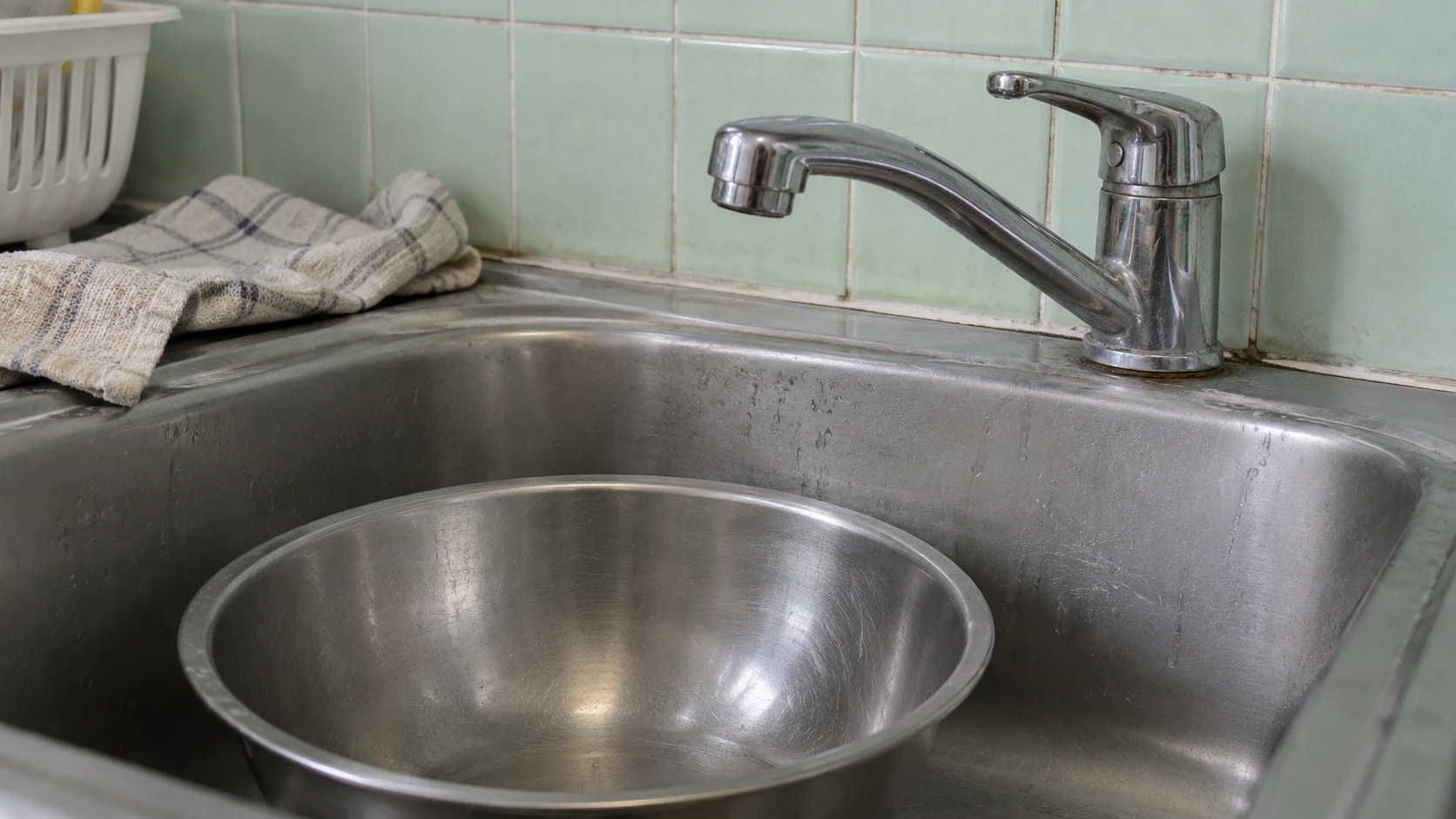
If the water stops in your Thai condo, check whether the problem affects one tap, your whole unit or the building before trying to fix anything. Contact management, ask for the expected duration and water-safety instructions, and keep a separate supply for drinking and food. Water coming back through the pipes does not, by itself, answer whether it is safe to use.
A dry shower halfway through the morning is inconvenient. An outage that lasts through dinner needs a different plan. This guide is for that everyday disruption: who to ask, what to keep at home and which decisions belong to the building team.
Start with three checks, without opening anything
| What you notice | What to check next | Who to contact |
|---|---|---|
| One tap or shower has stopped | Try another normal tap. Note whether the problem affects hot water, cold water or both. | Your landlord or the building maintenance team. |
| Your whole unit has no water | Ask a neighbour whether their unit is affected. Check management's latest notice. | The building office or its after-hours contact. |
| Several units or nearby buildings are affected | Ask whether there is a supplier interruption, building-system problem or announced maintenance. | Management first, then the supplier named on the water account where appropriate. |
These checks help you describe the problem; they do not diagnose it. Leave shared valves, pumps, electrical panels and storage tanks to authorised staff. Do not enter a tank or a flooded service room.
If electricity has also failed, ask management whether the building's water system depends on pumps that are currently unavailable. Do not assume that working lights in your unit prove every building service is operating.
Send management a message they can act on
Give your building, unit number and the time the supply stopped. A useful message is:
We have no water at the kitchen and bathroom taps in unit [number], starting at [time]. Are other units affected? Is this a building issue or a supplier outage? When is the next update due, and are there any restrictions on using the water when it returns?
Ask for the next update time if nobody can give a reliable repair estimate. It is more useful than repeatedly being told “soon”. Save the reply, particularly if you need to discuss temporary accommodation with your landlord. Do not assume that an outage automatically entitles you to deduct money from the rent.
Keep these contact details with the other paperwork covered in our guide to organising travel and household documents.
Check the supplier before calling a national number
The Provincial Waterworks Authority lists 1662 as its call centre. Its customer guidance asks people reporting leaks to identify the relevant service area. Have the address and account details ready if the account is yours.
A condo's water bill may come through building management. Ask who supplies the building and who should report the interruption. Do not assume every Hua Hin address or every Thai property has the same provider.
Keep drinking water separate from the household water problem
The CDC's emergency reserve guideline is at least one US gallon, about 3.8 litres, per person daily for three days. That covers drinking and basic uses; heat, illness, pregnancy and pets may increase what you need.
For two people, the baseline is about 23 litres. Sixteen 1.5-litre bottles provide 24 litres. Count the litres you actually have, rather than treating one large bottle as a household plan. Keep the reserve accessible without having to carry it all at once.
Follow the date on commercially bottled water. For water you store yourself, the CDC recommends suitable food-grade containers and replacement every six months. Keep supplies away from sunlight and chemicals.
For the rest of your home reserve, use our 72-hour emergency kit checklist. A few meals that need no cooking are easier to manage during a water outage than a cupboard full of dry rice.
Ask what a water-safety notice actually permits
The CDC distinguishes three types of advisory. These descriptions help explain a notice; follow the instructions issued for your own location.
- Boil-water notice: a warning about germs. Use commercially bottled water or follow the specified boiling instructions.
- Do-not-drink notice: use bottled water for drinking and food preparation. Boiling does not solve chemical contamination.
- Do-not-use notice: contact with the water may also be unsafe. Follow the notice's restrictions, rather than treating it as a drinking-only warning.
Ask for a copy or photograph of the actual notice if a forwarded message is unclear. “The water is back” and “the restriction has been lifted” are different statements.
A filter is not a universal rescue plan. The US Environmental Protection Agency explains that boiling or disinfection does not remove heavy metals, salts and many other chemicals. Do not turn floodwater into a drinking-water experiment. If flooding is involved, follow our safe return-home checklist as well.
Decide early whether staying is practical
Check four things before spending the afternoon waiting: safe drinking water, usable sanitation, food you can prepare and any personal care needs that depend on water. Agree on a point at which you will move somewhere suitable if the repair has not happened.
A family with a baby or someone following a medical care plan may need arrangements that a neighbour living alone does not. Make that decision around the household's actual needs, rather than waiting until every bottle is empty.
When the taps start running again
Ask management whether the repair is complete, whether any safety restrictions remain, and what instructions apply to your unit's taps and appliances. Follow the building or supplier's specific flushing and cleaning directions. Do not invent a fixed flushing time from a social-media comment.
Record when normal service resumed and report any continuing problem. Before your next lease, add the building's outage contact, water storage arrangements and update process to the questions in our Hua Hin rental checklist.
Questions residents ask
Should I call 1662 or the condo office?
Start with the condo office to establish the scope of the problem and the building's supplier. Call 1662 for PWA matters when relevant; management may need to report an issue on a shared account.
Does clear running water mean a drinking restriction has ended?
No. Get confirmation that the relevant restriction has been lifted and follow the instructions for your building.
Can I rely on my filter during an outage?
Do not assume so. Check its stated treatment capabilities and the official notice. Boiling or basic disinfection does not make chemical contamination disappear.
How much reserve water should two adults keep?
The CDC baseline works out at about 23 litres for three days, with more needed for heat and individual circumstances. Plan other household water needs separately.
Continue reading
guide to organising travel and household documents
Contextual next step in the water-outage guide.
72-hour emergency kit checklist
Contextual next step in the water-outage guide.
safe return-home checklist
Contextual next step in the water-outage guide.
Hua Hin rental checklist
Contextual next step in the water-outage guide.
Sources & Verification
- PWA lists its call centre as 1662; customer guidance asks people reporting leaks to identify the relevant service area. — Provincial Waterworks Authority: contact information and customer FAQsSource
- The CDC recommends at least one US gallon per person per day for three days, additional supplies for hot climates and specific needs, and six-month replacement of water stored at home. — CDC: How to Create an Emergency Water SupplySource
- Boil-water, do-not-drink and do-not-use advisories have different restrictions; official local instructions govern. — CDC: Drinking Water Advisories: An OverviewSource
- Boiling or disinfection does not remove heavy metals, salts and many other chemical contaminants. — US EPA: Emergency Disinfection of Drinking WaterSource