Why Is Your Thai Electricity Bill So High? A Renter's Checklist
Check a high Thai electricity bill using meter dates, kWh, billing terms and current PEA information. Separate consumption, tariff changes and landlord charges.

Editorial Team
Nov 17, 2026 · 6 min read
Status
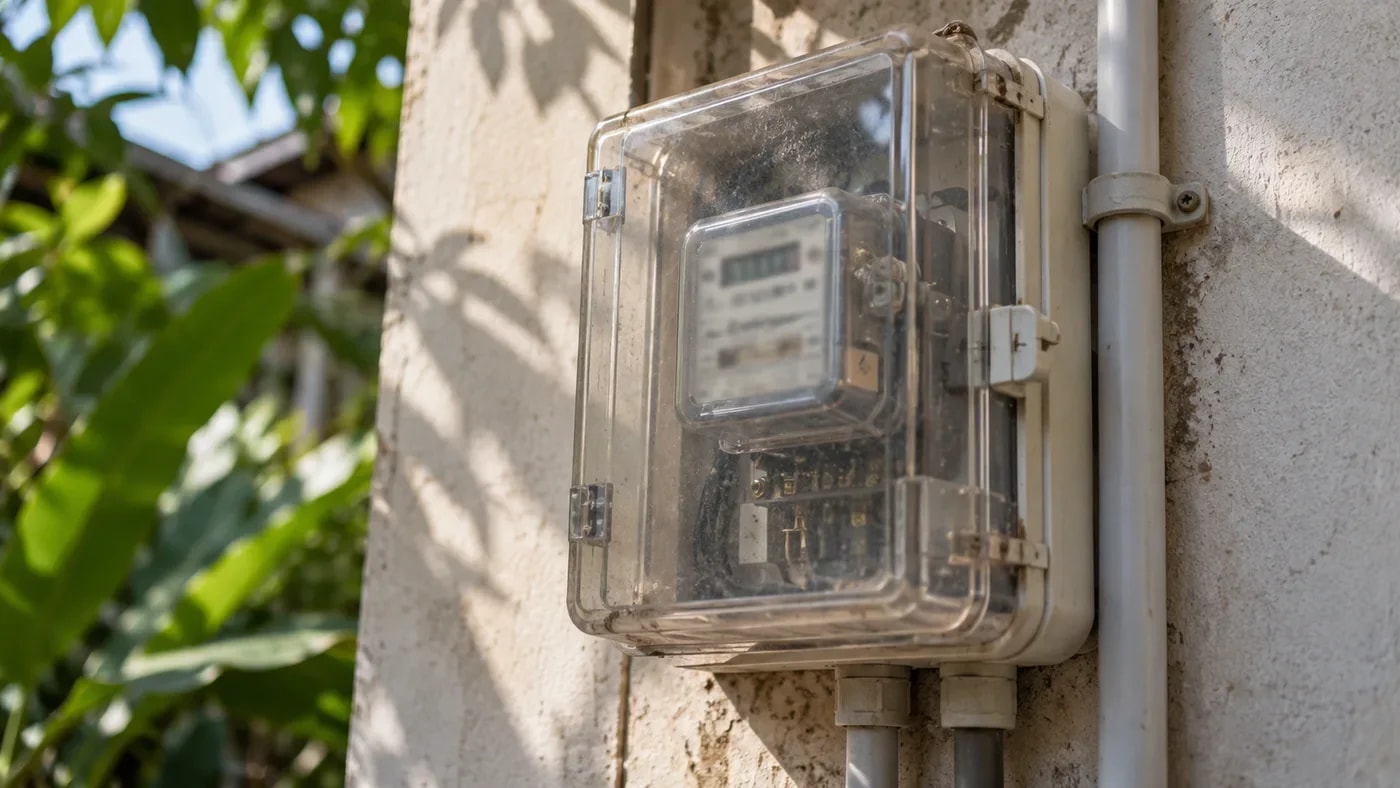
A surprisingly high electricity bill needs two different checks: did you use more electricity, and were the correct charges applied to that usage? Looking only at the final baht amount makes it easy to confuse the two.
Start with the billing dates, meter number and kilowatt-hours, usually shown as kWh or units. Then establish whether you receive a direct utility bill or a calculation from your landlord. Do not open a meter box or touch wiring to investigate a billing question.
Put this month's bill beside the previous one
Check that both bills belong to the same property and meter. Compare the number of billed days, previous reading, current reading and any adjustment or arrears. A longer billing period can increase the total even when daily consumption is similar.
Here is a deliberately simple example, not a Hua Hin household average. A reading rising from 12,400 to 12,820 represents 420 kWh. Over 30 days that is 14 kWh a day. If the previous period used 360 kWh over 30 days, the increase is 60 kWh, or two kWh per day. You now have a consumption question that can be investigated.
If there has been a meter replacement, estimated reading or correction, ordinary subtraction may not explain the bill on its own. Ask the account holder or utility for the reading history and adjustment basis rather than deciding that a different number proves an overcharge.
Understand the parts of the price
PEA's tariff information separates the tariff framework from the fuel adjustment, known as Ft. Check the correct customer category and billing period. A screenshot of an older residential table is not enough to establish every charge on a later bill.
The current Ft page, checked on 21 October 2026, lists 0.1623 baht per unit for September–December 2026. That is the adjustment component, not the complete electricity price. Do not mistake 16.23 satang for 16.23 baht or add the same adjustment twice.
For 420 kWh, that particular Ft component would be 68.166 baht, about 68.17 baht before any applicable tax and final invoice rounding. Energy charges, relevant service charges and tax still need their own calculation. We are not presenting an all-in flat rate or reproducing an old base-tariff table as a current universal quote.
If the landlord issues the bill
Request the opening and closing readings, the date range, rate basis and a breakdown of any separate service charge. Ask how your submeter relates to the main account and how shared-area consumption is handled. An unexplained total is not enough to compare with a neighbour's direct utility account.
OCPB's residential-rental guidance describes restrictions on utility markups for operators covered by its controlled-contract framework. Coverage matters; it should not be reduced to a claim that every landlord can charge any chosen rate, or that one historical number is the permanent legal ceiling for every rental.
Ask OCPB or an independent adviser to check the applicable framework if a charge is disputed. Keep the lease, landlord invoices, meter photographs and payment evidence together. Our rental guide explains why billing terms should be agreed before moving in.
Look for a change in the routine
Before blaming one appliance, compare the month honestly. Were more people at home? Did a visiting relative use another bedroom's air conditioner? Did you work indoors all afternoon rather than at a coworking space? Was the room kept cooler, or the balcony door left open more often?
Make a short diary of the main changes. Compare similar periods where possible, not a week with visitors against a week when the home stood empty. Do not switch off essential refrigeration, necessary medical equipment or another safety-critical load to conduct a casual experiment.
| What changed? | A practical check |
|---|---|
| More time at home | Compare occupied days and cooling hours |
| Different air-conditioning use | Note set temperature, doors and whether another room is being cooled |
| Different bill length | Compare kWh per billed day, not just the total |
| New equipment or a fault | Ask the landlord or a qualified technician to investigate safely |
| New charges | Request the tariff period, invoice breakdown and account basis |
Use estimates carefully
For a genuinely steady 1 kW load running six hours daily for thirty days, the arithmetic is 180 kWh. An air conditioner marked with a capacity figure does not necessarily draw that amount continuously. Cooling capacity, electrical input and actual metered consumption are different things, and inverter equipment can vary its draw.
Ask a qualified technician about a unit that behaves abnormally. Burning smells, sparking, damaged sockets or a hot electrical enclosure are safety issues, not opportunities for DIY meter testing. Keep clear and contact the appropriate professional or emergency service as the situation requires.
Raise a useful query
Write down the exact discrepancy: wrong dates, unexplained reading, a charge not in the breakdown or a consumption increase you cannot account for. Send the account reference privately through the utility's official channel, or ask the landlord as account holder to obtain an explanation.
Check the payment and dispute procedure instead of assuming that querying a bill pauses every obligation. Keep confirmations and do not share a full bill publicly: it can identify the home and account. A clear set of readings and dates is more useful than an online argument about what somebody else's condo costs.
For a realistic ongoing allowance, use your checked bills in the Hua Hin budget guide. When changing homes, record the opening reading alongside the other account and service arrangements. That makes the first bill much easier to understand.
Common questions
Is 0.1623 baht the complete electricity price?
No. PEA lists it as the Ft adjustment for September–December 2026. The full bill also depends on the applicable energy tariff, relevant service charges and tax.
Should I compare two electricity bills only by the baht total?
No. First compare the meter, billing dates, readings, kWh and adjustments. Different consumption or period lengths can change the total before any rate difference.
Can I open the meter enclosure to check an unexplained bill?
No. Keep clear of sealed equipment and wiring. Record visible information safely and ask the utility, landlord or a qualified technician to investigate as appropriate.
Continue reading
Sources & Verification