Hua Hin Air Quality: How to Check AQI and PM2.5 Before Going Out
A sea view is not an air-quality reading. Learn which station, scale and time window to check before heading out, with practical alternatives for polluted days.

Editorial Team
Oct 25, 2026 · 6 min read
Status
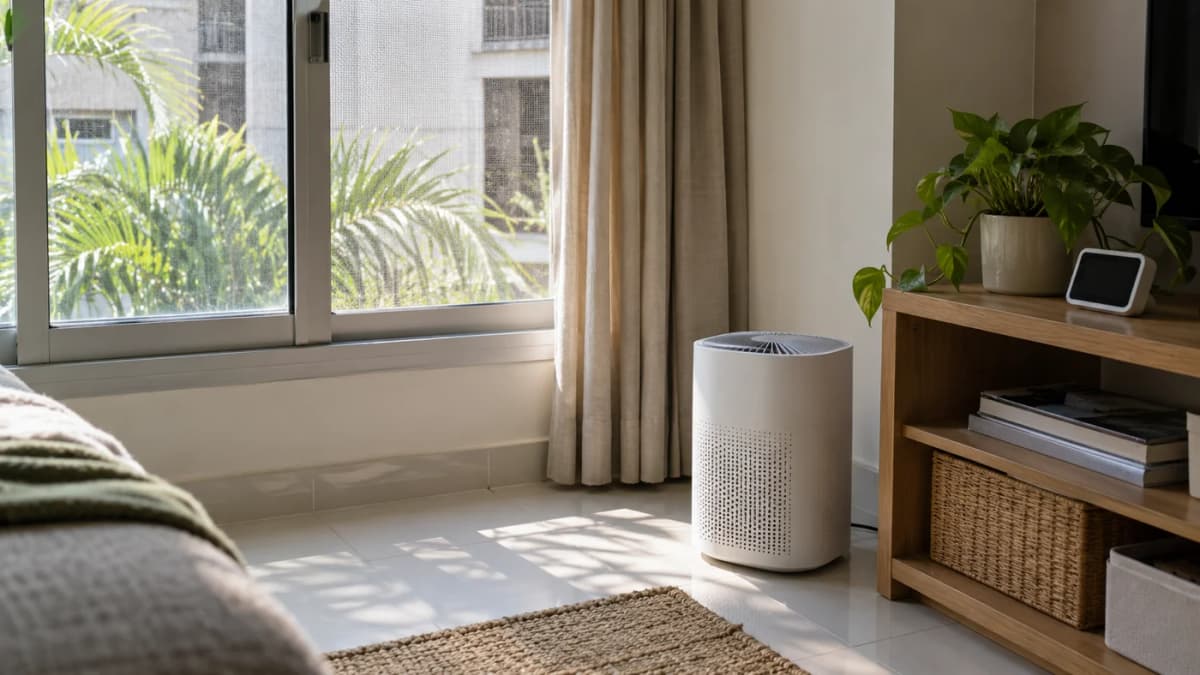
A clear view of the sea is not an air-quality measurement. Nor does a hazy horizon tell you exactly how much fine-particle pollution is outside your room. Before a long walk, a run or a child's outdoor activity in Hua Hin, check the data as well as the sky.
You do not need to become an air-pollution specialist. You need to know which number you are reading, where it came from, when it was updated and what change to make to today's plan. This is a checking routine, not a live claim that Hua Hin's air is good or bad right now.
AQI and PM2.5 are different things
Thailand's Pollution Control Department explanation distinguishes AQI, a unitless index, from PM2.5 concentration, measured in micrograms per cubic metre, written µg/m³. Thailand's AQI considers several pollutants. A large AQI number is not automatically the same number of micrograms of fine particles.
Also check the scale. An app using US AQI and one using Thai AQI can display different index numbers without measuring different air. The US EPA describes its own AQI system; it should not be silently substituted for Thailand's. Compare the pollutant, units and averaging period before deciding two sources disagree.
Start with Air4Thai and inspect the station
Open the Pollution Control Department's Air4Thai site or its official app. Locate Hua Hin and your actual area. Open the station details rather than relying only on a regional colour or a city search label.
Check the station location, source and timestamp. A nearby reading is more useful than a fresh-looking number for another province, but it still does not measure every street or room. If there is no recent representative observation, acknowledge that gap rather than treating a blank as zero pollution.
Another app can be helpful as a cross-check. Find out whether it shows a government monitor, a private sensor, a modelled estimate or a combined city value. Those are different products. A label saying Hua Hin is not enough to establish that the device sits outside your building.
| Field to check | Question it should answer |
|---|---|
| Location | Where is the actual monitor or estimated area? |
| Time | When was the reading measured and last updated? |
| Pollutant and units | Is this AQI, PM2.5 in µg/m³ or something else? |
| Scale and averaging | Thai or US AQI? One hour, rolling 24 hours or another stated period? |
| Advice | What does that source recommend for your group and intended activity? |
Read the time window before comparing numbers
The PCD explanation says Air4Thai's displayed PM2.5 figure uses a 24-hour average updated with hourly observations; its graph also provides hourly values. Check the current interface's labels rather than assuming every large number is a last-minute reading.
A 24-hour average can remain elevated after conditions improve, while a short high reading does not equal the average exposure over the whole day. Use the trend alongside the labelled measurement, not as a reason to dismiss an inconvenient result. A screenshot without a time, station and units is poor evidence for deciding today's run.
Understand the Thai categories
The PCD's published Thai AQI table, on page 48 of its action plan, uses these five bands. The English labels below explain the categories; they are not individual medical clearance.
| Thai AQI | Category |
|---|---|
| 0–25 | Very good |
| 26–50 | Good |
| 51–100 | Moderate |
| 101–200 | Starting to affect health |
| 201 and above | Health effects |
Follow the current source's health instructions for the category and your circumstances. Do not import a different app's colour or numeric action threshold into this table. People with a personal care plan should follow their clinician's advice even when a broad category sounds reassuring.
Change the outing rather than giving up the whole day
The EPA's particle-pollution activity guide recommends options such as reducing intensity, shortening an activity, rescheduling and exercising away from busy roads when pollution is elevated. These principles help build alternatives; the guide's US AQI categories are not Thai AQI thresholds.
For a Hua Hin walk, choose a route with an easy return and somewhere suitable to stop. For a workout, consider an indoor alternative with appropriate air management. An open-sided gym is not automatically cleaner than the road outside. Our local fitness guide helps plan a routine with more than one option.
Do not promise yourself that the beach or early morning always has clean air. Check again near departure and consider the route, heat and weather too. The weather guide covers that separate check. A good pollution reading does not cancel a thunderstorm warning.
Make the room part of the plan
Before a longer rental, ask whether a suitable air cleaner is available, who changes its filters and which room it serves. A portable unit is not a promise of clean air throughout a villa, and a standard air conditioner should not be assumed to provide fine-particle filtration.
The EPA's consumer filter guide recommends matching a portable cleaner's clean-air delivery rate to the room. Check the manufacturer's instructions, filter condition and placement. Do not obstruct the inlet behind furniture or buy a device solely because its display turns green.
Filtration does not remove every pollutant. The EPA warns about ozone generators sold as air cleaners; avoid treating a strong smell as proof of useful cleaning. Also avoid adding smoke from cigarettes, candles or burning products indoors.
Keep a personal backup, especially with health needs
Children, older adults and people with heart or lung conditions may need more cautious plans. The CDC's smoke-health guidance explains increased risks; smoke is one possible source of particles, not a diagnosis of the source of today's Hua Hin reading.
Ask a clinician about your own exposure and exercise plan where relevant. Do not use an app number to dismiss breathing difficulty, chest pain or other concerning symptoms. Seek urgent medical help when needed; our Hua Hin emergency guide gives local contacts. For routine arrangements, use the healthcare guide.
Keep the habit simple: save a reliable source, inspect its labels, check before leaving and have one realistic alternative. That is more useful than repeatedly comparing unexplained numbers in group-chat screenshots.
Common questions
Is AQI the same number as PM2.5 concentration?
No. AQI is an index without physical units. PM2.5 concentration is measured in micrograms per cubic metre. Check the pollutant, scale and averaging period before comparing displays.
Does being beside the sea guarantee clean air in Hua Hin?
No. Check recent representative observations and current advice. A coastal location, clear view or usual season does not establish the air quality for your outing.
Can I use a Thai AQI threshold with an app set to US AQI?
Do not mix the scales. Read the app's stated system and associated advice, or compare pollutant concentrations using the same units and time window.
Checked on 21 October 2026. This is a source-reading and planning guide, not a live air-quality report or individual medical advice. Check current readings before each outing.
Ananas Premium
Unlock Hua Hin's Best Property & Investment Insights
Enjoying our free content? Get unlimited access to premium articles, local market intelligence, member briefings, and exclusive checklists for ฿290 / $9.95 per month.
Continue reading
Sources & Verification
- Thailand's Pollution Control Department explanation — epo08.pcd.go.thSource
- US EPA describes its own AQI system — www.airnow.govSource
- Air4Thai site — air4thai.pcd.go.thSource
- published Thai AQI table — www.pcd.go.thSource
- EPA's particle-pollution activity guide — www.airnow.govSource
- EPA's consumer filter guide — www.epa.govSource
- EPA warns about ozone generators sold as air cleaners — www.epa.govSource
- CDC's smoke-health guidance — www.cdc.govSource