Internet and Mobile Data in Hua Hin: Best Providers and Packages
Mobile data in Hua Hin: AIS, DTAC, TrueMove packages from 199 THB. Tourist vs regular SIM comparison.
Editorial Team
Aug 14, 2026 · 15 min read
Status

The SIM Card Trap That Costs You Double
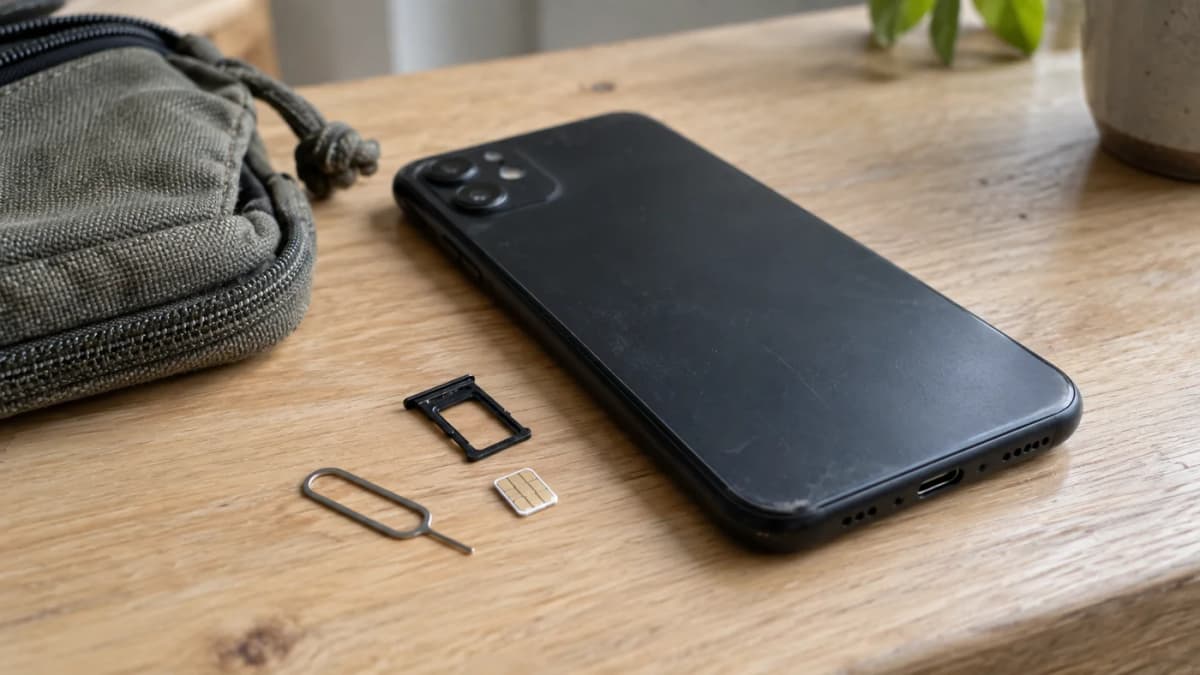
Every tourist in Thailand buys a SIM card at the airport. They pay 399-1,199 THB for a "tourist" package that gives them 8-30 days of data. Then they discover that the same data package costs 199 THB if you buy it at a local shop — or 270 THB as an eSIM before the flight. The airport SIM is the most overpriced convenience in Thai tourism. This guide covers every mobile data and internet option in Hua Hin, with real 2026 prices, honest speed comparisons, and the practical decisions that save you money whether you're visiting for a week or moving here permanently.
Hua Hin sits in Prachuap Khiri Khan province, about 200 kilometers south of Bangkok. The three major Thai carriers — AIS, TrueMove H, and the merged DTAC — all provide coverage here, but the experience varies more than you'd expect for a town of 90,000 people. The beachfront zones get solid 5G. The soi streets behind Soi 94 can drop to 3G. The hills around Khao Takiab have spotty coverage that makes video calls unreliable. None of this shows up on the carrier coverage maps, which paint the entire province in confident blue.
This matters because Hua Hin isn't just a tourist destination anymore. The town has a growing expat community of European retirees, digital nomads, and remote workers who depend on reliable internet the way they depend on electricity. A bad SIM choice means slow maps, dropped Grab calls, and the kind of frustration that ruins a beach afternoon. A good one means seamless connectivity for 299 THB a month. The difference is knowing what to buy, where to buy it, and what nobody tells you at the airport counter.
Mobile Carriers in Thailand: AIS vs TrueMove H vs DTAC
Thailand's mobile market consolidated in 2023 when DTAC merged with True Corp to form TrueMove H. That left two major networks: AIS (Advanced Info Service, majority-owned by Singapore's Temasek) and TrueMove H (the combined True+DTAC entity, majority-owned by CP Group). In practice, you'll see three brands at airport kiosks — AIS, TrueMove, and DTAC — but True and DTAC now share the same network infrastructure.
AIS is the largest carrier with the widest 5G footprint. In Hua Hin, AIS delivers the most consistent speeds — typically 50-150 Mbps on 5G in the town center and 20-50 Mbps on 4G in residential areas. The coverage extends reliably to Cha-am and Pranburi, making it the best choice for anyone who travels around the province. AIS Fibre also offers home internet, which matters if you're setting up long-term.
TrueMove H (including former DTAC subscribers) has slightly weaker rural coverage but competitive urban speeds. In Hua Hin's town center, TrueMove delivers 40-120 Mbps on 5G — comparable to AIS. The advantage: TrueMove's tourist SIM packages sometimes undercut AIS by 50-100 THB, and their app is slightly more user-friendly for topping up with an international credit card.
For most visitors, the practical difference between AIS and TrueMove in Hua Hin is negligible. Both provide reliable 4G/5G in the areas where tourists and expats actually spend time. The choice comes down to price, convenience, and whether you plan to use home fiber internet from the same provider (bundled discounts exist).
Tourist SIM vs Regular SIM: The Real Cost Difference
Airport kiosks sell "tourist SIMs" at a premium. The same data packages are available cheaper at 7-Eleven or provider retail stores — but only if you know what to ask for. Here's the honest comparison for 2026:
| Plan | Airport Price | 7-Eleven Price | eSIM Price |
|---|---|---|---|
| AIS 8 days, 15 GB | 399 THB ($11) | 299 THB ($8) | N/A |
| AIS 30 days, unlimited (10 Mbps) | 999-1,199 THB ($29-35) | 599 THB ($17) | N/A |
| TrueMove 30 days, unlimited (FUP) | 999-1,199 THB ($29-35) | 499-599 THB ($14-17) | N/A |
| eSIM 10 GB / 30 days | N/A | N/A | 270-340 THB ($8-10) |
| eSIM 20 GB / 30 days | N/A | N/A | 612-680 THB ($18-20) |
The pattern is clear: airport kiosks charge 30-50% more than the same package at a 7-Eleven or provider store. The convenience premium is real — you get SIM activation at 2 AM after a 12-hour flight — but if you can wait until morning, a trip to the 7-Eleven on Soi 88 or the AIS shop on Phetkasem Road saves you 300-600 THB. For a two-week holiday, that's a nice dinner at Hua Hin's night market.
The catch with 7-Eleven SIMs: the packages are more basic. You'll typically get 15 GB for 8 days, then need to top up via the carrier's app. Topping up is straightforward — download the AIS or TrueMove app, register with your Thai number, pay with an international credit card, and select a data package. The app prices are often cheaper than the in-store packages, so the total cost over a month ends up similar to an eSIM.
eSIM: The Smart Alternative Nobody Uses
An eSIM is a digital SIM card that you install before your flight and activate on landing. No queue at the airport, no passport registration, no swapping physical cards. Your home SIM stays in your phone, so you keep receiving WhatsApp messages and bank verification codes on your regular number while using Thai data on the eSIM.
For Hua Hin specifically, eSIMs work on the same AIS and TrueMove H networks as physical SIMs — same coverage, same speeds. The only disadvantage: eSIMs don't come with a Thai phone number, which means you can't receive local SMS verification codes. This matters if you need to register for Thai apps like LINE, local delivery services, or certain banking features. For 95% of travelers, data-only is fine.
| eSIM Provider | 10 GB / 30 days | 20 GB / 30 days | Thai Number? |
|---|---|---|---|
| Travelsim Asia | $9.99 | $19.99 | No |
| Saily | $10.99 | $19.99 | No |
| Airalo | $11.00 | $18.00 | No |
| Airalo (dtac tourist) | N/A | N/A (unlimited $34.95/30d) | Yes |
| Nomad | $10.00 | N/A | No |
The best eSIM deal for Hua Hin in 2026: Airalo's dtac tourist eSIM gives you a Thai phone number plus unlimited data for 30 days at $34.95. If you don't need a local number, Travelsim Asia's 10 GB at $9.99 covers maps, Grab, social media, and messaging for most travelers. For heavier use, Airalo's 20 GB at $18.00 is the cheapest fixed-data option.
Install the eSIM before your flight. Download it via QR code while you have WiFi at home, but don't activate it until you land in Thailand — the 30-day countdown starts when you connect to a Thai network, not when you install the profile. This means you can install it weeks in advance and it costs you nothing until you actually need it.
Home Internet in Hua Hin: Fiber Options for Expats
If you're staying longer than a month — renting a condo, working remotely, or retired and settled — mobile data isn't enough. You need home fiber internet. Hua Hin has three main providers, and the choice matters more than you'd expect for a beach town.
AIS Fibre is the most reliable option in Hua Hin. Plans start at 390 THB/month ($11) for 100 Mbps and go up to 899 THB/month ($26) for 1 Gbps. The 100 Mbps plan is more than enough for streaming, video calls, and general use. AIS Fibre requires a 12-month contract, and installation takes 3-5 business days. The equipment (router + ONT) is included at no extra cost. Coverage is strongest in central Hua Hin and the soi streets off Phetkasem Road. Some of the newer condo developments along the beach have AIS Fibre pre-installed.
True Online (formerly TrueVisions) offers similar speeds at comparable prices. The 300 Mbps plan costs 499 THB/month ($14), and the 1 Gbps plan costs 799 THB/month ($23). True Online has a slight advantage in some condo buildings where they've negotiated exclusive deals with developers — you'll find True Online pre-wired in buildings like The Refinement, Baan Ing Phu, and several others along Soi 112. If your condo already has True Online infrastructure, choosing them saves you the installation hassle.
3BB (Triple T Broadband) is the budget option with decent speeds. The 100 Mbps plan costs 350 THB/month ($10), making it the cheapest fiber in Hua Hin. The catch: 3BB's coverage is patchier outside the town center, and their customer service has a reputation for slow response times. For basic browsing and streaming, 3BB works fine. For video calls that can't afford drops, AIS or True Online are safer bets.
| Provider | 100 Mbps | 300 Mbps | 1 Gbps | Contract |
|---|---|---|---|---|
| AIS Fibre | 390 THB | 590 THB | 899 THB | 12 months |
| True Online | 399 THB | 499 THB | 799 THB | 12 months |
| 3BB | 350 THB | 450 THB | 700 THB | 12 months |
The expat recommendation: AIS Fibre 100 Mbps at 390 THB/month. It's fast enough for 4K streaming on two devices simultaneously, reliable enough for daily video calls, and the 12-month contract isn't a problem if you're actually living in Hua Hin. If your condo comes pre-wired with True Online, go with True instead — the marginal speed difference isn't worth the installation hassle of switching providers.
WiFi Speeds in Hua Hin: What to Actually Expect
Coverage maps lie. Speed test averages lie worse. Here's what you'll actually experience in different parts of Hua Hin, based on real-world testing across the town:
Town center (Phetkasem Road, Soi 88-94): 50-150 Mbps on AIS 5G, 40-120 Mbps on TrueMove 5G. This is the best-served area — most hotels, cafes, and restaurants have strong mobile signal. Home fiber (AIS Fibre or True Online) delivers the advertised speeds consistently.
Beach road (Naresdamri, Khao Takiab): 30-80 Mbps on 4G, spotty 5G. The beachfront hotels and restaurants have decent mobile coverage, but the further you walk from the main road, the weaker it gets. Several beachfront cafes have their own WiFi that ranges from "surprisingly fast" (Cicada Market area) to "barely functional" (some beachfront bars near Khao Takiab).
Residential sois (Soi 94-112): 20-60 Mbps on 4G, limited 5G. This is where most long-term expats live, and the mobile coverage is thinner. Home fiber is essential here — relying on mobile data for daily work is frustrating. AIS Fibre reaches most of these areas; True Online covers some but not all.
Outskirts (Khao Tao, Hua Hin Hills, Baan Ing Phu): 10-30 Mbps on 4G, no 5G. The golf course areas and hillside developments have the weakest mobile coverage in Hua Hin. If you're renting a villa in Khao Tao or Hua Hin Hills, test the mobile signal before signing a lease. Home fiber may not be available — some of these developments rely on fixed wireless or satellite internet.
Digital Nomad Setup: Internet That Actually Works
If you're working remotely from Hua Hin — coding, designing, managing teams, running a business — your internet setup needs to be bulletproof. Here's the configuration that works:
Primary connection: AIS Fibre 100 Mbps (390 THB/month). This handles video calls, file transfers, cloud sync, and everything else. The 100 Mbps plan is genuinely enough — unless you're transferring massive video files daily, you won't notice the difference between 100 Mbps and 1 Gbps.
Backup connection: AIS or TrueMove mobile hotspot (299-599 THB/month). When fiber goes down — and it does, occasionally, for maintenance or during storms — your mobile hotspot keeps you connected. Use a separate SIM for the hotspot so you're not burning through your primary mobile data.
Coworking backup: Hua Hin has several coworking spaces with reliable internet. Hub53 on Soi 88 offers 100+ Mbps WiFi with air conditioning for 250 THB/day. The space is small but functional, and the WiFi holds up during peak hours. Other options include various cafes along Phetkasem Road that cater to the laptop crowd — the cafe guide covers WiFi speeds at each location.
The critical tip: Test your fiber speed during your first week. Run speed tests at different times of day — morning, afternoon, evening. If the speeds are consistently below 50 Mbps, contact AIS or True Online for a line check. Sometimes the issue is a faulty ONT (optical network terminal) that the provider replaces for free. Don't assume slow speeds are normal — they're usually a sign of a fixable problem.
The Tourist SIM Scam Nobody Warns You About
There's a specific practice at Suvarnabhumi Airport that catches almost every first-time visitor: the upsell. You ask for a 299 THB tourist SIM, and the kiosk attendant shows you a "better" package for 599 or 999 THB. The "better" package includes "unlimited" data, which sounds great until you read the fine print: "unlimited" means unlimited volume but capped speed. The 999 THB AIS plan gives you unlimited data at 10 Mbps. That's fine for messaging and maps, but it's noticeably slow for video calls and frustrating for streaming.
The 399 THB AIS plan (15 GB for 8 days, then unlimited at 4 Mbps) is usually the better deal for short stays. You get 15 GB at full 5G speed — more than enough for a week of maps, Grab, social media, and occasional video calls. After 15 GB, the speed drops to 4 Mbps, which still handles messaging and light browsing. For most tourists, the 399 THB plan covers the entire trip without the speed feeling slow.
The real scam isn't the upsell — it's the "tourist" label itself. Tourist SIMs are more expensive than regular prepaid SIMs because they're designed for people who don't know better. If you can wait until a 7-Eleven (there's one on almost every major soi in Hua Hin), you'll pay 199-299 THB for a regular prepaid SIM with a similar data package. The only downside: you need to register with your passport at the 7-Eleven, and the staff may not speak English. Bring your passport, point at the SIM card you want, and show your phone number when prompted. It takes 5 minutes.
Home Fiber Installation: What the Process Actually Looks Like
Getting fiber internet installed in Hua Hin is straightforward but requires patience. Here's the timeline:
Day 1: Visit the AIS shop (there's one on Phetkasem Road near Soi 88) or call True Online at 1239. Bring your passport and rental agreement (or proof of address). Choose your plan, sign the 12-month contract, and pay the first month. The installation fee is usually waived for new customers.
Day 2-5: A technician visits to install the ONT (optical network terminal) and router. The ONT connects to the fiber line that runs to your building. The router broadcasts WiFi. The technician tests the connection and shows you how to access the admin panel. If your condo already has fiber infrastructure (most newer buildings do), installation takes 1-2 hours. If the building needs new fiber runs, it can take a full day.
Day 5-7: The connection is fully active. Run speed tests to verify you're getting the advertised speeds. If not, call the provider for a line check. In my experience, AIS Fibre delivers within 10-20% of advertised speeds about 90% of the time. True Online is similar. 3BB sometimes underperforms.
The important detail: Your 12-month contract starts on the installation date, not the signup date. If you move out before 12 months, you'll owe an early termination fee (typically 1-2 months of service). For expats who aren't sure they'll stay a full year, consider starting with a month-to-month mobile hotspot and upgrading to fiber once you're committed. The complete internet setup guide covers the full process with more detail.
VPN in Thailand: Do You Need One?
Thailand doesn't block most websites, but it does block some. Facebook, YouTube, Netflix, and Google services work fine without a VPN. What's blocked: certain political websites, some gambling sites, and a handful of adult content platforms. For 95% of travelers and expats, a VPN is unnecessary for daily use.
Where a VPN matters: accessing geo-restricted content from your home country. If you want to watch BBC iPlayer, US Netflix, or European streaming services, you'll need a VPN. The popular options — NordVPN, ExpressVPN, Surfshark — all work in Thailand and cost $3-10/month. Most offer Android and iOS apps that connect in one tap.
The practical advice: Install a VPN app before you arrive in Thailand. Some VPN websites are occasionally blocked, and it's easier to download the app while you still have unrestricted access at home. Don't pay for a VPN subscription until you've tested the free trial in Thailand — some VPNs are noticeably slower on Thai networks, and you want to verify performance before committing.
The Verdict: What to Buy in 2026
For tourists staying 1-2 weeks: Buy an eSIM before your flight. Travelsim Asia 10 GB / 30 days at $9.99 covers everything you need — maps, Grab, social media, messaging — at full speed with no throttling. If you need a Thai phone number for LINE or local apps, get Airalo's dtac tourist eSIM with unlimited data at $34.95/30 days.
For tourists staying 2-4 weeks who prefer a physical SIM: Skip the airport kiosk. Go to a 7-Eleven on your first morning and buy a regular prepaid SIM for 299-599 THB. Bring your passport. The 5-10 minutes you spend at 7-Eleven saves you 300-600 THB compared to the airport.
For expats and long-term residents: AIS Fibre 100 Mbps for home internet (390 THB/month) plus an AIS or TrueMove monthly SIM for mobile data (299-599 THB/month). Total cost: 689-989 THB/month ($20-29) for reliable home and mobile internet. That's less than a single airport tourist SIM — and infinitely more practical.
For digital nomads: AIS Fibre 100 Mbps (primary) + mobile hotspot SIM (backup) + coworking space membership (emergency). This three-layer setup ensures you never lose connectivity. The total cost is under 1,000 THB/month ($29), which is nothing compared to the productivity loss of a dropped video call with a client.
For more on setting up your home, check our complete internet setup guide and the digital nomad guide to Hua Hin for coworking spaces, cafe WiFi, and the full remote work picture.
Ananas Premium
Unlock Hua Hin's Best Property & Investment Insights
Enjoying our free content? Get unlimited access to premium articles, local market intelligence, member briefings, and exclusive checklists for ฿290 / $9.95 per month.
Continue reading
Sources & Verification